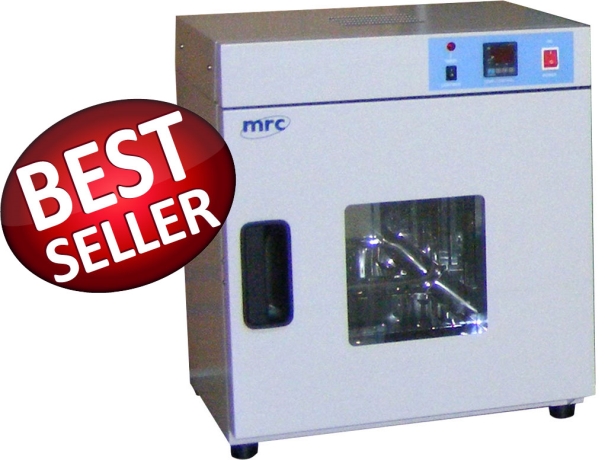
A laboratory oven is used for controlled heating, drying, curing, testing and heat-treatment processes across scientific, industrial and quality-control laboratories.
Choosing the correct oven requires more than comparing maximum temperature and chamber capacity. The oven must be suitable for the materials being processed, deliver the required temperature performance and operate safely within the laboratory environment.
Selecting an unsuitable oven can lead to inconsistent results, damaged samples, excessive energy consumption or serious safety risks.
Before purchasing a laboratory oven, evaluate the following six factors.
1. Define the Application and Materials Being Heated
The first step is to define exactly what the oven will be used for.
Common laboratory oven applications include:
- Drying glassware
- Removing moisture from samples
- Curing coatings and materials
- Heating components
- Thermal ageing
- Annealing
- Heat treatment
- Stability testing
- Drying powders
- Processing samples before analysis
- General laboratory heating
The intended application determines the required oven type, temperature range, airflow and safety features.
Before requesting a quotation, identify:
- The materials being heated
- The expected moisture content
- Whether vapours or gases will be released
- The maximum sample dimensions
- The number of samples processed per cycle
- Required heating and cooling rates
- Required exposure time
- Relevant test methods or internal procedures
A standard laboratory drying oven should not automatically be used for every heating application.
2. Check the Temperature Range and Performance
Maximum temperature is an important specification, but it is only one part of oven performance.
The oven must also provide suitable stability, uniformity and control throughout the required operating range.
Maximum and Minimum Temperature
Confirm that the oven can operate reliably at the temperatures required for the process.
Avoid selecting an oven that will operate continuously at its absolute maximum temperature. Choosing suitable performance capacity above the routine operating temperature may support reliability and provide flexibility for future applications.
MUNRO Scientific lists laboratory ovens designed for ranges up to approximately 250°C to 300°C, as well as higher-temperature ovens covering approximately 300°C to 750°C.
Temperature Uniformity
Temperature uniformity describes the difference between temperatures measured at different positions within the oven chamber.
Good uniformity is important when multiple samples must experience similar conditions during the same cycle.
Uniformity can be affected by:
- Oven design
- Airflow
- Chamber loading
- Shelf positioning
- Sample size
- Set temperature
- Door openings
Ask the supplier how uniformity was measured and whether the stated value applies to an empty or loaded chamber.
Temperature Stability
Temperature stability describes how much the temperature fluctuates over time at a particular point.
An oven may have good stability at the control sensor while still showing temperature differences between different areas of the chamber.
Control and Display Accuracy
The displayed temperature should provide an appropriate indication of the actual chamber temperature.
For critical processes, an independent sensor, data logger or calibration procedure may be required.
Heating and Recovery Time
Consider how quickly the oven reaches the required temperature and how efficiently it recovers following a door opening.
Fast heating may be useful for high-throughput work, but some sensitive samples may require controlled and gradual heating.
3. Select the Correct Airflow and Oven Type
Different oven designs distribute heat in different ways.
The correct airflow system depends on the samples, required uniformity and process conditions.
Natural Convection Ovens
Natural convection ovens distribute heat through the natural movement of warm air.
As air heats, it rises, while cooler air moves downward. This creates circulation inside the chamber without a mechanical fan.
Natural convection ovens may be suitable for:
- General drying
- Heating powders
- Delicate samples
- Applications where strong airflow could disturb the material
- Lower-throughput processes
Because they do not use a fan to actively circulate air, they may heat more slowly and can show greater variation across the chamber than suitable forced-air models.
Forced-Air Ovens
Forced-air ovens use a fan or blower to circulate heated air.
They may provide:
- Improved temperature uniformity
- Faster heat transfer
- Quicker recovery after door openings
- Shorter drying times
- More consistent processing of multiple samples
Forced airflow may not be suitable for lightweight powders or materials that could be disturbed by moving air.
MUNRO Scientific lists forced-air laboratory ovens in capacities ranging from approximately 20 to 220 litres.
Horizontal-Airflow Ovens
Horizontal-airflow ovens direct heated air across the chamber in a controlled pattern.
They may be appropriate for processes requiring consistent airflow across trays or samples.
Vacuum Ovens
Vacuum ovens reduce the pressure inside the chamber, allowing certain materials to dry at lower temperatures.
They may be suitable for:
- Heat-sensitive materials
- Controlled drying
- Removing trapped gases
- Selected solvent processes
- Applications requiring reduced oxygen exposure
A vacuum oven does not automatically make all solvent-drying processes safe. The equipment must be specifically suitable for the substances involved, and the connected vacuum pump, traps and exhaust system must also be compatible.
Clean-Room Ovens
Clean-room ovens are designed for controlled environments where particulate contamination must be minimised.
They may include filtration and specialised chamber designs to support clean processing.
High-Temperature Ovens
Applications above the range of standard drying ovens require specialised high-temperature ovens or furnaces.
Confirm the required maximum temperature, chamber materials, heating rate and intended application before choosing this equipment.
4. Choose the Correct Chamber Size and Loading Capacity
Oven size should be selected according to the actual usable chamber capacity required.
A larger oven is not always better. It may:
- Consume more energy
- Require more laboratory space
- Take longer to heat
- Increase purchase costs
- Provide unnecessary capacity
However, an oven that is too small may become overloaded and restrict airflow.
Before selecting a chamber size, consider:
- Maximum sample dimensions
- Number of samples per batch
- Shelf dimensions
- Number of shelves
- Shelf load capacity
- Required space between samples
- Expected future demand
- Available laboratory space
- Door-opening clearance
- Delivery access
Avoid Overloading the Chamber
Air must be able to move around the samples.
Overloading may:
- Block airflow
- Increase drying time
- Reduce temperature uniformity
- Create hot or cold areas
- Produce inconsistent results
The supplier should be informed about the normal load configuration, not only the external dimensions of the samples.
5. Evaluate Safety, Ventilation and Material Compatibility
Safety must be considered before placing any material inside a laboratory oven.
Flammable and Volatile Materials
A standard laboratory oven should not be used to heat materials that release flammable vapours unless the oven is specifically designed and approved for that purpose.
Flammable vapours can accumulate and ignite, creating a serious fire or explosion risk.
If solvents, coatings or volatile materials will be heated, determine:
- Which vapours may be released
- Expected vapour concentration
- Required exhaust rate
- Required ventilation
- Whether a solvent-rated oven is necessary
- Whether hazardous-area certification is required
- Whether explosion relief or protection is required
Solvent-venting ovens are designed to remove hazardous vapours, while ovens intended for installation in hazardous locations may require additional protection and certification.
Over-Temperature Protection
The oven should include suitable independent over-temperature protection.
This helps prevent uncontrolled heating if the primary temperature controller fails.
Depending on the application, other safety features may include:
- Door switches
- Audible alarms
- Visual alarms
- Automatic shut-off
- Exhaust monitoring
- Fan-failure detection
- Password-protected controls
- Data recording
Material Temperature Resistance
Confirm that all samples, containers, trays and accessories can withstand the selected temperature.
Materials may melt, deform, crack or ignite if heated beyond their safe operating limits.
Laboratory Ventilation
Determine whether the process may release moisture, fumes or hazardous gases.
Some applications may require a dedicated exhaust connection, local extraction or another suitable ventilation arrangement.
6. Compare Controls, Monitoring and Long-Term Costs
The final purchasing decision should consider how the oven will be controlled, monitored, maintained and supported throughout its operating life.
Controller Type
Basic ovens may include a simple digital temperature controller.
More advanced systems may provide:
- Programmable temperature profiles
- Ramp and dwell programmes
- Timed operation
- Multiple stored methods
- Data logging
- USB export
- Remote monitoring
- Alarm history
- Password-protected settings
Select the control system according to the complexity and documentation requirements of the process.
Data Logging and Documentation
For critical or regulated processes, it may be necessary to record:
- Set temperature
- Actual temperature
- Cycle duration
- Alarm events
- User actions
- Process deviations
Confirm whether the oven includes built-in recording or whether an independent data logger is required.
Calibration and Temperature Mapping
Calibration helps confirm that the temperature measurement system performs within the required limits.
Temperature mapping measures conditions at multiple positions in the chamber and can identify differences between areas.
The required calibration or mapping frequency depends on the application, risk and laboratory quality procedures.
Energy Consumption
Energy efficiency should be considered, especially when the oven will operate for long periods.
Relevant factors include:
- Chamber volume
- Insulation
- Operating temperature
- Heating time
- Door-opening frequency
- Standby operation
- Air exchange rate
- Process duration