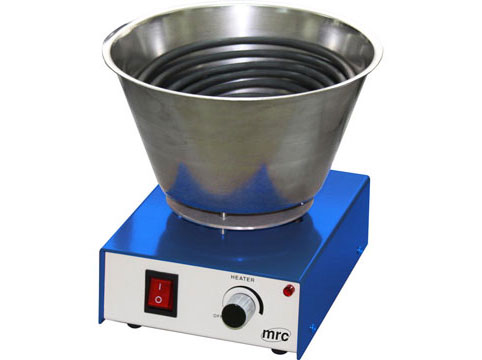
Heating mantles are laboratory equipment that provides an even and adjustable heat source for containers such as flasks, beakers, or crucibles. The equipment is designed to fit perfectly for round-bottomed flasks. This provides more controllable and consistent heating for users. A heating mantle is the safest way to heat organic liquids, ensuring no open flame or access to the heated material. It also allows for easy adjustment of temperature, which you can monitor with an external thermometer. This makes it ideal for performing delicate experiments and processes that require precise control over heating and cooling rates.
Heating Mantles Work Process
Heating mantles indirectly heat the contents of a flask or other container. The built-in electrical element within the mantle is powered through an outlet and heats up over time, transferring heat to the outside air. This heated air then radiates onto the walls of the flask, gently warming its contents from all sides. This indirect heating process ensures no direct contact between the heating element and what’s being heated, which minimizes oxidation and avoids possible combustion.
Kinds Of Heating Mantles
Heating mantles are available in two forms: fabric or rigid. The fabric mantle is the most popular due to its versatility and cost-effectiveness. It features a cloth cover with a built-in heating element that wraps around the flask. This allows for easy adjustment of temperature and insulation to maintain consistent heat. Rigid mantles are constructed from ceramic, aluminum, or metal and feature an adjustable thermostat control knob. They also offer better heat conductivity than fabric mantles, which makes them ideal for higher temperatures or quicker heating rates.
In This way you need to work correctly with Heating Mantles:
AC voltage is efficiently converted into heat. A lot of energy is required to generate the high temperatures that are often needed. This can create a risk of fire or shock if used incorrectly. It is important to ensure that the mantle is not overheated and that precautions such as using an electrical surge protector are taken when using electric laboratory heating mantles. Never plug the mantle directly into the wall socket.
Use a variable autotransformer to control the input voltage, which can help to protect from accidental over-voltage. Follow the recommended input voltage on the user manual and do not exceed the voltage level. Vacuum distillation of heat-sensitive or unstable materials should not be attempted using a heating mantle, as it is difficult to maintain an accurate temperature.