UV-VIS spectroscopy is a type of spectroscopy that uses ultraviolet-visible light to analyze a sample. This technique can be used to measure the absorbance of a sample and the wavelength of light absorbed by the sample. Ultraviolet-visible spectroscopy is commonly used in analytical chemistry and many other scientific fields.
Ultraviolet-Visible Spectrophotometer
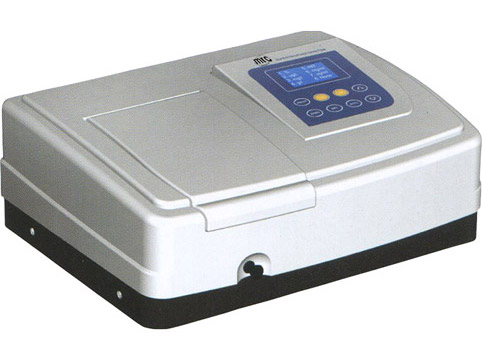
A UV-VIS spectrophotometer is a type of spectrophotometer that uses ultraviolet-visible light to analyze a sample. This type of spectrophotometer is commonly used in analytical chemistry and many other scientific fields. It can measure span wavelengths from around 200 nm to around 800 nm. The absorption of light by a sample is used to measure the concentration of the sample.
You can also measure the wavelength of light absorbed by a sample. You can use this information to identify the molecules in a sample. UV-VIS spectrophotometers can also be used to measure the fluorescence of a sample. Fluorescence is when a molecule absorbs light at one wavelength and then emits light at another wavelength. For liquid streams or gases, a UV-VIS spectrophotometer is often used with a liquid chromatograph or gas chromatography.
A UV-VIS spectrophotometer is cost-effective and simple to use. You can use it to measure a wide variety of samples. UV-VIS spectrophotometers are found in many laboratories and are used in many industries.

The basis of Ultraviolet-visible spectroscopy
The basis of Ultraviolet-visible spectroscopy is the absorbance of light by a sample. The absorbance of light is a function of the wavelength of light and the concentration of the absorbing species in the sample. The interaction between incident radiation and the electron cloud of an atom or molecule can result in the absorbance of light.
Generally, substances' UV and visible spectral bands are large and well-defined. The amount of light absorbed by a sample is proportional to the concentration of the absorbing species in the sample. The absorbance of light is also proportional to the wavelength of light.
When UV-visible light shines on a sample, some of the light is absorbed, and some of the light is scattered. The absorbance of a sample can be measured with a spectrophotometer. A spectrophotometer is an instrument that measures the intensity of light as a function of wavelength. The tungsten-halogen lamp has a tungsten filament heated by an electric current. The filament emits radiation as it is heated. You can change the radiation wavelength from a tungsten-halogen lamp by changing the electric current. Deuterium lamp emits radiation in the ultraviolet region of the spectrum.
The radiation from typical hot solids consists of several wavelengths, and the primary factor determining the wavelength is the temperature of the solid. The wavelength range from about 200 nm to about 800 nm is called the visible spectrum. The human eye can detect light in this wavelength range.
The absorbance of a sample can be measured at any wavelength in the UV or visible spectrum. However, each molecule absorbs light at different wavelengths. Therefore, the choice of measurement wavelength depends on the identity of the molecule being studied.
Things To Understand Before Using Ultraviolet-Visible Spectroscopy
There are a few things that you should consider before using Ultraviolet-Visible spectroscopy. It is important to understand how the absorbance of light by a sample is affected by the concentration of the absorbing species and the wavelength of light. Here are some common questions regarding UV-vis spectroscopy:
What are the basics of Ultraviolet-Visible spectroscopy, and how does this analytical technique work?
Ultraviolet-Visible spectroscopy is an analytical technique used to identify and quantify molecules based on their ability to absorb ultraviolet (UV) or visible light. The basic principle of UV-vis spectroscopy is that when a molecule absorbs light, it will absorb energy. The amount of energy the molecule absorbs depends on the wavelength of light absorbed. Each molecule has a unique absorption spectrum that you can use to identify the molecule. Additionally, the concentration of a molecule in a sample can be determined by measuring the absorbance of light at specific wavelengths.
How is UV spectroscopy used in pharmaceutical analysis?
UV spectroscopy is used in pharmaceutical analysis because you can use it to identify and quantify active ingredients in a sample. Additionally, UV spectroscopy can be used to monitor the purity of a sample during manufacturing.
What type of lamp is necessary for UV spectroscopy?
A UV-visible spectrophotometer uses a lamp that emits radiation in the ultraviolet and visible regions of the spectrum. The most common type of lamp in UV-visible spectroscopy is a tungsten-halogen lamp. A spectrometer radiates light with a wavelength range of 190-800 nm through the cuvette, and absorption spectra are then noted.
What is the definition of the IR principle?
The IR principle is the active ingredient in a sample that absorbs light at specific wavelengths. The wavelength of light absorbed is characteristic of the molecule being studied. The energies depend on the form of molecular vibrations, rotations, and other motions.
What is the wavelength range of UV spectroscopy?
UV-VIS is a general procedure used to study most molecules, as they absorb light in the UV-visible wavelength spectrum. The ultraviolet frequency ranges from 100 to 400 nm, and the wavelength ranges from about 200 nm to 800 nm is called the visible spectrum.
Ultraviolet-Visible Spectroscopy in Industry and Science
UV-vis spectroscopy has a wide range of applications. You can use this type of spectroscopy to:
1) Measure the absorbance of a sample
2) Determine the wavelength of light that is absorbed by a sample
3) Identify molecules in a sample
4) Measure the fluorescence of a sample
5) Detect impurities in a sample
6) Monitor chemical reactions
7) Study environmental samples
Mid-range to Upper-end spectrophotometers are used in laboratories, while handheld devices are used in the field for environmental testing. It is commonly used to detect impurities and pollutants in the air, water, and soil. Additionally, it is used to study the effects of UV radiation on living organisms.
Key Parameters in UV-Vis Analysis
-
Wavelength Range: Depends on the sample being analyzed
-
Bandwidth: Narrow bandwidth gives higher resolution
-
Absorbance: Directly proportional to concentration
-
Transmittance: % of light that passes through the sample
How to Select the Right UV-Vis Spectrophotometer
Consider:
-
Required wavelength range
-
Optical resolution
-
Sample throughput
-
Budget and software compatibility
-
Whether a single or double beam is needed