Laboratory chillers are essential equipment in scientific research, pharmaceutical production, medical facilities, and various industrial applications. They play a crucial role in maintaining precise temperature control to ensure the integrity and stability of samples, reagents, and sensitive equipment. This comprehensive guide will provide an overview of laboratory chillers, their types, key features, applications, selection criteria, and maintenance tips.
Understanding Laboratory Chillers:
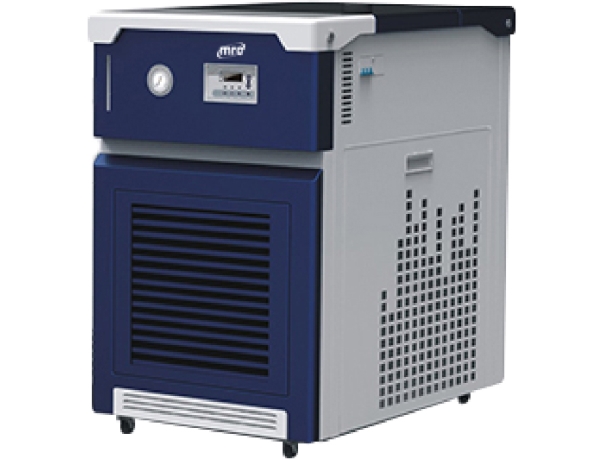
Laboratory chillers are refrigeration systems specifically designed to remove heat from a closed-loop system and maintain a constant temperature range. They consist of a compressor, condenser, evaporator, refrigerant, and a control system. They can achieve precise temperature control within a range of -20°C to +40°C, depending on the model and application.
Types of Laboratory Chillers:
a. Recirculating Chillers: These compact units recirculate a refrigerant through a closed-loop system to remove heat from the process and maintain temperature stability. They are commonly used in research laboratories and small-scale applications.
b. Water-cooled Chillers: Water-cooled use water as a heat transfer medium to remove heat from the refrigerant. They are ideal for applications where air-cooled systems may be inadequate, such as in environments with high ambient temperatures or limited ventilation.
c. Air-cooled Chillers: Air-cooled dissipates heat to the surrounding air through a condenser coil. They are cost-effective, easy to install, and suitable for laboratory setups where water supply or water cooling is not readily available.
Key Features and Considerations:
a. Cooling Capacity: The cooling capacity should match the specific requirements of the application. Consider factors such as the heat load, ambient temperature, and desired temperature range when selecting.
b. Temperature Control: Look for ones with precise temperature control capabilities and the ability to maintain temperature stability within a narrow range. Some models offer programmable controllers and digital displays for easy monitoring and adjustment.
c. Pump Performance: Ensure that the laboratory chiller's pump has sufficient flow rate and pressure to meet the demands of your application. The pump should be able to deliver the required cooling capacity and maintain consistent flow rates.
d. Energy Efficiency: Opt for chillers with high energy efficiency ratings to minimize operating costs. Look for features like variable speed compressors, energy-saving modes, and advanced insulation materials.
e. Safety Features: they should have safety features such as over-temperature protection, low liquid level alarms, and power failure restart capabilities. These features help protect valuable samples and equipment from damage.
Applications of Laboratory Chillers:
a. Scientific Research: Used in various research applications, including molecular biology, biochemistry, chemistry, and material science, where temperature-sensitive experiments and sample storage are critical.
b. Medical Facilities: They are vital for medical facilities, including hospitals, pharmaceutical manufacturing, and diagnostic laboratories, where precise temperature control is required for equipment, reagents, and patient samples.
c. Industrial Processes: Many industries rely on chillers for cooling applications, such as in laser systems, semiconductor manufacturing, food processing, and chemical production, where temperature control is essential for process efficiency and product quality.
Maintenance and Care:
a. Regular Cleaning: Clean the laboratory chiller's condenser and evaporator coils periodically to ensure efficient heat transfer. Remove dust, debris, and mineral deposits that can hinder performance.
b. Fluid Maintenance: Follow manufacturer guidelines for proper fluid maintenance, including regular fluid analysis, filtering, and replenishment. Contaminated or degraded fluids can impact chiller performance and lifespan.
c. Inspections: Conduct routine inspections to check for leaks, loose connections, and signs of wear. Address any issues promptly to prevent further damage or system failure.
d. Filter Replacement: Replace filters as recommended by the manufacturer to maintain optimal chiller performance. Clogged filters can restrict flow and reduce efficiency.
e. Compressor Maintenance: Follow the manufacturer's guidelines for compressor maintenance, including lubrication and inspection. Proper compressor care ensures reliable operation and extends the chiller's lifespan.
f. Professional Servicing: Consider scheduling regular professional servicing to ensure thorough maintenance and address any complex issues. Experienced technicians can perform in-depth inspections, clean components, and perform system diagnostics.
g. Environmental Considerations: Ensure that the machine is placed in a well-ventilated area with adequate airflow to prevent overheating. Avoid exposing the chiller to extreme temperatures or excessive humidity.
h. Documentation and Records: Maintain detailed records of maintenance activities, repairs, and any modifications made to the chiller. This information can be useful for troubleshooting, warranty claims, and future maintenance planning.