A laboratory thermometer is an instrument used to measure temperature. It consists of a glass tube with a bulb at one end, containing a liquid, such as mercury or alcohol, that expands and contracts as the temperature changes. The other end of the tube is marked with a scale that indicates the temperature.
How to take a temperature reading with a Thermometer?
It's easy to take a temperature reading with a thermometer, but did you know that there are different types of Thermometers? Here's a quick guide on how to read four different types:
1. Decide what type of thermometer you are using.
2. Make sure the thermometer is properly calibrated. (below 37∘C or 98∘F mark)
3. Clean the thermometer if necessary.
4. Insert the thermometer into the appropriate place.
5. Record the temperature reading.
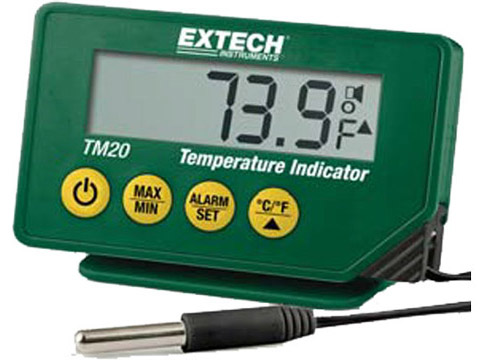
Type of Thermometers
Different types of Laboratory thermometers, each with advantages and disadvantages. The most common type of Temperature Meter is the mercury-in-glass thermometer, which uses mercury as the expandable material.
Mercury thermometers are very accurate and have a wide range of temperatures that they can measure. However, they are also very fragile and dangerous to handle, as mercury is a toxic heavy metal. If a mercury thermometer breaks, it can release large amounts of mercury into the environment.
Another type is the alcohol-in-glass thermometer, which uses alcohol instead of mercury. Alcohol are not as accurate as mercury but are much safer to use and handle.
Constant pressure gas Thermometer (CPGT) is one of the latest inventions in the field. It uses a constant-pressure gas, such as nitrogen, to measure temperature. CPGTs are more accurate than mercury and alcohol thermometers and safe to use and handle.
A forehead thermometer is an infrared thermometer that measures the temperature of the temporal artery, which is located just under the skin on the forehead. Forehead thermometers are quick and easy to use and provide accurate readings. You can use them on people of all ages, including infants and children.
A digital thermometer is an electronic instrument that measures temperature. It consists of a sensing element, such as a thermocouple or resistance temperature detector, that produces a voltage or current signal proportional to the temperature.
Thermocouple Thermometer is an electronic instrument that measures temperature. It consists of two conductors of different metals, the hot and cold junction. When the hot junction is heated, a voltage proportional to the temperature difference between the hot and cold junctions are generated.
A clinical thermometer is a type of mercury-in-glass thermometer used to measure the temperature of the human body. Clinical thermometers are very accurate and have a wide range of temperatures that they can measure. However, they are also very fragile and dangerous to handle, as mercury is a toxic heavy metal. If a clinical thermometer breaks, it can release large amounts of mercury into the environment. Clinical thermometers have a more limited scope, only measuring between 35 and 42 degrees Celsius.
Laboratory Thermometers are suitable for measurement in research laboratories like laboratory chemicals and other substances. Lab thermometers can measure a wider range of temperatures than clinical thermometers, from negative 10 degrees Celsius up to 110
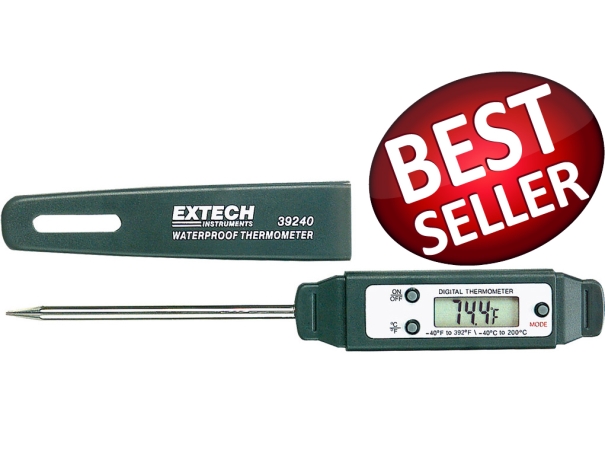
Key Features to Consider When Selecting a Lab Thermometer
1. Temperature Range
Choose a thermometer that covers the full range of your intended application. For example, cryogenic experiments require thermometers that operate at extremely low temperatures.
2. Accuracy
For most laboratory procedures, high precision is non-negotiable. Check the manufacturer's accuracy specification (e.g., ±0.1°C).
3. Response Time
Fast response is crucial when working with dynamic systems or short-lived reactions.
4. Calibration Options
Look for models that allow recalibration or come pre-calibrated with NIST certification.
5. Material Compatibility
If you're working with corrosive substances, choose thermometers with chemically resistant probes (e.g., Teflon-coated).
6. Data Logging and Connectivity
For research and documentation, digital thermometers with USB, Bluetooth, or Wi-Fi connectivity are ideal.