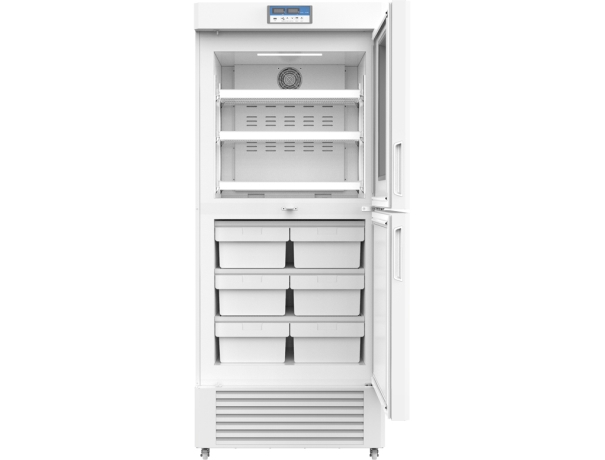
Laboratory cold storage is not a simple choice between “a fridge” and “a freezer”.
Different samples, reagents, medicines and research materials require different temperature conditions. Some products must be refrigerated but never frozen. Others require frozen storage, ultra-low temperature storage or a separate cold-storage system with continuous monitoring and alarms.
Choosing the wrong unit can lead to damaged samples, invalid test results, wasted stock, safety risks and loss of valuable research material.
This guide explains how to decide whether your laboratory needs a refrigerator, freezer, ultra-low freezer or combined refrigerator-freezer unit.
Start with the Material Being Stored
Before comparing models, identify exactly what will be stored.
Examples include:
- Reagents
- Vaccines
- Medicines
- Biological samples
- Enzymes
- Culture media
- Diagnostic samples
- Blood products
- Plasma
- DNA or RNA samples
- Proteins
- Cell culture materials
- Chemicals
- Reference materials
- Quality-control samples
- Food or environmental samples
The storage requirement should come from the product label, method, manufacturer’s instructions, laboratory SOP or applicable quality procedure.
Never assume that all biological products need ultra-low temperature storage.
Many refrigerated vaccines, for example, should be stored at +2°C to +8°C and should not be frozen.
Refrigerator, Freezer or Ultra-Low Freezer?
The first decision is the required temperature category.
Laboratory Refrigerator
A laboratory refrigerator is used when materials require controlled refrigerated storage.
Typical uses include:
- Reagents
- Medicines
- Vaccines
- Culture media
- Temperature-sensitive samples
- General laboratory materials requiring refrigeration
Many pharmacy and vaccine refrigerators are designed around the +2°C to +8°C cold-chain range, but not every laboratory material uses this range. The exact requirement must always be checked for the stored product.
A laboratory refrigerator may include:
- Fan-assisted air circulation
- Digital temperature display
- High and low temperature alarms
- Door-open alarm
- Lockable door
- Data logging
- Remote alarm contacts
- Drawers or shelves
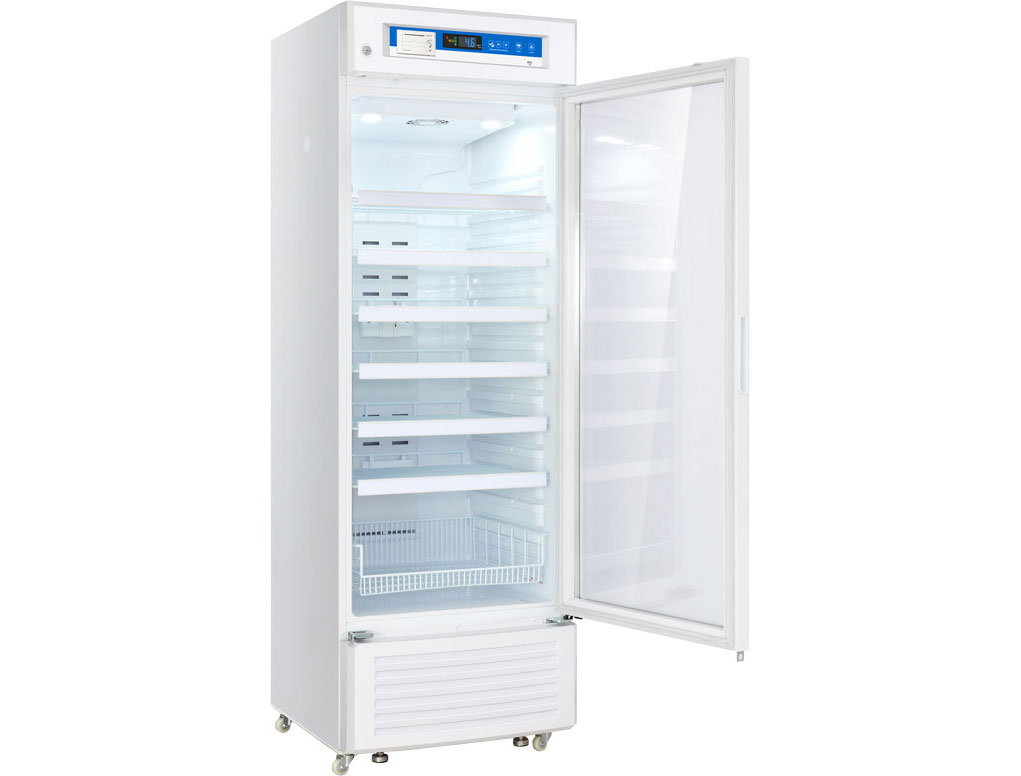
- Solid or glass door options
Laboratory Freezer
A laboratory freezer is used when samples or materials require frozen storage.
Typical uses include:
- Biological samples
- Reagents requiring frozen storage
- Long-term sample preservation
- Some diagnostic materials
- Enzymes and proteins, depending on product instructions
- Research samples
Common freezer temperature ranges may include approximately:
The correct setpoint depends on the material, storage duration and laboratory procedure.
Ultra-Low Temperature Freezer
An ultra-low temperature freezer, often called a ULT freezer, is used for very low temperature storage, commonly around:
ULT freezers may be used for:
- Long-term biological sample storage
- Biobanking
- Sensitive research samples
- Certain biologics
- Some molecular biology materials
- Specialist pharmaceutical or research applications
Do not buy a ULT freezer unless the stored material actually requires ultra-low temperature storage. ULT systems consume more energy, require more maintenance planning and need stronger monitoring and backup procedures.
Combined Laboratory Refrigerator-Freezer
A combined refrigerator-freezer includes separate refrigerated and frozen compartments in one unit.
It may be useful when:
- Laboratory space is limited
- Small quantities require both refrigeration and freezing
- A satellite laboratory needs local cold storage
- Separate full-size units are not justified
- Materials can be safely stored in separate compartments
However, a combined unit is not always the best choice for critical materials. If one system fails, both compartments may be affected, depending on the design.
For high-value or critical stock, separate dedicated units may provide better risk separation.
Match Storage Type to Material Risk
Routine Reagents
Routine reagents may require either refrigerated or frozen storage depending on the manufacturer’s instructions.
Important considerations:
- Required temperature range
- Shelf life after opening
- Light sensitivity
- Freeze-thaw sensitivity
- Container size
- Frequency of access
Vaccines and Medicines
Vaccines and medicines require strict storage according to their product instructions.
Many refrigerated vaccines must be maintained between +2°C and +8°C, protected from freezing and stored in a validated pharmaceutical refrigerator rather than a domestic fridge.
Key requirements may include:
- Dedicated medical or pharmacy refrigerator
- Lockable storage
- Continuous or regular temperature monitoring
- Min/max temperature recording
- Door-open alarms
- Written cold-chain procedures
- Response plan for temperature excursions
Biological Samples
Biological samples may require refrigerated, frozen, ultra-low or cryogenic storage depending on sample type and use.
Consider:
- Sample value
- Required storage duration
- Sensitivity to freeze-thaw cycles
- Required recovery after storage
- Backup capacity
- Inventory tracking
- Risk if the unit fails
Blood Products and Plasma
Blood products and plasma may require specialised storage and monitoring according to clinical, regulatory or laboratory procedures.
Do not select a general-purpose refrigerator or freezer without checking the exact storage and documentation requirements.
Flammable or Volatile Materials
Flammable materials should not be placed in a standard domestic-style refrigerator or freezer.
If flammable materials are stored cold, the unit must be suitable for that purpose.
There is an important difference between:
- Spark-free or flammable-material storage units
- Explosion-proof units
Spark-free units are generally designed to reduce ignition sources inside the storage chamber. Explosion-proof units are designed for more demanding hazardous environments and may require different construction and installation.
Always match the equipment to the chemical, container type, vapour risk and installation environment.
Temperature Range Is Only the First Specification
When buying laboratory cold storage, do not evaluate only the lowest or highest temperature.
Also check:
- Temperature stability
- Temperature uniformity
- Recovery after door opening
- Alarm limits
- Sensor accuracy
- Data logging
- Ambient operating range
- Defrost behaviour
- Air circulation
- Load effect
A freezer that can reach -40°C when empty may not perform the same way when heavily loaded or opened frequently.
Temperature Uniformity and Air Circulation
Temperature uniformity describes how consistent the temperature is across the chamber.
This matters because products placed near the door, back wall, top shelf or bottom shelf may experience different conditions.
Good air circulation helps reduce hot or cold spots.
When loading a refrigerator or freezer:
- Do not block internal vents.
- Do not pack items tightly against walls.
- Leave space around packages.
- Avoid overloading shelves.
- Keep frequently used items accessible.
- Keep temperature-sensitive stock away from unstable zones unless validated.
Vaccine storage guidance specifically notes that packages should have enough space for air circulation and should be kept away from side and back walls.
Capacity: Usable Storage Matters More Than Total Volume
Do not choose capacity only by litre rating.
Usable capacity depends on:
- Shelf layout
- Drawer layout
- Basket size
- Internal fans and vents
- Door storage restrictions
- Required spacing
- Package dimensions
- Inventory system
- Access frequency
- Future growth
A good rule is:
Choose enough capacity for current stock, safe spacing and realistic growth, but avoid unnecessary oversizing.
Oversized units waste space, energy and budget. Undersized units become overloaded and unstable.
Upright, Undercounter or Chest Freezer?
Upright Units
Upright refrigerators and freezers provide easy access and are useful in busy laboratories.
Advantages:
- Easier organisation
- Shelves or drawers
- Faster access
- Suitable for frequent use
Limitations:
- Door openings can release more cold air
- May recover more slowly if opened frequently
- Requires floor space
Undercounter Units
Undercounter units are useful for small laboratories or local workstations.
Advantages:
- Saves space
- Convenient access near the bench
- Suitable for lower-volume storage
Limitations:
- Lower capacity
- Ventilation clearance must be checked
- Not ideal for large or critical inventories
Chest Freezers
Chest freezers may reduce cold-air loss when opened and can provide efficient frozen storage.
Advantages:
- Can be energy efficient
- Good for long-term bulk storage
- Less cold-air spill during opening
Limitations:
- Harder inventory access
- Risk of buried samples
- Less convenient for frequent use
- May need racks, baskets and inventory control
Solid Door or Glass Door?
Glass Door
A glass door allows users to see contents before opening the unit.
This may reduce door-opening time in some workflows.
However, glass doors may provide lower insulation than solid doors depending on the design and may not be suitable for light-sensitive products.
Solid Door
A solid door may provide better insulation and protection from light.
It is often preferable for sensitive materials, critical storage and lower-temperature units.
Choose the door type according to:
- Product sensitivity
- Access frequency
- Need for visibility
- Insulation requirement
- Security
- Laboratory workflow
Alarms and Monitoring
For critical storage, alarms and monitoring are not optional extras.
Important features may include:
- High temperature alarm
- Low temperature alarm
- Door-open alarm
- Power-failure alarm
- Sensor-failure alarm
- Audible alarm
- Visual alarm
- Remote alarm contacts
- Data logging
- USB export
- Network monitoring
- Battery-backed alarm system
- Min/max temperature recording
For vaccines, UK care guidance states that vaccine fridges should be secure and maintained between +2°C and +8°C.
For high-value samples, consider independent monitoring in addition to the unit’s internal controller.
Backup and Failure Planning
Every laboratory cold-storage system should have a failure plan.
Ask:
- What happens during a power failure?
- Who receives alarms out of hours?
- Is backup power available?
- Is another unit available for emergency transfer?
- How will temperature excursions be assessed?
- Are emergency contacts documented?
- Are samples labelled and organised for rapid relocation?
- Is the inventory system up to date?
For critical stock, buying the unit is only one part of the risk-control plan.
Placement and Installation
Correct placement affects performance and reliability.
Before installation, check:
- Doorway and corridor access
- Floor or bench strength
- Ventilation clearance
- Ambient temperature range
- Heat sources nearby
- Direct sunlight
- Electrical supply
- Emergency power availability
- Noise
- Heat output
- Service access
- Door-opening clearance
Avoid placing cold-storage units next to ovens, radiators, direct sunlight or poor ventilation.
The existing article correctly recommends leaving ventilation clearance and avoiding direct sunlight and heating vents.
Maintenance and Good Practice
Routine maintenance helps protect stored materials and extend equipment life.
Procedures may include:
- Checking door seals
- Cleaning condenser filters or fins
- Removing ice build-up
- Defrosting where required
- Checking alarms
- Reviewing temperature records
- Cleaning internal surfaces
- Checking inventory
- Avoiding overloading
- Keeping vents clear
- Testing backup response procedures
For ULT freezers, published laboratory sustainability guidance recommends planned defrosting and cleaning filters or fins as part of freezer management.
Combined Fridge-Freezer: When It Makes Sense
A combined refrigerator-freezer may be suitable when:
- Storage quantities are modest
- Space is limited
- Both refrigerated and frozen storage are needed locally
- Materials are not highly critical
- Separate alarms and temperature displays are available
- Compartments are clearly separated
A combined unit may be less suitable when:
- Samples are high value
- Failure of one unit would affect critical work
- Refrigerated and frozen materials require separate monitoring
- Large capacity is needed
- One compartment is opened very frequently
- Compliance requirements demand dedicated equipment
For critical applications, separate dedicated refrigerator and freezer units may be safer.
Questions to Ask Before Buying
Before selecting a lab refrigerator or freezer, ask:
- What materials will be stored?
- What exact temperature range is required?
- Can the materials be frozen?
- Are freeze-thaw cycles harmful?
- Is ultra-low storage genuinely required?
- Is the unit for routine or critical storage?
- What capacity is needed without overloading?
- How often will the door be opened?
- Are alarms and data logging required?
- Is independent monitoring needed?
- Are materials flammable or volatile?
- Is spark-free or explosion-proof equipment required?
- What happens during power failure?
- What backup storage is available?
- What maintenance and service support are required?
Common Buying Mistakes
Common mistakes include:
- Assuming vaccines require -86°C
Using a domestic refrigerator for critical laboratory storage - Choosing capacity only by litre rating
- Overloading shelves and blocking airflow
- Confusing spark-free with explosion-proof
- Ignoring door-opening recovery
- Relying only on the internal display
- Failing to plan independent monitoring
- Not having a power-failure response plan
- Buying a ULT freezer when refrigerated storage is enough
- Choosing a combined fridge-freezer for critical stock without risk assessment
- Ignoring maintenance, filters, ice build-up and door seals
Laboratory Refrigerators and Freezers from MUNRO Scientific
MUNRO Scientific supplies laboratory refrigerators, laboratory freezers and cold-storage solutions for research, medical, pharmaceutical, educational and industrial laboratories.
Available options may include refrigerated storage, frozen storage, combined refrigerator-freezer units, pharmacy refrigerators, blood-bank storage and ultra-low temperature solutions.
Contact MUNRO Scientific with details of the materials, required temperature range, storage volume, monitoring needs and installation conditions to identify suitable cold-storage equipment.
What is the difference between a laboratory refrigerator and a laboratory freezer?
A laboratory refrigerator is used for controlled refrigerated storage, often around +2°C to +8°C depending on the material. A laboratory freezer is used for frozen storage, commonly around -20°C, -30°C or lower, depending on the application.
Do vaccines need to be stored at -86°C?
Not usually. Many refrigerated vaccines must be stored between +2°C and +8°C and should not be frozen. Always follow the manufacturer’s storage instructions for the specific vaccine.
When should a laboratory use an ultra-low temperature freezer?
An ultra-low temperature freezer should be used when samples require very low temperature storage, commonly around -80°C, such as certain biological samples, research materials or specialist products.
Is a combined laboratory fridge-freezer a good option?
A combined fridge-freezer can be useful where space is limited and storage quantities are modest. For critical or high-value samples, separate dedicated units may provide better risk separation.
Can flammable materials be stored in a standard laboratory refrigerator?
No. Flammable or volatile materials require suitable cold-storage equipment, such as a spark-free or explosion-proof unit depending on the material and risk assessment.
Why is temperature monitoring important in lab refrigerators and freezers?
Temperature monitoring helps identify excursions, equipment faults, door-open events and power failures before stored materials are damaged or invalidated.