Mixing is a fundamental operation in almost every laboratory workflow. While the market offers a vast array of magnetic stirrers, selecting the correct instrument—whether for qualitative analysis or quantitative chemical processes—is critical for achieving reproducible results. Magnetic stirrers utilize inert magnetic bars (fleas) paired with standard glass containers to create a uniform liquid combination.
For applications requiring simultaneous temperature control, a laboratory hotplate stirrer is the ideal dual-function solution. Investing time in understanding the specific requirements of your lab activities will ensure you choose a model that optimizes your stirring efficiency.
Choosing the most appropriate magnetic stirrer according to your application ensures that your solutions are stirred optimally. Invest some effort as well as time in determining which model is appropriate for your lab activity, given the quantity of models of magnetic stirrers available.
Different kinds of magnetic stirrers:
By being familiar with the various accessible options, you can make the unit selection process faster and easier.
- Multi-Places magnetic stirrers:
Many beakers or flasks can be simultaneously heated and stirred by this type of stirrer. The conditions of reaction may be adjusted to be constant across all samples individually due to the features of this stirrer. 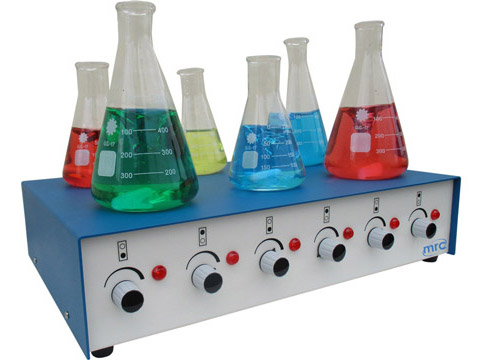
- Laboratory Digital Hotplates/ Laboratory magnetic Stirrers:
These stirrers include LCD or LED panels that indicate temperature, rotation speed, etc. These digital units include an electronic speed controller that maintains a steady pace. They allow simple adjustment till desired target value is attained. 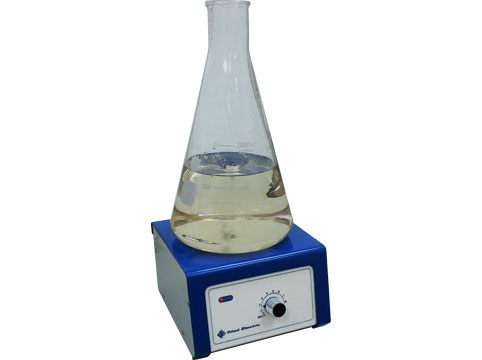
- Analog magnetic Stirrers:
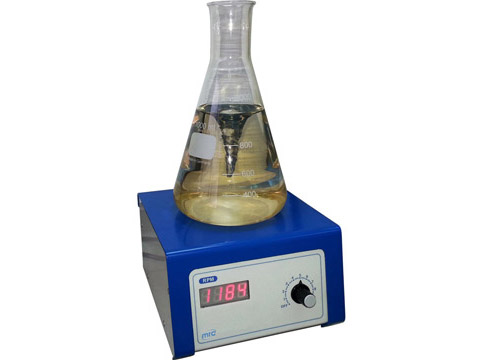
The majority of analog magnetic stirrers have electronic speed control to maintain consistent speed regardless of the sample load. These stirrers have poor heat temperature stability.
Key Technical Parameters to Consider Before Purchasing
Before upgrading your laboratory infrastructure, audit your daily operations and consider the following technical specifications:
Temperature Range & Heating Capability: If your daily operations require heating and stirring simultaneously, a magnetic hotplate stirrer is essential. Consider the required heat output and adjustable temperature settings. Metal or ceramic hotplates can easily reach temperatures between 350°C and 500°C. For maximum uniform heating, choose models compatible with external heating blocks.
RPM (Revolutions Per Minute): Heating and mixing fluids at a steady rotation rate is crucial. Standard magnetic hotplate stirrers operate at baseline speeds of roughly 1,000 RPM, while more robust, heavy-duty units can achieve up to 2,000 RPM. A brushless motor is highly recommended for consistent stirring and increased longevity.
Volume and Viscosity: Compact magnetic stirrers are generally suitable for standard capacities—up to 3 liters for basic water-like substances, 1 liter for surfactant solutions, and 250ml for emulsions. Always verify the maximum carrying capacity of the device. Note: If you are working with thick suspensions or highly viscous solutions, mechanical overhead stirrers are required instead of magnetic ones.
Advanced Controls: For operations requiring continuous monitoring (such as buffered systems), look for magnetic hotplate stirrers compatible with external pH or temperature probes. Digital units with electronic feedback controls provide the highest level of stability.
What is Laboratory Hotplate & Stirrers
A laboratory hotplate with a magnetic stirrer keeps liquids circulating as they are heated for a faster, more even reaction.
Overhead stirrers can be used when working with thick suspensions, huge sample quantities, etc., because mechanical stirring is required.