Peristaltic pumps give the benefit that the transferred liquid stays contained inside the tube during the whole transfer procedure.
As part of their regular operations, labs everywhere are required to pump and distribute culture medium, buffer solutions, and other fluids. The greatest difficulty is in transferring liquids with the highest accuracy and without contaminating them.
Some pumps, such as those with valves, are prone to contamination and even clogging when treating difficult-to-handle liquids or suspensions.
As a result of these factors, it is not surprising that peristaltic pumps have become a popular option in labs for dispensing a broad range of fluids throughout time.
How does a peristaltic pump work?
During peristaltic pumping, a flexible tubing typically made of silicone is deformed mechanically to flow liquid through the tube. Peristalsis is the process used to compress tubes as the body transports fluid through the digestive tract. Moving fluids around is a common concept employed by many biological systems, including the digestive system.
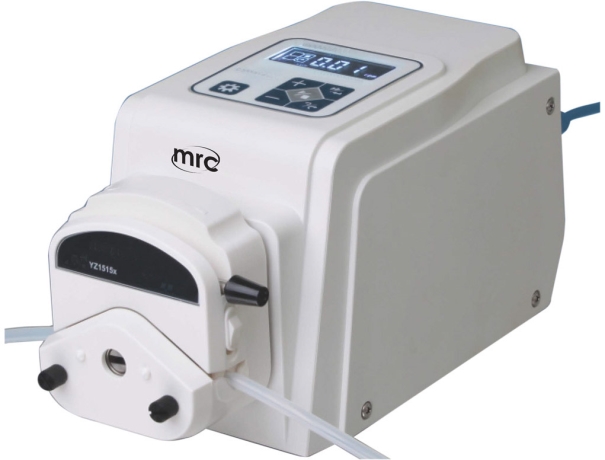
Benefits of a peristaltic pump:
- Cheap and easy maintenance:
The components of a peristaltic pump are less susceptible to contamination or damage from polluted fluids. Due to the pump's tiny size, fewer components must be changed, and maintenance is less expensive and simpler.
- Gentle delivery:
Even blood can be transferred with a peristaltic pump without damaging the integrity of the sample. The pump is also capable of transporting chemically aggressive liquids without the risk of damaging the pump's parts as a result of the transfer.
- Closed-loop system:
The fluid in the peristaltic pump is always contained inside the tube. As a result, there is a reduced possibility of contamination for both the product and the equipment. The pump is capable of moving liquids that are chemically reactive without damaging any of the pump's components. The tubing may also be readily cleaned and disinfected after each usage. This approach eliminates the possibility of infection since it provides sterile conditions.
Checklist before buying a peristaltic pump:
- Know your workspace:
Unfortunately, in many laboratories peristaltic pumps are difficult to program and oversized. That is why know how much space is available in the laboratory.
- Know your tubing material:
In the case of peristaltic pumps, choose the appropriate tubing material to ensure that the pump elements that come into touch with the fluids are suitable for it.
- Know your requirements:
Before deciding on the sort of fluid, you need to handle or the level of accuracy you want, you must first determine your sterility and viscosity requirements.