An anaerobic chamber creates an oxygen-free environment ideal for cultivating and working with oxygen-sensitive microorganisms and materials. It allows researchers to process, incubate, and examine samples without exposure to atmospheric oxygen, ensuring accurate and reliable results.
How it works / Principles of operation
- Atmosphere Control:
- Uses programmable logic controllers (PLC) for precise and automated atmosphere management.
- A "Go Anaerobic" automatic purging system rapidly establishes anaerobic conditions.
- Equipped with low gas consumption features, using anaerobic mixed gas and nitrogen for cost-efficient operation.
- Functional Features:
- Includes glove ports or airlocks for safe transfer of materials.
- Vacuum-capable transfer chambers for efficient sample handling.
- Integrated drying train canisters and programmable catalyst heaters maintain humidity and reduce oxygen levels.
- Options for monitoring anaerobic conditions with downloadable data for quality assurance.
- Ease of Use:
- Compact footprint for bench space efficiency.
- Color touch-screen control panels for monitoring temperature, humidity, and other parameters.
- Ethernet-enabled for remote access to control systems.
Industries/Applications/Tests
Anaerobic chambers are widely used in:
- Microbiology: Growing and isolating anaerobic bacteria for research and diagnostics.
- Pharmaceuticals: Testing for anaerobic contamination in drug production.
- Food and Beverage: Monitoring anaerobic organisms in food safety studies.
- Environmental Studies: Examining anaerobic microbial activity in soil, water, and waste treatment.
- Clinical Research: Studying gut microbiome and anaerobic pathogens for healthcare applications.
- Industrial Applications: Investigating anaerobic processes like fermentation and biogas production.
Available types
- Compact Workstations
- Small footprint, ideal for personal use or labs with limited space.
- Features touch screens, low gas consumption, and integrated monitoring systems.
Suitable for transitioning from anaerobic jars to more advanced workstations.

- Large Chambers:
- Accommodate high workloads with significant plate capacity (e.g., 240–270 Petri dishes).
Provide a generous working area and advanced gas efficiency.
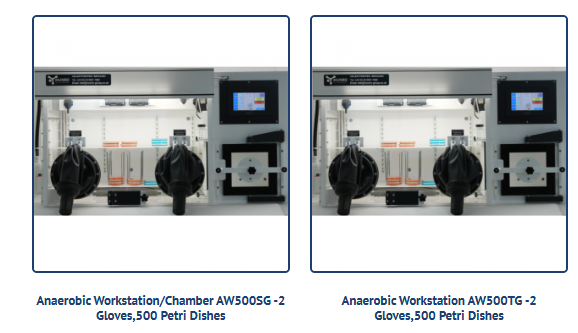
- X-Large Chambers:The workstation is very economical to run, as two gas supplies are used.The AW800TGRF4P will comfortably incubate up to 800 Petri dishes and comes complete with catalyst and plate holders