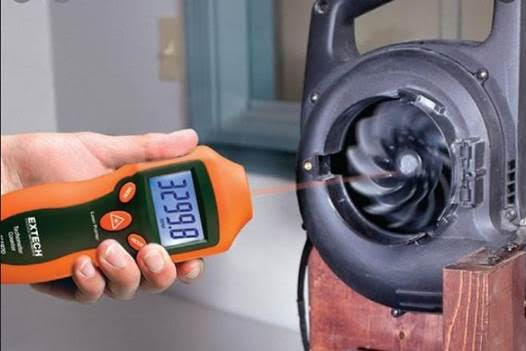
As technology evolves, the debate between analog and digital tachometers continues. Which one is better? Let’s dive deep to uncover the strengths and weaknesses of each.
What is a Tachometer?
A tachometer is a device that measures rotational speed, typically expressed in revolutions per minute (RPM). These instruments are essential in industries such as automotive, manufacturing, and aviation, ensuring efficiency and safety.
How Tachometers Work
Tachometers operate by sensing rotation through a mechanical, optical, or electronic mechanism. Analog models use physical pointers, while digital ones process data electronically to display readings.
Analog Tachometers
Overview and History
Analog tachometers have been around for decades, offering a simple yet effective way to measure speed. They are commonly found in older vehicles and mechanical systems.
Features and Components
- Needle and dial display.
- Mechanical or magnetic drive.
- Often powered by the machine’s rotation.
Pros of Analog Tachometers
- Simplicity: Easy to understand without prior training.
- Durability: Built to last in rugged environments.
- No Power Dependency: Functions without external electricity.
Cons of Analog Tachometers
- Limited Accuracy: Prone to minor inaccuracies.
- Difficult Calibration: Requires manual adjustments.
- Bulky Design: Less compact than digital counterparts.
Digital Tachometers
Overview and Evolution
Digital tachometers represent modern technology, offering advanced features and sleek designs. They are now standard in many industries due to their accuracy and versatility.
Features and Components
- LCD or LED displays.
- Microprocessors for data processing.
- Compatibility with additional sensors.
Pros of Digital Tachometers
- High Accuracy: Eliminates guesswork with precise readings.
- Versatility: Often includes additional features like memory storage.
- User-Friendly: Compact and easy to interpret.
Cons of Digital Tachometers
- Power Dependency: Requires batteries or external power.
- Fragility: Sensitive to environmental conditions.
- Higher Cost: More expensive initially than analog options.
Accuracy Comparison
Digital tachometers are unmatched in precision, making them ideal for applications demanding exact measurements. Analog models, while reliable, may fall short in high-stakes scenarios.
Ease of Use
Analog tachometers are intuitive and straightforward, perfect for users who prefer simplicity. Digital tachometers, on the other hand, are designed for convenience but might overwhelm less tech-savvy individuals.
Durability and Maintenance
Analog devices are robust, often outlasting their digital counterparts in harsh environments. Digital tachometers require careful handling and periodic updates to maintain functionality.
Suitability for Different Applications
- Analog: Favored in classic automotive systems and industries requiring rugged devices.
- Digital: Preferred in high-tech fields like aerospace and precision engineering.