An anemometer is a precision instrument used to measure wind speed and sometimes direction. It is essential in meteorology, wind energy, aviation, HVAC systems, and environmental monitoring. This comprehensive Q&A guide explains how anemometers work, their components, performance specifications, calibration, and field applications.
1. How Does an Ultrasonic Anemometer Measure Wind Speed Without Moving Parts?
An ultrasonic anemometer measures wind by transmitting high-frequency sound pulses between pairs of transducers. The time it takes for sound to travel between them changes depending on wind velocity and direction.
- Principle: Time-of-flight differential method.
- Advantage: No moving parts, eliminating mechanical wear.
- Accuracy: ±0.1 m/s or better in high-end models.
- Use case: Ideal for long-term meteorological or offshore installations.
2. What Units Are Used to Measure Wind Speed?
Common units include:
- Meters per second (m/s) – standard SI unit.
- Kilometers per hour (km/h) – used in weather reports.
- Knots (kt) – nautical and aviation use (1 kt = 0.5144 m/s).
- Feet per minute (ft/min) – used in HVAC systems.
Conversion example:
1 m/s = 3.6 km/h = 1.943 knots = 196.85 ft/min.
3. What Is the Measurement Range and Accuracy of an Anemometer?
Typical ranges:
- Cup or vane anemometers: 0.3–60 m/s.
- Ultrasonic models: 0–75 m/s or higher.
Accuracy depends on design: - ±0.2 m/s or ±2% of reading for ultrasonic types.
- ±0.3 m/s for mechanical types under laboratory calibration.
4. What Is the Minimum and Maximum Wind Speed That Can Be Measured?
- Minimum (cut-in speed): 0.3–0.5 m/s for cup models, 0 m/s for ultrasonic.
- Maximum: Up to 75–90 m/s for reinforced industrial-grade units.
For storm research, high-range models are used with reinforced bearings or transducers.
5. What Is the Response Time of the Sensor?
Response time defines how quickly the instrument reacts to wind changes.
- Mechanical models: 0.25–1 second (depends on inertia).
- Ultrasonic models: 0.05–0.1 second (virtually instantaneous).
Fast response is critical for turbulence and gust analysis.
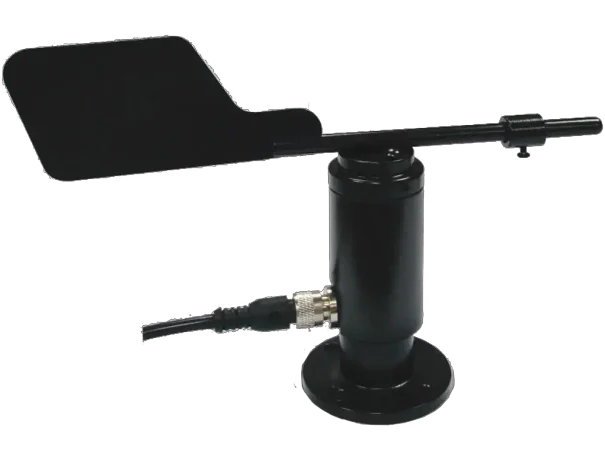
6. How Is Wind Direction Measured in Combined Anemometer and Wind Vane?
Combined units include a wind vane with a potentiometer or magnetic encoder.
- Range: 0–360°.
- Resolution: 1° or better.
- Output: Analog (0–5 V) or digital (RS-485, Modbus).
Ultrasonic models measure both speed and direction from airflow vectors.
7. How Does Air Temperature or Humidity Affect Measurement Accuracy?
- Ultrasonic sensors use air temperature to correct sound speed, improving accuracy.
- Mechanical sensors are less sensitive but may experience density-related drag effects.
- Humidity slightly alters air density and thus affects calibration in high-precision systems.
8. What Is the Starting Threshold (Cut-in Speed) of a Cup or Vane Anemometer?
The cut-in speed is the lowest wind speed that initiates rotation.
- Standard range: 0.3–0.5 m/s.
- Influenced by bearing friction and cup geometry.
High-quality bearings and balanced cups reduce the threshold and increase low-speed sensitivity.
9. What Materials Are Used in the Cups or Vanes?
Durability and inertia depend on materials:
- Plastic (polycarbonate, ABS) – lightweight, economical.
- Aluminum or carbon fiber – robust for harsh environments.
- Stainless steel – used in corrosive or offshore locations.
Material selection affects response time and mechanical longevity.
10. How Is the Anemometer Calibrated for Accurate Measurements?
Calibration ensures measurement traceability to international standards.
- Wind tunnel calibration at defined speeds (ISO 17713-1).
- Calibration points typically at 4–6 different wind speeds.
- Data stored as a correction factor (e.g., calibration constant “k”).
Annual recalibration maintains compliance and accuracy.
11. What Is the Typical Lifespan of Bearings or Moving Parts?
- Precision ball bearings: 3–5 years under continuous use.
- Sealed stainless bearings: up to 10 years.
Maintenance intervals depend on dust, temperature, and vibration.
Ultrasonic models have no bearings and can operate 10+ years with minimal service.
12. How Are Data Signals Transmitted?
Common output formats:
- Analog voltage: 0–1 V, 0–5 V, 0–10 V.
- Frequency/pulse output: for counter-based loggers.
- Digital protocols: RS-232, RS-485, Modbus RTU, SDI-12, NMEA 0183.
- Wireless: via radio, Bluetooth, or LoRa for remote sites.
Signal type depends on application and integration requirements. -
13. Is the Anemometer Equipped With Built-in Temperature or Pressure Sensors?
Many modern Anemometers integrate:
- Temperature sensor (thermistor or PT100).
- Barometric pressure sensor.
- Humidity sensor in multiparameter models.
Such integration improves environmental compensation and reduces total system cost.
14. How Does Sampling Frequency Affect Accuracy in Turbulent Flow?
Sampling rate determines how well the sensor captures rapid wind fluctuations.
- 1–10 Hz: Standard for meteorological monitoring.
- 20–50 Hz: Required for turbulence or gust studies.
Ultrasonic models can sample at up to 100 Hz, enabling high-resolution wind analysis.
15. What Is the Correlation Between Wind Speed and Direction Precision?
Direction error often increases at low speeds due to cup inertia or turbulence.
- At >2 m/s: Direction error typically <2°.
- At <1 m/s: May rise to ±5°.
Ultrasonic sensors calculate direction vectorially, maintaining precision even in low flows.
16. How Does Temperature Compensation Work in Ultrasonic Models?
Sound speed in air changes by about 0.6 m/s per °C. Ultrasonic anemometers measure air temperature continuously to correct this effect.
- Equation: c = 331.3 + (0.606 × T°C).
Without compensation, a 10°C error would shift speed by ~6 m/s.
17. What Standards Define Anemometer Accuracy?
Primary standards:
- IEC 61400-12-1: Wind turbine power performance testing.
- WMO No. 8: Meteorological Instruments and Methods of Observation.
- ISO 17713-1: Calibration and performance of cup anemometers.
Compliance ensures international comparability and traceability.
18. What Is the Effect of Cup Size or Vane Length on Sensitivity?
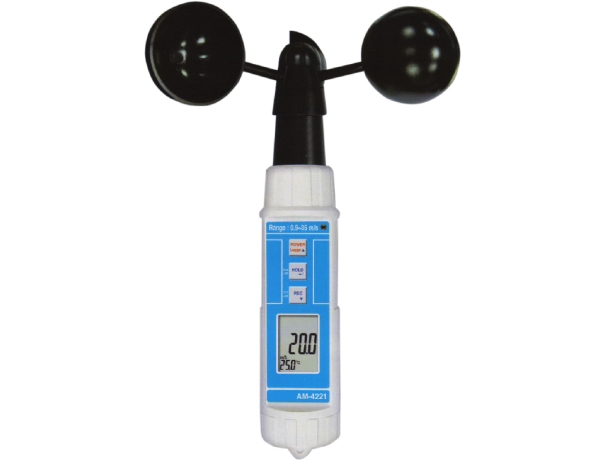
Larger cups or vanes increase torque and improve low-speed sensitivity but reduce high-speed response due to drag.
Shorter vanes or smaller cups offer faster response but require stronger winds to start. Design balances inertia and aerodynamic efficiency.
19. How Are Ultrasonic Transducers Protected Against Rain or Frost?
- Hydrophobic coatings repel water droplets.
- Heating elements prevent ice buildup in cold regions.
- Drainage grooves ensure free airflow around sensors.
Proper shielding prevents signal attenuation and maintains accuracy in all weather.
20. What IP Protection Classes Are Typical for Anemometers?
Ingress protection (IP) defines dust and water resistance:
- IP65: Dust-tight, protected from low-pressure water jets.
- IP67: Immersion-resistant up to 1 meter for 30 minutes.
- IP68: Suitable for prolonged submersion or offshore exposure.
21. What Maintenance Schedule Ensures Long-term Reliability?
Recommended maintenance includes:
- Bearing lubrication or replacement every 12–24 months.
- Cleaning of cups or vanes from dust and insects.
- Checking electrical connectors for corrosion.
- Recalibration every 12 months for certified measurements.
22. What Output Types Are Available?
Common types:
- Analog (4–20 mA) for industrial PLCs.
- Digital (RS-485/Modbus, SDI-12) for automated stations.
- Frequency output for simple wind loggers.
Choice depends on data acquisition system and cable length.
23. How Is Data Logged or Connected to AWS or SCADA Systems?
Anemometers connect to:
- Automatic Weather Stations (AWS) via data loggers.
- Supervisory Control and Data Acquisition (SCADA) in wind farms.
- Cloud platforms via IoT gateways for remote access.
Data transmitted every 1–10 seconds depending on monitoring purpose.
24. How Can Calibration Data Be Stored Digitally?
Modern sensors store calibration coefficients internally.
- EEPROM or flash memory keeps slope and offset data.
- Ensures traceability and simplifies field replacement.
Digital storage avoids manual recalibration when swapping units.
25. Which Power Supplies Are Supported?
Typical power options:
- 5–24 V DC for low-power meteorological stations.
- 12–30 V DC for industrial systems.
- Solar-powered units with battery backup for remote sites.
Energy-efficient electronics allow long-term autonomous operation.
26. Which Anemometer Type Is Best for Specific Applications?
| Application | Recommended Type | Reason |
| Meteorological towers | Cup or ultrasonic | High accuracy, proven design |
| Wind turbines | Ultrasonic | No moving parts, low maintenance |
| HVAC systems | Vane | Measures low airspeed precisely |
| Research labs | 3D ultrasonic | Vector analysis of turbulence |
| Marine use | Ultrasonic or propeller | Resistant to salt and moisture |
27. How Does Icing or Dust Affect Performance?
- Icing increases mechanical resistance and causes false zero readings.
- Dust clogs bearings or obstructs sound paths.
Preventive heating, self-cleaning coatings, and regular maintenance minimize these effects.
28. How Can Anemometers Be Used in Wind Resource Assessment Campaigns?
In wind energy studies, anemometers measure speed profiles across tower heights (10 m to 100 m).
- Data averaged over 10-minute intervals.
- Used to calculate wind shear and power density.
IEC-compliant instruments ensure valid project financing data.
29. What Are the Operating Temperature and Altitude Limits?
- Temperature: -40°C to +70°C for industrial models.
- Altitude: Up to 4,000 m above sea level.
Electronics are temperature-compensated, and sealed housings prevent condensation.