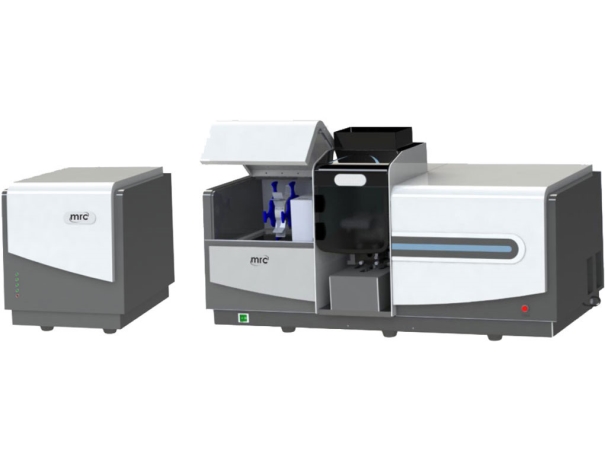
An Atomic Absorption Spectrophotometer (AAS) is a powerful analytical instrument used to determine the concentration of various elements in a sample with high sensitivity and accuracy. It is widely applied across diverse industries, including geology and mining, environmental monitoring, food and beverage analysis, forensic science, medical and clinical testing, and petrochemical analysis. AAS is valued for its versatility, sensitivity, and precision.
How Does an Atomic Absorption Spectrophotometer Work?
AAS operates by measuring the absorption of light by atoms in a sample as they transition between energy levels. This process, known as atomic absorption, enables the detection and quantification of a wide range of elements.
The basic components of an AAS include:
- Light Source: Typically a hollow cathode lamp or electrodeless discharge lamp that produces a specific wavelength of light to excite atoms in the sample.
- Sample Introduction System: Includes a nebulizer or graphite furnace for delivering the sample to the light source in an appropriate state.
- Monochromator/Spectrometer: Selects the specific wavelength of light absorbed by the atoms of the target element.
- Detector: Often a photomultiplier tube or CCD camera that measures the intensity of light after passing through the sample.
Applications of Atomic Absorption Spectrophotometer
Atomic Absorption Spectrophotometer is employed in a wide range of fields, including:
- Environmental Monitoring: Measuring heavy metals and pollutants in water, soil, and air samples.
- Food and Beverage Analysis: Determining nutrient levels, such as iron and zinc, in food products.
- Forensic Science: Detecting trace elements like lead or copper in gunshot residue and paint samples.
- Medical and Clinical Testing: Measuring elements like sodium, potassium, and zinc in biological samples.
- Industrial Quality Control: Ensuring the purity of products in pharmaceuticals, petrochemicals, and metals manufacturing.
What to Consider When Purchasing an AAS
If you are considering purchasing an atomic absorption spectrophotometer, here are key factors to evaluate:
- Elemental Analysis Requirements: Ensure the instrument supports the specific elements you need to analyze.
- Sample Type: Some AAS models are better suited for particular sample forms, such as solids or solutions with high concentrations.
- Detection Limits: Lower detection limits indicate higher sensitivity and suitability for trace element analysis.
- Cost: Prices can vary significantly based on features and capabilities. Choose a model that balances your analytical needs and budget.
Uses of Atomic Absorption Spectrophotometer
Atomic absorption spectrophotometers (AAS) are used for a wide range of applications, including:
Environmental and soil testing: AAS can be used to measure the concentrations of various elements in mines, water, soil, and air samples to determine their impact on the environment.
Food analysis: AAS is often used to analyze the elemental composition of food products, including the levels of vitamins, minerals, and other nutrients.
Industrial quality control: AAS is commonly used in industries such as pharmaceuticals, petrochemicals, and metals manufacturing to ensure the quality and purity of products.
Medical testing: AAS can be used to measure the levels of certain elements in human tissue samples, such as calcium in bone or iron in red blood cells, to help diagnose medical conditions.
Forensic analysis: AAS can be used to analyze trace elements in forensic samples, such as soil or paint, to help determine the location or origin of a crime.
Research and development: AAS is often used in research laboratories to analyze the elemental composition of various samples, including chemicals and biological materials.
How Atomic Absorption Spectrophotometer works?
An atomic absorption spectrophotometer (AAS) works by measuring the absorption of light by atoms in a sample as they are excited by a specific wavelength of light. The absorption of light is proportional to the concentration of the element being measured in the sample.
Here's a general overview of how an AAS works:
A light source, such as a hollow cathode lamp or an electrodeless lamp, produces a specific wavelength of light that is directed at the sample.
The sample is typically in the form of a solution, and is placed in a burner or atomizer where it is vaporized.
The atoms in the vaporized sample absorb the light from the light source, and the amount of absorption is measured by a detector.
The detector sends a signal to a computer, which calculates the concentration of the element based on the absorption measurement.
The results are displayed on a screen or printed out for analysis.
AAS instruments are highly sensitive and accurate, and can be used to measure the concentration of a wide range of elements in a variety of samples.
What to consider when purchase an Atomic Absorption Spectrophotometer
Atomic absorption spectrophotometers (AAS) are specialized analytical instruments that are used to determine the concentration of specific elements in a sample. If you are interested in purchasing an AAS, there are a few key factors to consider:
Type of element being analyzed: Different AAS instruments are designed to measure different elements, so it's important to choose a model that is suitable for your needs.
Type of sample: Some AAS instruments are better suited to certain types of samples, such as solid samples or high-concentration samples.
Detection limits: The lower the detection limit of an AAS instrument, the more sensitive it is and the better it is at detecting low concentrations of elements.
Cost: AAS instruments can vary significantly in price, depending on the features and capabilities of the instrument. It's important to consider your budget and choose a model that fits your needs and budget.
There are several companies that manufacture and sell AAS instruments, and they can be purchased through scientific instrument suppliers or directly from the manufacturer. It's a good idea to research and compare different models and suppliers before making a purchase.