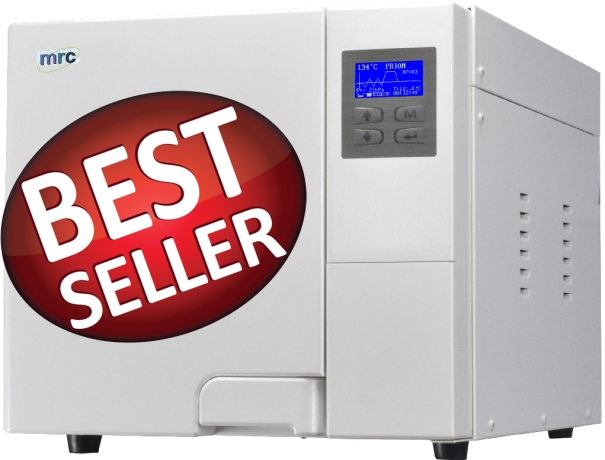
Autoclave sterilization is one of the most widely used methods for sterilizing laboratory instruments, glassware, media, waste and heat-resistant materials.
The method uses saturated steam under pressure to expose a load to a defined temperature for a defined time.
When the cycle is selected correctly and the load is prepared properly, steam sterilization can destroy microorganisms, including resistant bacterial spores. Steam sterilization is widely described as one of the most common and robust sterilization methods when used correctly.
However, autoclaving is not simply a matter of setting a temperature and pressing start.
A successful cycle depends on steam contact, air removal, load type, exposure time, packaging, drying, monitoring and correct operation.
This guide explains what laboratories need to know before relying on an autoclave sterilization cycle.
What Is Autoclave Sterilization?
Autoclave sterilization is a moist-heat sterilization process.
The autoclave uses pressurised steam to transfer heat into the load. The steam condenses on cooler surfaces inside the chamber and releases heat energy. This helps raise the temperature of the materials being sterilized.
The key principle is direct steam contact.
If steam cannot reach a surface, that surface may not be sterilized.
That is why loading, packaging, air removal and cycle selection matter as much as temperature.
Why Steam Under Pressure Is Used
Water boils at around 100°C at normal atmospheric pressure. An autoclave increases pressure inside the chamber so that steam can reach higher temperatures, commonly around 121°C or 134°C.
The pressure itself is not the sterilizing agent. The main sterilizing effect comes from saturated steam at high temperature contacting the load for enough time.
A useful way to think about it:
Steam carries the heat.
Pressure allows higher steam temperature.
Time allows the heat to act on the microorganisms.
If one of these conditions is wrong, the cycle may fail.
The Four Conditions Every Steam Sterilization Cycle Needs
1. Correct Temperature
Common steam sterilization temperatures include 121°C and 134°C.
The correct temperature depends on the autoclave, load type, packaging and application.
The existing Munro article lists standard temperatures such as 121°C, 134°C and 115°C, but the article should avoid presenting one setting as universal.
2. Correct Exposure Time
Exposure time is the period during which the load is held at the required sterilization temperature.
It is not the same as total cycle time.
Total cycle time may include:
- Air removal
- Heat-up
- Exposure
- Exhaust
- Drying
- Cooling
CDC cycle-time tables show that exposure times vary by sterilizer type and item type. For example, gravity displacement and dynamic-air-removal sterilizers use different exposure times for wrapped instruments and porous items.
3. Saturated Steam Contact
Steam must contact all surfaces that require sterilization.
Air trapped inside the chamber, inside packaging or inside hollow items can prevent steam penetration.
This is a common reason for failed sterilization.
4. Correct Load Preparation
The load must be arranged so steam can circulate.
Overloading, tight packing, blocked vents, sealed containers or unsuitable packaging can prevent proper steam penetration and drying.
Common Autoclave Cycle Temperatures
The following table should be presented as general guidance only, not as a substitute for the autoclave manual, item manufacturer instructions or laboratory SOP.
| Temperature | Typical use | Notes |
|---|
| 121°C | General laboratory loads, some media, waste and instruments | Exposure time depends on load type, sterilizer type and packaging |
| 134°C | Faster high-temperature cycles, often for compatible instruments | Common in dynamic-air-removal cycles where suitable |
| 115°C | Heat-sensitive materials in some specialised protocols | Less common and requires validated conditions |
Do not write that one temperature and time combination is always sufficient.
The correct cycle must be validated for the load.
Gravity vs Vacuum Autoclave Cycles
Autoclaves do not all remove air in the same way.
This matters because air prevents steam contact.
Gravity Displacement
In a gravity cycle, steam enters the chamber and pushes air out through a drain or vent.
Gravity cycles are often used for simple, unwrapped or liquid loads, depending on the autoclave design and procedure.
Limitations:
- Less effective air removal from complex loads
- Not ideal for many porous or wrapped loads
- Longer exposure may be required
- More sensitive to loading problems
Dynamic-Air-Removal or Pre-Vacuum
In a pre-vacuum or dynamic-air-removal cycle, air is actively removed before steam exposure.
This improves steam penetration into wrapped, porous or more complex loads.
CDC describes typical sterilization temperatures of 132°C to 135°C with exposure times of 3 to 4 minutes for porous loads and instruments in certain steam sterilization contexts.
Why This Matters
The same item may require a different cycle depending on the sterilizer type.
That is why copying a cycle from another autoclave can be unsafe.
What Can Be Sterilized in an Autoclave?
Autoclaves are suitable for many heat-resistant and moisture-resistant materials.
Typical laboratory loads include:
- Glassware
- Metal instruments
- Stainless-steel tools
- Certain plastics marked autoclavable
- Culture media
- Liquids in suitable containers
- Laboratory waste
- Pipette tips and boxes, if compatible
- Rubber items, if approved
- Textiles or porous materials, in suitable sterilizers
MUNRO’s autoclaves category presents benchtop and vertical autoclaves for laboratories, hospitals, universities, dental clinics and medical facilities, with compact and large-capacity options.
What Should Not Be Autoclaved?
Not every material is safe for steam sterilization.
Avoid autoclaving materials unless they are confirmed compatible.
Examples may include:
- Heat-sensitive plastics
- Sealed containers
- Volatile chemicals
- Flammable solvents
- Corrosive chemicals
- Bleach-containing waste
- Powders that may not allow steam penetration
- Oils and greases
- Electrical components
- Materials that react with water or steam
- Items not rated for pressure or heat
Autoclaving incompatible materials can cause melting, pressure build-up, chemical release, fire risk, chamber damage or sterilization failure.
Load Type Changes the Cycle
The load type is one of the most important factors in autoclave sterilization.
Solid Instruments
Solid, unwrapped instruments are generally easier to sterilize than wrapped, porous or hollow items.
However, they still need correct cleaning before sterilization.
Sterilization is not a replacement for cleaning.
Wrapped Instruments
Wrapped instruments require steam to penetrate the packaging and reach the instruments.
Drying is also important because wet packs can become contaminated after the cycle.
Porous Loads
Porous loads include materials such as fabrics, dressings or items wrapped in porous materials.
UK Health Technical Memorandum guidance discusses porous-load sterilizers used for towels, gowns, dressings and packaged medical or surgical equipment.
Liquids
Liquids require special cycles because they heat and cool differently from dry goods.
Important points:
- Containers should not be sealed tightly.
- Fill volume must allow expansion.
- Cooling time can be long.
- Boil-over risk must be controlled.
- Liquid cycles may not include vacuum drying.
- Temperature inside the liquid may lag behind chamber temperature.
Waste
Laboratory waste should be treated according to local biosafety and waste procedures.
Waste loads are often difficult because they may be bulky, mixed and poorly penetrated by steam.
Overfilled waste bags can prevent steam penetration.
Cleaning Comes Before Sterilization
An autoclave cycle is not a cleaning process.
Organic matter, soil, biofilm, grease, salts or residues can protect microorganisms from steam exposure.
Before sterilization, items should be cleaned, rinsed and arranged correctly.
This is especially important for:
- Instruments
- Glassware
- Reusable tools
- Hollow items
- Items with hinges, grooves or cavities
The process should be:
Clean first.
Inspect.
Pack or load correctly.
Sterilize.
Dry.
Store correctly.
Skipping the cleaning step can make a technically correct cycle unreliable.
Indicators and Monitoring
Autoclave monitoring helps confirm that the process conditions were achieved.
It does not make a poor load safe, but it helps detect cycle problems.
Physical Monitoring
Physical monitoring includes the cycle printout or digital record.
It may include:
- Chamber temperature
- Chamber pressure
- Exposure time
- Cycle type
- Date and time
- Alarm events
- Operator or programme number
Chemical Indicators
Chemical indicators change when exposed to certain sterilization conditions.
They can show whether a pack or load has been exposed to steam conditions, but they do not prove sterility by themselves.
Biological Indicators
Biological indicators use resistant spores to challenge the sterilization process.
They are used for validation, routine monitoring in some applications and investigation of failures.
CDC guidance states that sterilizers are tested with biological and chemical indicators upon installation, relocation, redesign, major repair and after sterilization failure before routine use.
Drying Is Part of the Process
A cycle is not complete just because exposure time has ended.
For wrapped items, drying is important.
Wet packs can draw in contamination during handling or storage.
Drying depends on:
- Load type
- Packaging material
- Chamber loading
- Autoclave design
- Vacuum capability
- Cooling time
- Condensation control
- Door opening practice
Opening the autoclave too early can cause condensation or wet loads.
Why Autoclave Cycles Fail
The most useful part of this article should be practical: explaining real causes of failure.
| Problem | What it can cause | Typical reason |
|---|
| Load overloaded | Poor steam penetration | Too many items packed tightly |
| Air trapped in load | Cold spots | Wrong cycle or poor air removal |
| Wrong packaging | Steam cannot reach item | Non-porous or unsuitable material |
| Sealed bottles | Pressure build-up | Container cannot vent |
| Wet packs | Contamination risk after cycle | Poor drying or overloaded chamber |
| Wrong cycle chosen | Incomplete sterilization | Liquid cycle used for solids or opposite |
| Items not cleaned | Microbes protected by residue | Soil or organic matter remains |
| No monitoring | Failure not detected | No indicators or cycle record review |
| Door opened too early | Condensation and disturbance | Load not allowed to dry or cool |
| Incompatible material | Damage or hazard | Heat, steam or pressure sensitivity |
Autoclave Sterilization Is Not the Same as Disinfection
Sterilization and disinfection are not the same.
Sterilization is intended to destroy or remove all forms of microbial life, including spores.
Disinfection reduces microorganisms to a safer level but does not necessarily destroy all spores.
Healthcare sterilization literature distinguishes between sterilization, high-level disinfection and lower-level disinfection according to the intended use of the item. Critical items that contact sterile tissue require sterilization, while other items may require different levels of disinfection.
For laboratory work, the required level depends on the material, risk and intended reuse or disposal route.
Autoclaves from MUNRO Scientific
MUNRO Scientific supplies autoclaves for laboratories, hospitals, universities, dental clinics and medical facilities.
The range includes benchtop and vertical autoclaves in different capacities, including compact units and larger laboratory models. MUNRO also lists Class B and Class N autoclave options for different sterilization needs.
For best results, choose an autoclave according to load type, chamber size, cycle requirements, drying needs, documentation requirements and the intended application.