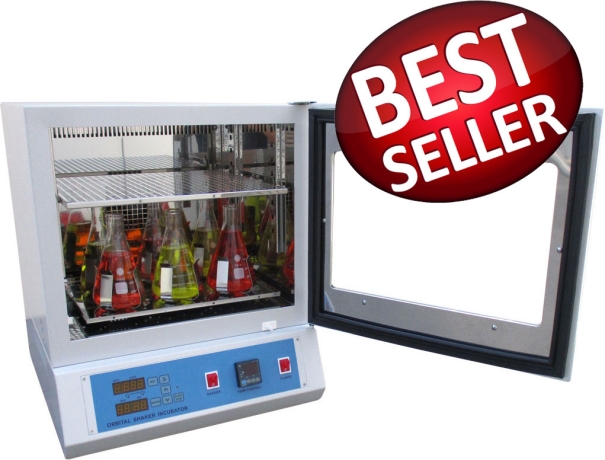
A shaker incubator is a specialized laboratory device designed to provide a stable environment with a consistent temperature and humidity level, all while agitating its contents. The built-in shaking feature evenly distributes temperature, gas, and humidity, which is especially useful for cell cultures, bacterial growth, and other processes where uniformity is crucial.
Why Temperature and Humidity Control is Essential
Temperature and humidity are key factors in biological reactions. Even slight fluctuations can lead to skewed results, affecting the integrity of experiments. In microbial studies, for instance, temperature directly impacts growth rates and metabolic activity. Humidity, on the other hand, can affect the growth environment, nutrient distribution, and water balance in samples.
Components of Temperature Control in Shaker Incubators
Temperature control in shaker incubators relies on heating elements, cooling systems, and efficient insulation. Many incubators use electric heating pads and fans for even temperature distribution, while advanced models incorporate cooling systems to prevent overheating. Insulation ensures that the temperature remains stable, reducing energy use and maintaining experimental conditions.
How Shaker Incubators Regulate Temperature
Modern shaker incubators utilize thermostats and microprocessors to maintain consistent temperatures. Thermostats allow users to set a desired temperature, while microprocessors actively monitor and adjust to maintain this setting. With built-in sensors, these systems detect any deviations and trigger heating or cooling responses immediately, ensuring a stable environment.
Humidity Control in Shaker Incubators
Humidity control is achieved through a combination of humidifiers, dehumidifiers, and controlled airflow. Some Laboratory incubators include water trays or steam-based humidifiers that release moisture into the air as needed, while others may incorporate dehumidifiers to prevent excess moisture. This is critical because excessive humidity can lead to condensation and negatively impact the experiment.
How Shaker Incubators Monitor Humidity Levels
Humidity sensors continuously measure the moisture in the incubator chamber, relaying this data to the control system. With real-time monitoring, the incubator can automatically adjust humidity levels by activating humidifiers or dehumidifiers, maintaining an ideal balance for the experiment's needs.
Integration of Temperature and Humidity Control
Maintaining both temperature and humidity requires a synchronized system, as these elements often influence each other. For instance, heating can reduce humidity levels, while cooling can increase them. By integrating both controls, shaker incubators can provide stable conditions for sensitive experiments, optimizing the environment for maximum accuracy.
Environmental Stability and Impact on Experiments
For successful and reproducible experiments, shaker incubators need to avoid fluctuations in environmental conditions. This stability is crucial in fields like microbiology, where precise growth conditions are needed to analyze cultures accurately. Fluctuating conditions can lead to unexpected changes in samples, impacting the experiment's reliability.
Advanced Features in Modern Shaker Incubators
Today’s shaker incubators come equipped with a range of features designed for convenience and accuracy. Programmable settings allow scientists to set time, temperature, and humidity sequences for specific experimental needs. Digital displays provide easy access to real-time data, while some models even offer remote monitoring capabilities for added convenience.
Benefits of Precision Temperature and Humidity Control
With precision control, researchers can expect higher-quality results and a streamlined workflow. Shaker incubators that consistently maintain the right conditions reduce the need for constant adjustments, allowing researchers to focus on their work without worrying about environmental inconsistencies.
Choosing the Right Shaker Incubator for Your Needs
Selecting an appropriate shaker incubator depends on factors like the experiment type, volume of samples, and desired features. Popular models vary in size, programmable options, and control accuracy. Evaluating these factors can help laboratories invest in a device that best meets their needs.
Applications Across Various Scientific Fields
Shaker incubators find applications across a wide range of fields, from molecular biology and genetics to chemistry and pharmacology. In microbiology, they support bacterial and yeast growth, while in biochemistry, they aid in protein expression studies. As technology advances, shaker incubators are likely to become even more versatile, accommodating diverse research needs.