Selecting the correct laboratory vacuum pump is essential for achieving reliable results, protecting connected equipment and reducing maintenance costs.
The most powerful pump is not always the most suitable option. Different laboratory applications require different vacuum levels, pumping speeds, chemical resistance and control capabilities.
A pump intended for filtration may be unsuitable for freeze drying, while a pump designed for deep vacuum may be unnecessarily expensive and difficult to maintain for a simple aspiration process.
This guide explains how to evaluate laboratory vacuum pumps and select a suitable system for your application.
What Does a Laboratory Vacuum Pump Do?
A laboratory vacuum pump removes gas molecules and vapours from a sealed system to reduce the internal pressure below atmospheric pressure.
Reducing pressure can support a wide range of laboratory processes, including:
Moving liquids through filters
Aspirating liquids
Lowering solvent boiling points
Drying samples
Removing air from chambers
Collecting gas samples
Supporting freeze-drying processes
Creating controlled low-pressure environments
The correct pump must provide sufficient vacuum and pumping speed while remaining compatible with the gases, vapours and materials involved. 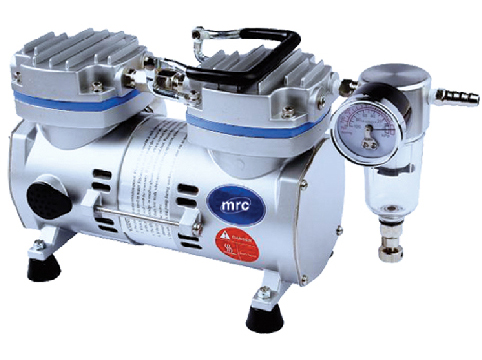
Start with the Laboratory Application
The first step is to define exactly how the vacuum pump will be used.
Different applications require significantly different pressure ranges and pumping capacities.
Filtration and Aspiration
Vacuum filtration and aspiration usually require a moderate vacuum rather than the deepest possible pressure.
An oil-free diaphragm or piston pump may be suitable for many filtration and aspiration applications.
For chemical filtration, the pump materials must be compatible with any vapours or liquids that may enter the system.
Rotary Evaporation
A rotary evaporator requires sufficient vacuum to reduce the solvent boiling point while removing the generated vapour.
The pump should provide:
- Suitable chemical resistance
- Stable vacuum control
- Adequate vapour-handling capacity
- Compatibility with the solvent
- A suitable ultimate pressure
A chemical-resistant diaphragm pump combined with a vacuum controller is commonly suitable for many rotary evaporation processes.
Vacuum Ovens
Vacuum ovens may require a deeper vacuum than filtration systems.
The required pump depends on the oven volume, required pressure, temperature, sample properties and the quantity of vapour released during drying.
Oil-sealed rotary vane, dry scroll or suitable multi-stage dry pumps may be considered depending on the required vacuum and chemical exposure.
Desiccators
A desiccator generally requires a moderate vacuum and relatively low pumping speed.
A compact oil-free diaphragm or piston pump may be suitable, provided it can achieve the required pressure.
Freeze Drying
Freeze drying usually requires a deep and stable vacuum.
The pump must be correctly matched to the freeze dryer and capable of handling the required pressure and vapour load. A suitable cold trap or condenser is also essential to protect the pump from water vapour and solvents.
Schlenk Lines and Deep Vacuum Applications
Schlenk lines, molecular processes and other deep-vacuum applications may require an oil-sealed rotary vane pump, dry scroll pump or another specialised vacuum system.
The required pressure, gas load and chemical compatibility must be defined before selecting the pump.
Gas Sampling
Gas sampling applications require careful control of flow, leak tightness and compatibility with the sampled gases.
The pump must not contaminate or alter the gas sample.
Understand Vacuum Pressure
Vacuum performance is normally described using absolute pressure.
Common pressure units include:
- mbar
- Torr
- Pascal
- kilopascal
- inches of mercury
A lower absolute pressure represents a deeper vacuum.
For example:
100 mbar is a deeper vacuum than 500 mbar.
1 mbar is a deeper vacuum than 100 mbar.
Always confirm whether a specification refers to absolute pressure or pressure relative to the atmosphere.
Ultimate Vacuum Versus Operating Vacuum
Ultimate vacuum is the lowest pressure a pump can achieve under defined test conditions.
It is an important specification, but it should not be used alone to select a pump.
At pressures close to the ultimate vacuum, the pumping speed may be extremely low. A pump may therefore technically reach the required pressure but take too long to evacuate the system or fail to maintain that pressure during an active process.
The operating vacuum is the pressure that must be maintained while the process is taking place.
For correct selection, check the pump's performance curve and confirm that it provides sufficient pumping speed at the required operating pressure.
Understand Pumping Speed and Flow Rate
Pumping speed describes the volume of gas that the pump can remove over time.
It may be stated in units such as:
L/minm³/hCFM
A higher flow rate can evacuate a chamber more quickly, but the maximum published flow is usually measured at or near atmospheric pressure.
As pressure decreases, the effective pumping speed may change. Therefore, the pump's performance curve is more useful than the maximum flow figure alone.
When evaluating pumping speed, consider:
- Volume of the connected system
- Required evacuation time
- Amount of vapour or gas produced
- Required operating pressure
- Hose diameter and length
- Restrictions caused by valves, filters and fittings
- Leakage from the system
Common Types of Laboratory Vacuum Pumps
Diaphragm Vacuum Pumps
Diaphragm pumps use a flexible diaphragm to move gas through the pump.
They are widely used in laboratories because many models are oil-free, relatively low-maintenance and suitable for moderate vacuum applications.
Typical applications include:
- Filtration
- Aspiration
- Desiccators
- Rotary evaporation
- Vacuum manifolds
- General laboratory vacuum
Chemical-resistant diaphragm pumps are designed with materials suitable for handling aggressive vapours.
Advantages may include:
- Oil-free operation
- Reduced risk of oil contamination
- Lower routine maintenance
- Chemical-resistant options
- Suitability for many laboratory applications
Limitations may include:
- Limited deep-vacuum capability compared with some other technologies
- Pulsating flow
- Diaphragm and valve replacement requirements
Piston Vacuum Pumps
Piston pumps use a moving piston to create suction and compress gases.
Oil-free piston pumps may provide a cost-effective solution for non-corrosive applications.
Typical uses may include:
- Filtration
- Aspiration
- Desiccators
- General laboratory suction
- Selected vacuum oven applications
They should not be selected for aggressive chemical vapours unless the model is specifically designed for them.
Rotary Vane Vacuum Pumps
Rotary vane pumps use rotating vanes within a chamber to create vacuum.
Oil-sealed rotary vane pumps can provide deep vacuum and are commonly used for applications requiring lower pressures.
Typical applications may include:
- Freeze dryers
- Schlenk lines
- Vacuum ovens
- Deep-vacuum systems
- Selected analytical instruments
Advantages may include:
- Deep-vacuum capability
- High performance
- Wide availability
Limitations may include:
- Oil changes and routine maintenance
- Risk of oil contamination
- Oil degradation when exposed to vapours
- Potential exhaust mist
- Need for appropriate traps and exhaust management
Dry Scroll Vacuum Pumps
Dry scroll pumps use two spiral-shaped scrolls to compress and remove gases without oil in the pumping chamber.
They can provide deeper vacuum than many diaphragm pumps while avoiding oil contamination.
Dry scroll pumps are used in applications such as:
- Analytical instruments
- Vacuum ovens
- Glove boxes
- Research systems
- Clean vacuum processes
- Backing pumps for higher-vacuum systems
Their performance depends on the model, with some dry scroll pumps reaching ultimate pressures of approximately 10⁻² mbar.
Limitations may include sensitivity to corrosive vapours and the need to replace tip seals periodically.
Turbomolecular Pumps
Turbomolecular pumps are used for high and ultra-high vacuum applications.
They normally require a suitable backing pump and are used in specialised systems such as:
- Mass spectrometry
- Surface analysis
- Electron microscopy
- Vacuum deposition
- Advanced research systems
They are not normally required for general filtration, aspiration or routine laboratory evaporation. Turbomolecular pumps can operate in very low pressure ranges but must be correctly paired with an appropriate backing pump.
Oil-Free Versus Oil-Sealed Vacuum Pumps
The choice between an oil-free and oil-sealed pump depends on the application.
Oil-Free Pumps
Oil-free pumps are suitable where clean operation, lower routine maintenance and reduced contamination risk are important.
They are commonly selected for:
- Filtration
- Aspiration
- General laboratory use
- Selected evaporation processes
- Clean vacuum applications
Oil-Sealed Pumps
Oil-sealed pumps may be appropriate when a deeper vacuum or higher performance is required.
However, the oil must be monitored and replaced when contaminated or degraded.
When pumping vapours, an appropriate trap and gas ballast system may be required to reduce condensation and protect the pump.
Check Chemical Compatibility
Chemical compatibility is one of the most important factors when choosing a laboratory vacuum pump.
Before selecting a pump, identify every substance that may enter the vacuum line, including:
- Water vapour
- Organic solvents
- Acids
- Bases
- Corrosive gases
- Biological aerosols
- Particles
- Condensed liquids
Review the materials used in the pump's:
- Diaphragms
- Valves
- Seals
- Tubing
- Connectors
- Pumping chamber
A standard oil-free pump should not automatically be assumed to be chemically resistant.
Consider Vapour Handling
Applications involving evaporation can produce a substantial vapour load.
The pump must be able to remove this vapour without excessive condensation or damage.
Relevant considerations include:
- Solvent boiling point
- Vapour pressure
- Process temperature
- Quantity of solvent
- Duration of the process
- Pump vapour tolerance
- Use of condensers or traps
A cold trap or inlet trap can help capture vapours before they reach the pump. The trap must be suitable for the solvent and process temperature.
Use Appropriate Vacuum Control
Many laboratory processes benefit from controlled vacuum rather than maximum vacuum.
A vacuum controller can regulate the system pressure according to the process requirements.
Vacuum control may help:
- Maintain a stable pressure
- Improve repeatability
- Reduce sudden boiling or bumping
- Protect sensitive samples
- Reduce unnecessary pump operation
- Improve solvent recovery
- Reduce energy consumption
For rotary evaporation, controlled vacuum can help maintain efficient evaporation without pulling solvent vapour through the system too aggressively.
Consider Noise, Heat and Installation
Vacuum pumps can generate noise, vibration and heat.
Before purchasing, check:
- Published noise level
- Pump dimensions and weight
- Ventilation requirements
- Exhaust requirements
- Electrical supply
- Available bench or floor space
- Acceptable vibration level
- Hose and connection sizes
A pump used continuously beside laboratory personnel should be evaluated differently from a pump installed inside a ventilated service area.
Select the Correct Tubing and Accessories
A correctly selected pump may still perform poorly if the connected system contains restrictions or leaks.
Use vacuum-rated tubing that is compatible with the chemicals and required pressure.
Common accessories include:
- Vacuum controller
- Vacuum gauge
- Cold trap
- Liquid trap
- Inlet filter
- Exhaust filter
- Oil mist filter
- Vacuum regulator
- Non-return valve
- Chemical-resistant tubing
- Vacuum manifolds
Tubing should normally be kept as short and wide as practical to reduce flow restrictions.
Laboratory Vacuum Pump Selection Table
| Application | Typical Requirement | Common Pump Options |
|---|
| Filtration | Moderate vacuum, reliable suction | Diaphragm or piston pump |
| Aspiration | Moderate vacuum, contamination protection | Oil-free diaphragm pump with trap |
| Rotary evaporation | Controlled vacuum and chemical resistance | Chemical-resistant diaphragm pump with controller |
| Desiccator | Moderate vacuum and low flow | Diaphragm or piston pump |
| Vacuum oven | Moderate to deep vacuum | Multi-stage diaphragm, dry scroll or rotary vane pump |
| Freeze drying | Deep, stable vacuum | Suitable rotary vane or dry pump matched to the freeze dryer |
| Schlenk line | Deep vacuum | Rotary vane or suitable dry scroll pump |
| Glove box | Clean, controlled vacuum | Dry scroll or application-specific pump |
| Gas sampling | Controlled flow and compatibility | Application-specific diaphragm or sampling pump |
| Analytical instruments | Clean and stable vacuum | Dry scroll, rotary vane or specialised pump |
The correct specification must always be confirmed according to the individual equipment and process.
Questions to Ask Before Purchasing
Before selecting a laboratory vacuum pump, confirm:
- What operating pressure is required?
- What is the required ultimate pressure?
- What pumping speed is available at the operating pressure?
- What volume must be evacuated?
- How quickly must the system reach the required pressure?
- Which gases, vapours or solvents will enter the pump?
- Is chemical resistance required?
- Is oil-free operation necessary?
- Is precise vacuum control required?
- Will a cold trap or liquid trap be needed?
- What tubing and connection sizes are required?
- What are the noise and heat-output levels?
- What routine maintenance is required?
- Are spare parts and servicing available?
- What is the expected total cost of ownership?
Common Vacuum Pump Selection Mistakes
Common mistakes include:
- Choosing a pump based only on ultimate vacuum
- Ignoring pumping speed at the required operating pressure
- Selecting a pump that is not chemically resistant
- Using an oversized pump for a simple application
- Selecting insufficient flow for a large chamber
- Failing to install traps for liquids or vapours
- Using unsuitable tubing
- Ignoring noise and heat output
- Failing to consider maintenance and spare parts
- Assuming every oil-free pump is suitable for solvents
Maintenance and Pump Protection
Routine maintenance helps preserve pump performance and extend operating life.
Recommended procedures depend on the pump type but may include:
- Inspecting tubing and connections
- Emptying traps
- Checking filters
- Monitoring oil condition
- Changing oil according to instructions
- Inspecting diaphragms and valves
- Replacing scroll tip seals
- Keeping ventilation openings clear
- Preventing liquids and particles from entering the pump
Always follow the manufacturer's operating and maintenance instructions for the specific pump model.
Laboratory Vacuum Pumps from MUNRO Scientific
MUNRO Scientific supplies laboratory vacuum pumps for filtration, aspiration, evaporation, vacuum ovens, desiccators, freeze dryers and other scientific applications.
The available range includes oil-free pumps, diaphragm pumps, chemical-resistant pumps, piston pumps, dry scroll pumps, vacuum controllers and supporting accessories.
Contact MUNRO Scientific with details of your required pressure, flow rate, application and chemical exposure to identify a suitable vacuum pump.