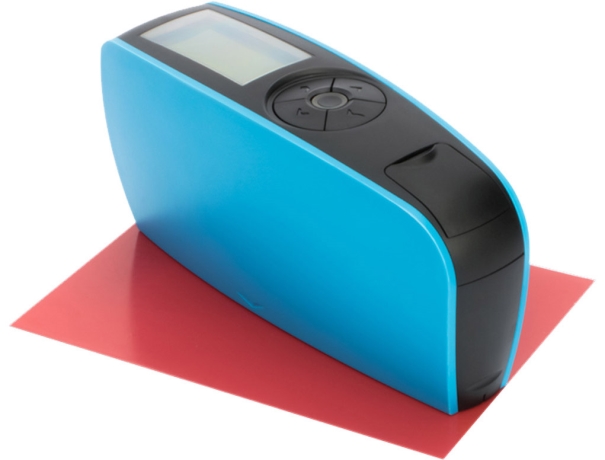
A gloss meter is a device used to measure the specular reflection of light on a surface. Gloss meters are commonly used in the automotive, plastics, and printing industries, as well as in quality control and research and development settings.
How to use a gloss meter
To use a gloss meter, follow these steps:
- Prepare the surface: Make sure the surface to be measured is clean and free of any dirt, debris, or fingerprints.
- Set up the gloss meter: Turn on the gloss meter and let it warm up for a few minutes. Then, select the appropriate measurement angle for your application. Most gloss meters come with a 60-degree angle, which is suitable for measuring most surfaces.
- Take the measurement: Hold the gloss meter perpendicular to the surface you want to measure, and press the button to take the reading. Make sure the instrument is in contact with the surface and that the measurement is taken within the specified area.
- Record the result: Record the measurement on a piece of paper or in a spreadsheet. If you need to take multiple measurements, repeat steps 2-3 for each area.
- Interpret the results: Gloss meters measure the amount of light reflected from a surface, with a higher number indicating a more reflective surface. Depending on the application, you may need to compare your results to a specific standard or specification to determine if the surface meets the desired level of gloss.
Remember that gloss meters are sensitive instruments, and any scratches or defects on the surface being measured can affect the reading. Additionally, different measurement angles may be required for different applications, so be sure to consult the gloss meter's manual for specific instructions.