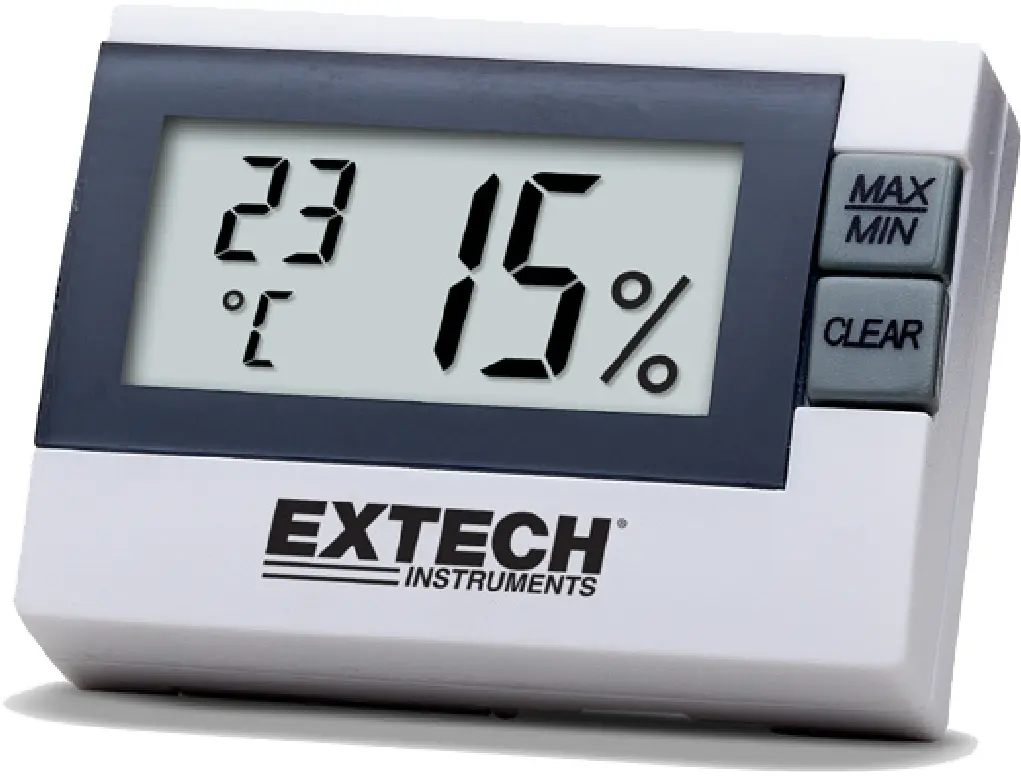
Laboratory humidity and temperature meters are specialized devices used to monitor and control the environmental conditions in research settings. These meters come in different types, including digital, analog, and wireless models, each with varying features such as data logging, remote monitoring, and high precision sensors.
Why Are Humidity and Temperature Important in a Laboratory?
Temperature and humidity directly impact:
- The accuracy and reliability of scientific experiments.
- The performance and lifespan of laboratory equipment.
- The preservation of sensitive samples, including biological and chemical substances.
How Do Laboratory Humidity and Temperature Meters Work?
- Laboratory humidity and temperature meters use advanced sensors to detect and measure atmospheric conditions. The data is displayed on screens or logged into a software system for analysis. Regular calibration ensures their accuracy and reliability.
How to Set Up a Laboratory Humidity and Temperature Meter
- Unbox and inspect the device for any damage.
- Choose an ideal location away from direct heat sources and airflow obstructions.
- Power up the device and configure its settings.
Step-by-Step Guide to Using a Laboratory Humidity and Temperature Meter
- Turn on the meter and allow it to stabilize.
- Set desired parameters like units (Celsius/Fahrenheit, %RH).
- Take readings at regular intervals.
- Record data manually or using the meter’s logging feature.
Interpreting the Data from Your Meter
- Identify normal vs. abnormal fluctuations.
- Adjust laboratory conditions accordingly.
- Set alerts for deviations beyond acceptable ranges.