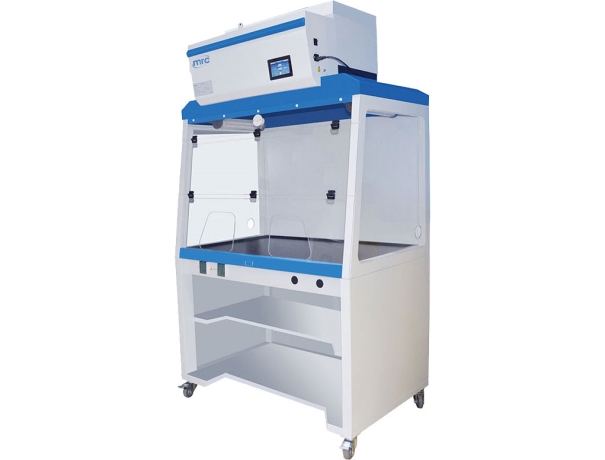
A laboratory fume hood, also known in the UK as a fume cupboard, is designed to help protect laboratory users from hazardous vapours, gases, fumes and airborne chemical contaminants.
It does this by drawing air away from the user, through the hood opening and into an exhaust system. This helps contain chemical emissions produced during suitable laboratory procedures.
However, a fume hood only works properly when it is used correctly. Poor sash position, blocked airflow, overcrowded workspaces, incorrect chemical storage and fast movements can reduce containment and increase exposure risk.
This guide explains how to work safely and effectively with laboratory fume hoods in UK laboratories.
What a Laboratory Fume Hood Is Designed to Do
A fume hood is an exposure-control device.
It is commonly used for procedures involving:
- Volatile chemicals
- Hazardous vapours
- Acid fumes
- Solvent vapours
- Irritating gases
- Odorous substances
- Dusts or powders where suitable controls are required
- Small-scale chemical reactions
The hood is intended to capture and remove airborne contamination before it reaches the user’s breathing zone.
A fume hood should not be treated as a general workbench, chemical store, waste-disposal route or substitute for a full risk assessment.
Fume Hood or Biological Safety Cabinet?
A fume hood is not the same as a biological safety cabinet.
A fume hood is mainly used for chemical vapours and fumes. It draws air away from the user and exhausts it through a ducted system or suitable filtration system.
A biological safety cabinet is designed for biological work involving aerosols, microorganisms or cell-culture procedures. Depending on the class, it may protect the user, sample and environment.
The wrong equipment can create serious risk.
Use a fume hood for chemical vapour control when the risk assessment requires it. Use a biological safety cabinet only when the work and containment requirement match that cabinet type.
Before You Start: Check the Hood Is Ready
Before placing chemicals inside the hood, carry out a basic pre-use check.
Confirm that:
- The hood is switched on where required.
- The airflow indicator or monitor is working.
- No alarm is active.
- The sash moves correctly.
- The sash is set at the safe working height.
- The work surface is clear.
- The rear baffles are not blocked.
- The hood is not being used for storage.
- Required spill materials are available.
- The correct PPE is being worn.
Do not start work if the airflow alarm is active, the monitor is not functioning or the hood appears damaged.
Keep the Sash as Low as Practical
The sash is not only a glass screen. It is a critical part of the hood’s containment system.
When working:
- Keep the sash as low as practical.
- Keep the sash below the marked safe working height.
- Use the sash as a physical barrier.
- Do not raise the sash higher than necessary.
- Close the sash when the hood is not in active use.
The higher the sash is opened, the larger the face opening becomes, and the more difficult it can be for the hood to maintain effective containment.
University safety guidance commonly recommends keeping the sash as low as possible and always below the safe working limit.
Never Put Your Head Inside the Hood
Your head should remain outside the plane of the hood opening.
Do not lean into the hood to inspect a reaction, smell a chemical or reach equipment at the back.
If you need to adjust something inside the hood:
- Lower the sash as much as possible.
- Keep your face outside the opening.
- Move slowly.
- Avoid placing your breathing zone inside the hood.
Safety guidance specifically warns users not to allow the head to enter the plane of the hood opening.
Work at Least 15 cm Inside the Hood
Place chemicals, glassware and active processes at least 15 cm, or about 6 inches, inside the front opening.
This helps the hood capture vapours before they escape into the room.
Do not work right at the edge of the hood.
Good positioning matters especially when using:
- Open vessels
- Volatile solvents
- Acid containers
- Heating plates
- Reaction flasks
- Weighing boats
- Small containers that can be moved easily
Several safety sources recommend keeping equipment and materials at least 15 cm, or 6 inches, inside the hood opening.
Do Not Block the Baffles or Airflow Slots
The rear baffles and exhaust slots help direct air through the hood.
Blocking them can reduce containment and create turbulence.
Avoid placing the following directly against the rear wall or baffles:
- Large bottles
- Equipment
- Storage boxes
- Waste containers
- Paper towels
- Cables
- Large racks
- Instruments
If large equipment must be used inside the hood, raise it on suitable supports so air can flow underneath and around it.
Safety guidance recommends elevating large equipment to allow air to move smoothly and avoid airflow disruption.
Do Not Use the Hood as Storage Space
A Laboratory fume hood is not a chemical cupboard.
Do not store unnecessary bottles, waste containers, old reactions or equipment inside the hood.
Storage inside the hood can:
- Block airflow
- Increase chemical load
- Make spills harder to control
- Reduce working space
- Increase fire risk
- Create incompatible chemical storage problems
- Make emergency response more difficult
Only keep materials needed for the current procedure inside the hood.
Organise the Work Area Before Starting
A tidy hood is safer and easier to control.
Before beginning, arrange the work area so that the procedure can be completed without unnecessary reaching or movement.
A practical setup may include:
- Active reaction or procedure in the centre
- Chemicals positioned behind the 15 cm line
- Waste container positioned safely but not blocking airflow
- Frequently used items within easy reach
- Incompatible chemicals separated
- Electrical equipment placed to avoid spills
- Labels facing outward where possible
Plan the sequence before opening bottles or starting reactions.
Move Slowly and Avoid Turbulence
Fast movement can disturb airflow.
When working inside the hood:
- Move hands slowly.
- Avoid sweeping arm movements.
- Do not walk quickly past an active hood.
- Avoid opening nearby doors or windows.
- Keep laboratory traffic around the hood low.
- Do not place fans near the hood.
Air currents from doors, windows, supply vents and people walking past the hood can affect performance. Safety guidance recommends keeping doors and windows closed where airflow through the hood could be affected.
Use Suitable PPE
A fume hood reduces exposure, but it does not replace PPE.
Depending on the risk assessment, PPE may include:
- Safety glasses or goggles
- Laboratory coat
- Chemical-resistant gloves
- Face shield
- Apron
- Respiratory protection where required
- Closed footwear
Choose gloves according to chemical compatibility, not convenience.
A fume hood should be used as part of a wider control strategy, including risk assessment, training, PPE and emergency procedures.
Know What Should Not Be Done in a Fume Hood
A fume hood should not be used for every laboratory task.
Avoid using a standard fume hood for:
- Long-term chemical storage
- Waste evaporation
- Biological aerosol work requiring a BSC
- Perchloric acid work unless the hood is designed for it
- Radioactive work unless the system is suitable
- Large-scale reactions beyond the hood’s capacity
- Explosive reactions without specialist controls
- Processes that exceed the hood’s airflow or exhaust capacity
Some work requires a specialist hood, dedicated extraction system or a different type of containment.
Do Not Evaporate Waste Chemicals in the Hood
A fume hood is not a waste-disposal system.
Leaving unwanted chemicals to evaporate inside the hood is poor practice and can create unnecessary exposure, fire risk and environmental emissions.
Waste chemicals should be stored, labelled and disposed of according to the laboratory’s waste procedure.
Safety sources specifically warn against using fume hoods as a way to evaporate old or unwanted chemicals.
Be Careful with Heat Sources
Heating chemicals inside a hood can increase vapour generation and fire risk.
When using hotplates, heating mantles or oil baths:
- Keep them away from the front opening.
- Avoid blocking airflow.
- Keep flammable materials away from heat.
- Secure glassware properly.
- Use secondary containment where appropriate.
- Do not leave unstable reactions unattended.
- Confirm that the hood and process are suitable for the vapour load.
Heating a volatile solvent can quickly increase the amount of vapour the hood must capture.
Use Electrical Equipment Carefully
Electrical equipment inside a fume hood may be exposed to vapours, spills and corrosive atmospheres.
Before using electrical equipment:
- Confirm it is suitable for the chemical environment.
- Keep cables organised.
- Avoid running cables across the sash opening.
- Keep plugs and controls outside the hood where possible.
- Do not overload sockets.
- Keep electrical equipment away from spills.
If flammable vapours may be present, equipment suitability must be assessed before use.
Keep Containers Closed When Not in Use
Open containers increase vapour release.
When possible:
- Keep bottles capped.
- Use small working quantities.
- Do not leave solvent bottles open.
- Label all containers.
- Remove chemicals from the hood after the procedure.
- Store chemicals in suitable cabinets, not inside the hood.
The hood should contain the active work, not become a storage area for every bottle used in the laboratory.
What to Do If the Airflow Alarm Activates
If the airflow alarm activates during work:
- Stop the procedure if safe to do so.
- Close containers.
- Lower the sash.
- Move away from the hood.
- Warn nearby users if needed.
- Report the issue according to local procedure.
- Do not continue work until the hood has been checked.
Never ignore a hood alarm.
An alarm usually indicates that the airflow or sash condition may not be within the expected operating range.
What to Do After Finishing Work
At the end of the procedure:
- Close all chemical containers.
- Remove chemicals that are no longer required.
- Dispose of waste correctly.
- Clean spills or residues.
- Remove unnecessary equipment.
- Lower or close the sash.
- Leave the hood ready for the next user.
If the hood has been used for hazardous substances, follow the laboratory’s cleaning and decontamination procedure.
Routine Inspection and Testing
Fume hoods must be maintained and tested to remain effective.
In the UK, COSHH requires exposure-control equipment to be maintained in efficient working order. Safety documentation for ducted fume cupboards states that fume cupboards should be inspected and tested at least every 14 months, or more often if risk assessments identify higher exposure risk.
Records should include:
- Inspection date
- Test results
- Airflow or face velocity data
- Repairs
- Filter changes where relevant
- Alarm checks
- User reports
- Maintenance actions
Users should know where to find the latest test label or certification record.
Common Mistakes When Working with Laboratory Fume Hoods
Common mistakes include:
- Raising the sash too high
- Placing chemicals at the front edge
- Putting your head inside the hood
- Blocking rear baffles
- Using the hood as storage
- Ignoring airflow alarms
- Working too quickly and creating turbulence
- Using the wrong hood for the chemical
- Leaving open solvent containers inside
- Evaporating waste chemicals
- Placing large equipment directly on the work surface
- Working near open doors, windows or air vents
- Assuming the hood protects against every hazard
What is the correct way to work in a laboratory fume hood?
Work with the sash as low as practical, keep your head outside the hood, place chemicals at least 15 cm inside the opening, avoid blocking baffles and keep only necessary materials in the hood.
Can a fume hood be used for chemical storage?
No. A fume hood should not be used as a chemical storage area. Unnecessary storage can block airflow, increase risk and reduce working space.
How far inside the fume hood should chemicals be placed?
Chemicals and active work should generally be placed at least 15 cm, or about 6 inches, inside the front opening to improve containment.
What should I do if the fume hood alarm activates?
Stop work if safe, close containers, lower the sash, move away from the hood and report the issue. Do not continue until the hood has been checked.
Is a fume hood the same as a biological safety cabinet?
No. A fume hood is mainly used for chemical vapours and fumes. A biological safety cabinet is used for suitable biological work and has a different airflow and filtration purpose.
Should the sash be closed when the fume hood is not in use?
Yes. Closing the sash improves safety and can reduce energy waste, especially in ventilated laboratory systems.