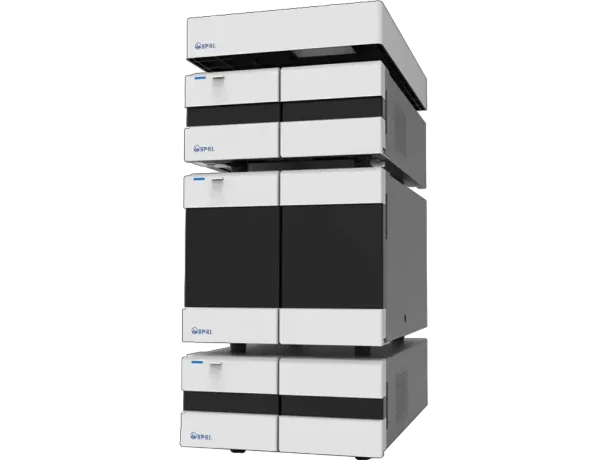
HPLC systems in the UK are not just another piece of laboratory equipment. For many laboratories, they are the analytical backbone behind product release, research decisions, stability testing, impurity profiling, environmental analysis, food safety checks and method development. HPLC, short for High Performance Liquid Chromatography, separates compounds in a liquid sample so analysts can identify, quantify and compare them with confidence. Think of it like sending a mixed crowd through a very selective corridor: each compound moves at its own pace, interacts differently with the column, and reaches the detector at a different time. That separation is what turns a messy sample into useful, defensible analytical data.
The reason HPLC matters so much in the UK is simple: UK laboratories often operate in highly regulated, high expectation environments. A pharmaceutical QC lab may need to prove that an active ingredient is present at the correct level and that impurities are below permitted limits. A university research group may need repeatable results for peer-reviewed work. A food testing lab may need to confirm preservatives, vitamins, contaminants or additives. An environmental laboratory may analyse water, soil or industrial samples for compounds that must be detected at low levels. In all these cases, the HPLC system is only useful if it delivers stable retention times, consistent peak areas, accurate quantification and traceable records.
Buying an HPLC system in the UK is therefore not only a technical decision. It is also a workflow decision, a compliance decision and a long-term cost decision. The cheapest system on paper can become expensive if service response is slow, software is not suitable, consumables are hard to source or the method cannot be transferred reliably. The best system is usually the one that fits the laboratory’s real samples, expected throughput, detector needs, regulatory obligations and staff skill level. That is why a serious HPLC buying process should start with applications, not brand names.
The Core Principle Behind HPLC
At its heart, HPLC works by pushing a liquid mobile phase through a packed column under pressure. The sample is injected into this flowing solvent stream, and its components interact with the stationary phase inside the column. Some compounds move quickly because they prefer the mobile phase; others move slowly because they interact more strongly with the stationary phase. This difference creates separation, and the detector records the compounds as peaks in a chromatogram. The position of a peak helps identify a compound, while the area or height of the peak helps quantify how much of that compound is present.
This is why column choice, solvent composition, flow rate, temperature and detector type all matter. Small changes can shift retention time, change peak shape or affect sensitivity. For example, a reversed phase C18 method for a pharmaceutical compound may behave very differently from a size exclusion method for a protein or polymer. The system is only one part of the analytical chain, but it controls the precision of how the method is delivered. A reliable pump keeps flow stable, an accurate autosampler injects consistent volumes, a well controlled column oven stabilises temperature, and the detector captures the signal cleanly.
For UK laboratories, the practical question is not only “Can this system run HPLC?” The better question is “Can this system run our methods reliably, repeatedly and in a way that will satisfy our internal or external quality requirements?” A teaching lab may need simple operation and robustness. A contract testing lab may need fast sample queues and audit-ready software. A pharmaceutical lab may need validated methods, controlled user access and data integrity features. The same core science sits underneath every system, but the right configuration changes depending on the job.
Why the UK Market Has Specific Requirements
The UK market has a particular mix of laboratory needs. It has strong pharmaceutical and biotech activity, a large academic research base, contract testing laboratories, NHS-linked research, food and beverage testing, environmental monitoring and industrial quality control. These sectors do not all buy HPLC for the same reason. A biotech lab may focus on proteins, peptides or oligonucleotides. A pharma QC laboratory may prioritise reproducibility, validated methods and compliance documentation. A food testing laboratory may care about high sample throughput and low cost per analysis. A research lab may need flexibility to change columns, detectors and gradients frequently.
That creates a UK buying environment where flexibility matters. Many laboratories need access to installation, training, maintenance, qualification, spare parts and consumables without long delays. A system that looks impressive in a brochure can disappoint if the local service structure is weak. This is especially important for laboratories that cannot afford downtime because every missed run delays release, reporting or research milestones. The UK buyer should therefore look at the full support ecosystem: not just the instrument, but the supplier, service engineers, training options, software support, column availability and upgrade path.
Another UK-specific factor is compliance. Many UK labs work under ISO/IEC 17025, GMP, GLP, GCP or internal quality systems. Even when a lab is not formally regulated by MHRA or accredited by UKAS, customers may still expect traceable, repeatable and well documented analysis. This means HPLC selection should include software access controls, audit trails, secure data storage, method version control, calibration records and service documentation. In plain language, the system must not only produce good data; it must help prove that the data can be trusted.
Main Types of HPLC Systems Available in the UK
The UK market offers several categories of HPLC systems, from conventional modular instruments to advanced UHPLC platforms and preparative systems. Each type has a role, and choosing the wrong one can create unnecessary cost or performance limitations. A conventional HPLC system is often ideal for routine QC, teaching, standard analytical methods and many established pharmaceutical procedures. A UHPLC system can deliver faster runs, sharper peaks and higher resolution, but it may require columns, fittings and methods designed for higher pressure. A preparative HPLC system is a different tool altogether, built for collecting purified compounds rather than only analysing them.
The main mistake buyers make is assuming that the most advanced system is automatically the best system. That is not always true. A laboratory running legacy methods may not benefit from UHPLC unless it plans to redevelop or transfer methods. A small lab with moderate throughput may be better served by a robust, serviceable HPLC platform with a UV or PDA detector. A research lab working across multiple projects may need a modular system that can accept different detectors. A purification lab may need fraction collection, higher flow rates and scale-up capability. The best choice depends on the work, not the marketing label.
Here is a practical comparison of common system types:
| System type | Best suited for | Main advantage | Main limitation |
|---|
| Conventional HPLC | Routine QC, teaching, established methods | Reliable, widely supported, method compatible | Slower than UHPLC for some applications |
| UHPLC | High throughput, high resolution analysis | Faster runs, sharper peaks, lower solvent use per run | Higher pressure demands and method transfer work |
| Preparative HPLC | Purification and compound collection | Collects purified fractions | Larger solvent use and higher running cost |
| Bio-inert HPLC | Biomolecules, proteins, sensitive compounds | Reduces unwanted metal interactions | More specialised and usually higher cost |
| Modular HPLC | Research and multi-method laboratories | Flexible detector and module combinations | Requires more method and configuration control |
Conventional HPLC
Conventional HPLC remains a strong choice for many UK laboratories because it is proven, familiar and compatible with a huge number of established methods. Many validated pharmaceutical, food, environmental and academic methods were developed on conventional HPLC platforms, so switching to a completely different pressure range or column format is not always desirable. If a lab needs dependable routine analysis rather than maximum speed, a conventional HPLC system can be the sensible option. It is also usually easier to train new users because the workflows are well understood and consumables are widely available. That makes it a practical workhorse rather than a glamorous showpiece.
A standard HPLC setup normally includes a solvent delivery pump, degasser, autosampler or manual injector, column compartment, detector and chromatography software. The detector might be UV, variable wavelength, diode array, fluorescence, refractive index, conductivity or another option depending on the sample. For many routine assays, UV or PDA detection is enough. For compounds that lack strong UV absorbance, a different detector or sample derivatisation may be needed. That is why the buyer should start with analytes and methods before choosing the detector.
Conventional HPLC also has an advantage when laboratories need continuity. If the lab already has validated methods, trained staff and established SOPs, staying with a compatible system can reduce transfer risk. A new platform still requires qualification, method verification and documentation, but it may avoid the deeper redevelopment needed for a UHPLC conversion. For UK labs working under strict customer deadlines, that reduced disruption can be valuable. The smartest purchase is sometimes the system that keeps validated work moving with minimal friction.
UHPLC
UHPLC, or Ultra High Performance Liquid Chromatography, is built for higher pressure operation, smaller particle columns and faster, more efficient separations. In the right method, UHPLC can shorten run times, improve resolution and reduce solvent consumption per analysis. That can be a major advantage for UK laboratories processing large sample volumes or trying to reduce bottlenecks. If a QC lab can reduce a 25-minute method to 8 minutes without compromising validation requirements, the gain is not just technical; it affects staffing, turnaround time, solvent use and instrument capacity. Over a year, those savings can matter more than the initial price difference.
The caution is that UHPLC is not magic. It requires compatible columns, fittings, low dispersion flow paths and methods designed to benefit from the technology. A poor method does not become excellent simply because it is run on a higher pressure system. Method transfer from HPLC to UHPLC needs careful control of column dimensions, particle size, gradient timing, dwell volume, flow rate and detector settings. In regulated laboratories, that transfer must be documented and justified. If the laboratory has the expertise to manage that process, UHPLC can be a powerful upgrade. If not, it can introduce complexity without delivering the expected return.
UHPLC is particularly attractive for high throughput pharmaceutical analysis, impurity profiling, advanced research, metabolomics support and applications where resolution is critical. It is also useful when solvent cost, waste disposal or instrument queue time is becoming a problem. For UK labs with growing workloads, UHPLC can act like adding an extra lane to a busy motorway. The traffic still needs good rules, but it can move faster when the method and system are well matched.
Preparative HPLC
Preparative HPLC is designed for purification, not just analysis. Instead of simply detecting peaks, the system collects fractions so the target compound can be isolated for further work. This is common in chemistry research, natural product isolation, pharmaceutical development, peptide purification and specialist production workflows. The pumps, columns, tubing and detectors are configured for larger sample loads and higher flow rates than analytical HPLC. The goal is not only to know what is in the sample, but to physically recover the compound of interest.
For UK laboratories, preparative HPLC should be treated as a separate investment category. It has different solvent demands, different waste handling requirements and different method development priorities. Resolution still matters, but loading capacity and recovery become central. A method that looks beautiful analytically may not scale perfectly to preparative conditions. The lab may need to optimise injection load, gradient shape, fraction collection timing and solvent compatibility. That requires both chemistry knowledge and a system designed for practical collection.
Preparative HPLC can be expensive to run if the workflow is not planned properly. Solvent use, column cost and purification time can add up quickly. Before buying, the lab should estimate sample load, target purity, expected recovery, solvent volumes and downstream handling needs. If purification is occasional, outsourcing may make sense. If purification is routine, a dedicated preparative system can give control, speed and repeatability that outsourced work cannot match.
Key Components to Compare Before Buying
An HPLC system is a chain of components, and the chain is only as strong as its weakest link. A premium detector cannot compensate for unstable flow. A high precision autosampler cannot fix a poorly controlled column temperature. Excellent software cannot rescue a method that produces broad, overlapping peaks. When comparing HPLC systems in the UK, buyers should avoid looking only at headline specifications and instead examine the complete workflow from sample preparation to final report. The right system should support the required method, expected throughput, compliance needs and operator skill level.
The most important components are the pump, autosampler, column oven, detector and chromatography data system. Each affects data quality in a different way. The pump controls flow and gradient accuracy. The autosampler controls injection precision and carryover. The column oven controls temperature consistency, which influences retention time and peak shape. The detector determines sensitivity, selectivity and the type of compounds that can be measured. The software controls data acquisition, processing, reporting, security and traceability. When these parts work together well, the lab gets reliable chromatograms. When one part is poorly matched, the whole method suffers.
A good UK supplier should help translate applications into configuration. That means asking about sample type, solvent compatibility, injection volume, analyte concentration, required detection limits, number of samples per day, column types and reporting requirements. If the supplier jumps straight to a model number without understanding the method, be cautious. The right HPLC system is not bought like a printer. It is specified like a production tool that must generate scientific evidence.
Pump and Flow Accuracy
The pump is the heart of an HPLC system. It pushes the mobile phase through the column at a controlled flow rate, often under high pressure. If the pump is unstable, the entire chromatogram becomes less reliable. Retention times may drift, gradients may behave unpredictably and quantification can become less repeatable. For isocratic methods, flow stability is essential. For gradient methods, mixing accuracy and dwell volume become especially important. This is why serious buyers should ask about flow precision, gradient accuracy, pressure range, solvent compatibility and maintenance requirements.
There are different pump configurations, including binary and quaternary systems. A binary pump is often preferred for high pressure gradient work and UHPLC applications where mixing precision and low delay volume matter. A quaternary pump offers more solvent flexibility, which can be helpful for method development and labs running varied methods. Neither is universally better. The right choice depends on whether the lab values high pressure gradient performance or flexible solvent blending. In a busy UK contract lab, flexibility may be valuable. In a high throughput QC lab running a fixed method, performance consistency may matter more.
Maintenance should not be ignored. Pump seals, check valves, mixers and filters are consumable parts of real-world HPLC ownership. A system that is easy to maintain can save hours of downtime. It is worth asking whether engineers are available locally, whether spare parts are stocked in the UK, and how often preventive maintenance is recommended. The purchase price is only the first chapter. Reliability over five to ten years is where the true cost becomes visible.
Autosampler, Column Oven and Detector Choice
The autosampler controls how samples enter the system, and its performance affects precision, carryover and throughput. If the lab processes large sample batches, autosampler capacity matters. If compounds are unstable, cooling may be essential. If the method requires tiny injection volumes, injection precision becomes critical. Carryover is another serious issue, especially when high concentration samples are followed by trace-level samples. A good autosampler should support the laboratory’s sample format, vial type, injection range and cleaning requirements.
The column oven may look less exciting, but it can make a major difference. Temperature affects mobile phase viscosity, analyte interaction with the stationary phase and retention time repeatability. In a UK lab where ambient room temperature can vary between seasons or across facilities, column temperature control helps protect method consistency. For some methods, even a small temperature change can alter separation enough to affect integration or system suitability. A stable oven is therefore not a luxury; it is part of good chromatographic control.
Detector choice should be driven by chemistry. UV and PDA detectors are common because many compounds absorb ultraviolet light, and PDA detection adds spectral information that can help assess peak purity. Fluorescence detection can offer excellent sensitivity for naturally fluorescent or derivatised compounds. Refractive index detection is useful for sugars, polymers and compounds with weak UV absorbance, but it is less compatible with gradient methods. Conductivity, electrochemical, evaporative light scattering and mass spectrometry detection may be relevant for specialist applications. The best detector is not the most expensive one. It is the one that sees your analyte clearly, consistently and at the required concentration.
Chromatography Software and Data Integrity
Chromatography software is no longer just a screen for viewing peaks. It is the control centre for methods, sequences, user permissions, integration, calibration, audit trails, reports and long-term data storage. For regulated UK laboratories, software can become one of the most important parts of the purchase. The system must support secure user access, traceable changes, controlled methods and reliable records. If the laboratory is audited, the question is not only whether the result is correct, but whether the data lifecycle is controlled from acquisition to reporting.
A practical way to judge software is to ask how easily it supports the lab’s daily reality. Can analysts build sequences quickly without increasing error risk? Can supervisors review chromatograms efficiently? Are integration changes traceable? Can methods be locked or version controlled? Can reports be customised without creating uncontrolled spreadsheets? Can the system export data in a format that works with the laboratory information management system? These questions matter because software friction often becomes a hidden cost after installation.
Data integrity should be treated as a design requirement, not a feature added later. In regulated environments, laboratories need to prevent uncontrolled deletion, undocumented changes and weak user accountability. Even in non-regulated research labs, strong data management protects scientific credibility. A modern HPLC system should help the lab create a clean path from sample to result. Without that, the lab may end up with good chemistry and poor evidence, which is a dangerous combination.
UK Compliance, Accreditation and Validation Considerations
UK laboratories often operate in environments where analytical results must stand up to technical review, customer audits, accreditation assessments or regulatory inspection. That does not mean every HPLC buyer needs a fully GMP-validated system from day one. It does mean the buyer should understand the level of control required for the intended use. A research-only system has different expectations from a pharmaceutical release testing system. A teaching lab has different needs from a contract testing laboratory that reports results to paying clients. The system should be purchased with the correct quality framework in mind.
Compliance also affects documentation. Installation qualification, operational qualification and performance qualification may be required depending on the lab’s quality system. Preventive maintenance records, calibration evidence, software validation, user access control and audit trail review procedures may also be relevant. A supplier that can provide qualification documentation, service records and technical support can reduce the burden on the laboratory. A system with poor documentation may create extra work for quality managers and analysts.
The key point is that compliance should not be treated as paperwork after the instrument arrives. It should influence the purchase decision from the beginning. If the lab needs audit trails, do not buy software that cannot support them properly. If the lab needs ISO/IEC 17025 accreditation support, make sure method verification, uncertainty, calibration and traceability requirements are considered. If the lab works under MHRA-regulated GxP expectations, data integrity must be built into the workflow. Buying correctly is easier than fixing a weak system later.
UKAS, ISO/IEC 17025 and Method Confidence
UKAS accreditation and ISO/IEC 17025 are highly relevant for many UK testing and calibration laboratories. In practical terms, ISO/IEC 17025 focuses on technical competence and the ability to produce valid results. For an HPLC laboratory, that means the instrument is only one part of the bigger picture. The lab must also control methods, staff competence, equipment calibration, reference materials, environmental conditions, measurement uncertainty and result reporting. A good HPLC system supports this framework by producing stable, traceable and repeatable analytical data.
When selecting an HPLC system for an accredited or accreditation-seeking lab, buyers should think beyond basic performance. They should ask how the system will be qualified, how maintenance will be documented, how performance will be checked and how method suitability will be demonstrated. System suitability tests are often used to confirm that the chromatographic system is working properly before or during analysis. These tests may include retention time, resolution, theoretical plates, tailing factor, repeatability and sensitivity. The exact criteria depend on the method, but the principle is the same: the system must prove it is fit for the analysis.
An accredited lab also needs good records. This includes instrument logs, service reports, calibration certificates, method versions and training records. If these records are scattered or incomplete, audits become painful. A well chosen HPLC system, combined with disciplined laboratory procedures, helps create confidence in the result. That confidence is the real product of the laboratory. The chromatogram is just the visible tip of the iceberg.
MHRA GxP Expectations for Regulated Laboratories
For UK laboratories working in pharmaceutical, clinical research, GLP or GMP-related settings, MHRA expectations around GxP data integrity are central. HPLC data can influence batch release, stability conclusions, impurity decisions and regulatory submissions. That makes the integrity of the data as important as the quality of the separation. If data can be changed without traceability, deleted without control or processed inconsistently, the result becomes vulnerable. A beautiful chromatogram is not enough if the record behind it cannot be trusted.
A GxP-ready HPLC setup should support secure user accounts, role-based permissions, audit trails, controlled methods and protected raw data. Laboratories should also define who can create methods, who can modify integration, who reviews audit trails and how electronic records are backed up. These responsibilities cannot be left vague. The software and SOPs must work together like the lock and key of the same door. One without the other is not enough.
Regulated labs should involve QA early in the buying process. Analysts may focus on resolution, sensitivity and speed, while QA will look at validation, access control, audit trails and documentation. Both perspectives are necessary. The best HPLC system for a GxP lab is not only the one that performs well on day one, but the one that remains defensible during audits, inspections and method lifecycle changes. That is where strong software, service support and documentation become business-critical.
Applications of HPLC Systems Across UK Industries
The strength of HPLC is its versatility. One system can support a wide range of methods, provided it is configured correctly. In the UK, HPLC is used in pharmaceutical manufacturing, biotech research, academic laboratories, food and drink testing, environmental monitoring, forensic work, cosmetics, chemical manufacturing and materials research. This broad use is one reason the market includes so many system types and detector combinations. The same basic principle can be adapted to very different analytical questions.
The application determines what matters most. In pharmaceutical QC, reproducibility and compliance often dominate. In research, flexibility and method development tools may be more important. In food testing, throughput and cost per sample may drive the decision. In environmental testing, sensitivity and sample preparation compatibility can be critical. In biotech, bio-inert flow paths, temperature control and specialised columns may be needed. A lab analysing caffeine in drinks does not need the same configuration as a lab characterising monoclonal antibodies.
This is why the phrase HPLC systems in UK should not be treated as one simple product category. It is a family of analytical solutions. The right system for a small teaching lab may be completely wrong for a GMP stability laboratory. The right system for routine UV assays may be inadequate for trace impurity profiling. Before comparing quotes, the lab should map its applications clearly. The better the application brief, the better the instrument decision.
Pharmaceutical and Biotech Laboratories
Pharmaceutical laboratories are among the most demanding HPLC users in the UK. They use HPLC for assay, impurity testing, dissolution, stability studies, cleaning validation, raw material testing and finished product analysis. These applications require precision, reproducibility and strong documentation. In many cases, methods are validated and must be run under controlled procedures. The HPLC system must therefore deliver consistent performance and support the data controls needed for regulated work.
Biotech laboratories add another layer of complexity. They may work with proteins, peptides, nucleic acids, oligonucleotides or other sensitive biomolecules. These compounds can be affected by metal interactions, temperature, adsorption or harsh solvent conditions. Bio-inert systems, specialised columns and gentle method conditions may be needed. Detection may involve UV, fluorescence, light scattering or mass spectrometry depending on the target. The system must be matched to the biology, not just the chromatography.
For both pharma and biotech, service support is a serious factor. Downtime can delay development work, QC release or customer commitments. A strong UK support network, preventive maintenance plan and fast access to spare parts can be as important as the system specification. The most advanced instrument is not helpful if it sits idle while a lab waits for support. Reliability is not only an engineering concept. In these sectors, it is a commercial and regulatory necessity.
Food, Environmental and Academic Research Labs
Food and beverage laboratories use HPLC to analyse compounds such as vitamins, preservatives, sweeteners, organic acids, colours, contaminants and naturally occurring constituents. The focus is often on reliable quantification, reasonable throughput and methods that can handle complex matrices. Sample preparation can be just as important as the instrument itself. A sugary drink, an oil sample and a processed food extract all behave differently. A practical system must be robust enough for real-world samples, not only clean standards.
Environmental laboratories may use HPLC for water, soil, waste and industrial samples. Sensitivity, selectivity and sample cleanup are often important because target compounds may be present at low levels in complex backgrounds. Depending on the application, HPLC may be paired with UV, fluorescence or mass spectrometry detection. The laboratory must also consider solvent use, waste disposal and method turnaround time. In environmental testing, a method that is technically impressive but slow or fragile may not be commercially practical.
Academic laboratories need flexibility because research questions change. One month the system may support natural product analysis; the next month it may support polymer work, teaching practicals or collaborative research. A modular HPLC system can be useful because detectors and modules can be adapted over time. However, flexibility must be balanced with ease of use. In shared university labs, many users may have different skill levels. Clear training, robust SOPs and simple software workflows can prevent avoidable damage and unreliable results.
How to Choose the Right HPLC System in the UK
Choosing the right HPLC system starts with a clear method and workflow brief. List the compounds you need to analyse, the sample types, expected concentration ranges, required detection limits, number of samples per day, method types, compliance requirements and reporting needs. Then translate that list into instrument requirements. Do you need UV, PDA, fluorescence, RI or MS compatibility? Do you need UHPLC pressure capability? Do samples need cooling? Is gradient accuracy critical? Will the system be used under ISO/IEC 17025, GMP, GLP or internal QC rules? These questions prevent overbuying and underbuying.
The next step is to compare total cost of ownership. The purchase price is only part of the story. Columns, solvents, vials, lamps, seals, filters, service contracts, software licences, qualification visits, training and downtime all affect the real cost. A lower priced system may be attractive, but if consumables are expensive or service is slow, the saving disappears. A higher priced system may be justified if it improves throughput, reduces errors, supports compliance and stays reliable for years. The best financial decision is the one that considers the full operating life of the system.
Supplier quality should carry serious weight in the UK buying decision. Ask about local installation, preventive maintenance, emergency callout, engineer coverage, qualification documents, user training and software support. Ask for references from laboratories with similar applications. If you are considering refurbished HPLC systems, verify what has been tested, what warranty is included, whether installation is provided and whether the system can support your software and compliance needs. Refurbished equipment can be a smart purchase for teaching, research or budget-limited labs, but it must be evaluated carefully.
Finally, think about future growth. A laboratory may begin with UV detection and later need PDA, fluorescence or MS compatibility. It may start with low throughput and later need faster methods. It may begin as an R&D lab and later move toward regulated testing. A system with a sensible upgrade path can protect the investment. HPLC is not a short-term purchase. When chosen well, it becomes a dependable analytical platform for many years.
Conclusion
HPLC systems in the UK serve a wide range of laboratories, from pharmaceutical QC and biotech research to food testing, environmental analysis, universities and industrial quality control. The best system is not simply the newest or most expensive model. It is the system that fits the laboratory’s applications, compliance level, sample workload, detector needs, software requirements and support expectations. A good HPLC purchase should produce reliable separations, defensible data and a workflow that analysts can operate confidently every day.
For UK buyers, the most important lesson is to choose by use case. Conventional HPLC remains excellent for many routine and validated methods. UHPLC is powerful when speed, resolution and throughput justify the extra complexity. Preparative HPLC is the right tool when purification and fraction collection are the goal. Software, service support and documentation should be evaluated as seriously as pump pressure or detector sensitivity. When the complete system is matched to the laboratory’s real needs, HPLC becomes more than an instrument. It becomes a dependable engine for better analytical decisions.
Frequently Asked Questions
1. What is the best HPLC system for a UK laboratory?
The best HPLC system depends on the application. A routine QC lab may need a robust conventional HPLC system with UV or PDA detection, while a high throughput lab may benefit from UHPLC. A biotech lab may need bio-inert flow paths and specialist detectors. The right choice should be based on analytes, sample volume, compliance requirements, software needs and service support.
2. Is UHPLC always better than conventional HPLC?
No. UHPLC can offer faster analysis and higher resolution, but it is not always the best option. If your lab runs established validated methods, conventional HPLC may be easier, more compatible and more cost-effective. UHPLC makes the most sense when the lab can benefit from shorter run times, improved separation or lower solvent use per result.
3. What detectors are commonly used with HPLC systems?
Common HPLC detectors include UV, variable wavelength, diode array, fluorescence, refractive index, conductivity and mass spectrometry interfaces. UV and PDA detectors are common for compounds that absorb UV light. Fluorescence is useful for sensitive analysis of fluorescent compounds. Refractive index detection is useful for compounds such as sugars and polymers, although it is less suitable for gradient methods.
4. What should UK regulated laboratories check before buying HPLC?
Regulated laboratories should check software security, audit trails, user access control, method control, raw data protection, qualification documentation and service support. They should also consider whether the system can support GMP, GLP, ISO/IEC 17025 or internal quality requirements. QA and laboratory managers should be involved before purchase, not after installation.
5. Are refurbished HPLC systems a good option in the UK?
Refurbished HPLC systems can be a good option for teaching labs, research groups and budget-limited laboratories. The key is to confirm testing, warranty, installation, software compatibility, service availability and spare part access. For regulated work, the lab must also check whether documentation and qualification support are adequate.