A tachometer is an instrument that measures the rotational speed of an engine. In other words, it measures how fast the engine is running. Tachometers can be analog or digital and are found in both automobiles and aircraft. Many modern cars have a digital tachometer built into the dash. These devices are used in various applications, such as in engines to measure the speed of the crankshaft or motors to measure the speed of the rotor.
A dial, a needle to show the current reading, and markings to indicate safe and hazardous levels make up this instrument. The needle measures the rate of rotation of an object and displays it on the dial. In most cases, the object being measured is an engine's crankshaft. The markings on the dial represent specific rpm readings. For example, redline is the maximum safe engine speed. Every tachometer has two yellow lines that bracket redline.
Mechanism of Tachometers
In an electronic Tachometer, the mechanism is simple. A sensor is mounted on the engine, which senses the revolution of the crankshaft and sends it to the electronic circuit. The circuit then processes these signals and displays them on a digital read-out or analog meter. Each revolution of the sparking system sends a voltage pulse to the spark plug. The pulse width is proportional to the interval between successive pulses, i.e., inversely proportional to engine speed
Variety of Tachometers
There are several types of Tachometers on the market today, each with its features and benefits. Here is a closer look at some of the most popular types of tachometers:
Analog Tachometers:
Analog tachometers are the simplest and most common type of tachometer. They usually consist of a needle that moves along a scale, making it easy to read the current RPMs.
Digital Tachometers:
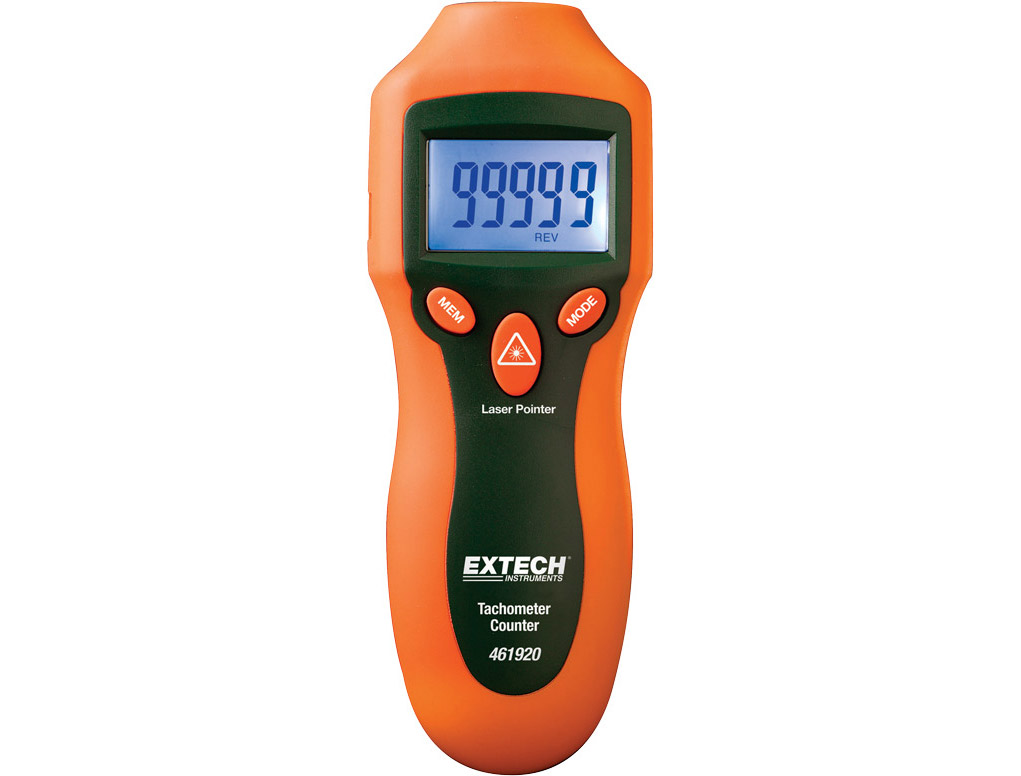
Digital tachometers are becoming increasingly popular as they offer more features and accuracy than analog models. Digital tachometers often include a backlit display, making them easier to read in low-light conditions.
Non-Contact Tachometers
Non-contact tachometers are devices that measure the speed of an object without making physical contact with it. These devices use a laser or an infrared sensor to emit a beam of light reflected off the measured object. The tachometer then calculates the speed of the object based on the amount of time it takes for the beam of light to travel to the object and back.
Uses of Tachometers in Various Sectors
Tachometers have a wide range of applications in industry and automobiles. They measure the speed of rotation of motors, wheels, fans, etc. In many industrial applications like textile, printing, paper, etc., tachometers are used to measure the speed of machines. In automobiles, tachometers are used to measure the engine speed and to indicate when to change gears. Medical applications include usage in spirometers, which are used to measure breathing rates.