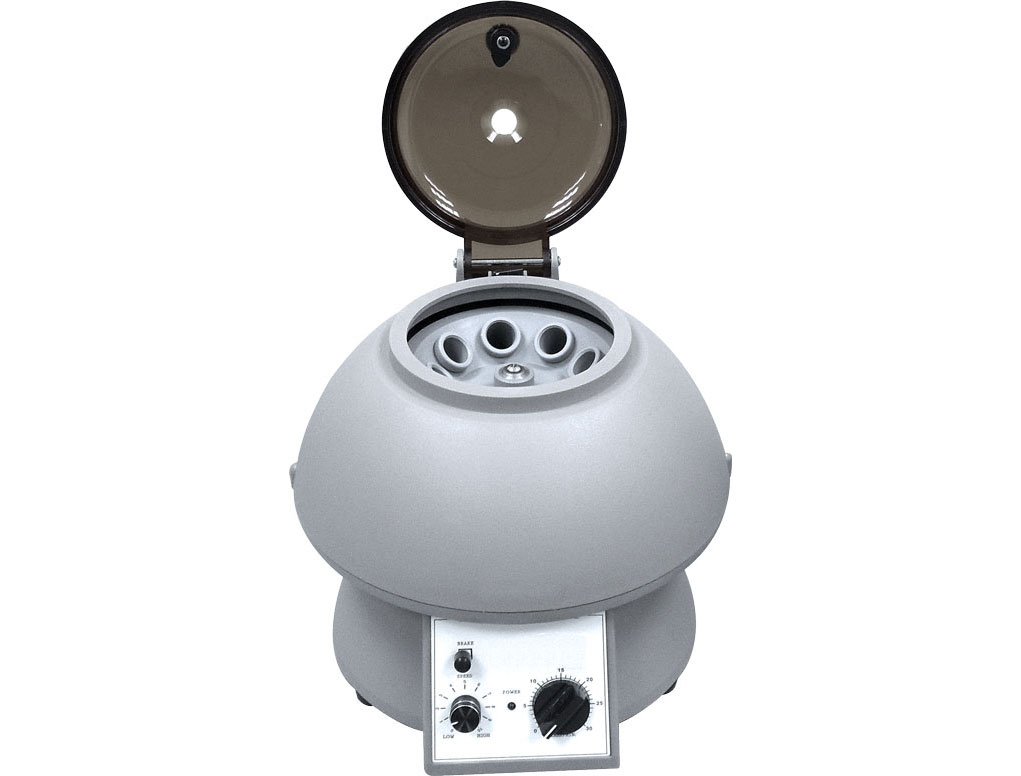
A laboratory centrifuge is a laboratory instrument that is used to separate substances of different densities. It works by spinning a tube or other container at high speeds, using centrifugal force to separate the substances based on their densities. Centrifuges are commonly used in biology, chemistry, and medical laboratories to isolate and purify various substances, such as cells, proteins, and nucleic acids. They can also be used to separate mixtures of substances, such as separating blood into its different components, or to precipitate solid particles from a solution. There are many types of laboratory centrifuges, including benchtop centrifuges, high-speed centrifuges, and ultracentrifuges, which are used for different applications and can spin at different speeds.
What is the centrifuge is used for?
Centrifuges are used for a wide range of applications in science and industry. Some common uses of centrifuges include:
Separating substances: Centrifuges are used to separate substances of different densities by spinning them at high speeds. This can be used to separate mixtures of substances, such as separating blood into its different components, or to isolate and purify specific substances, such as cells, proteins, or nucleic acids.
A blood centrifuge is a medical device used to separate blood components by spinning a tube or bottle of blood at high speeds. The centrifugal force created by the spinning motion causes the heavier blood components, such as red blood cells and white blood cells, to settle to the bottom of the tube, while the lighter plasma remains at the top.
There are several types of blood centrifuges available, including benchtop centrifuges, portable centrifuges, and large-scale centrifuges used in hospitals and diagnostic labs. The type of centrifuge chosen depends on the specific needs of the application, such as the volume of blood being processed and the required speed and duration of the separation.
Blood centrifuges are used for a variety of purposes, including separating blood for transfusion, preparing blood samples for laboratory testing, and separating blood components for medical research. They are an essential tool in the field of hematology, as they allow for the rapid and efficient separation of blood components for analysis and treatment.
In order to use a blood centrifuge, it is important to follow proper operating procedures and to use caution when handling the blood samples. It is also important to properly maintain and clean the centrifuge to ensure that it is in good working condition and to prevent contamination of the blood samples.
Precipitating solids: Centrifuges can be used to separate solid particles from a solution by spinning the mixture at high speeds, causing the heavier solid particles to settle to the bottom of the tube or container.
Clarifying solutions: Centrifuges can be used to clarify solutions by spinning them at high speeds, causing any impurities or suspended particles to settle to the bottom of the tube or container.
Analyzing samples: Centrifuges can be used to analyze samples by spinning them at high speeds and measuring the sedimentation rate of the different components. This can be used to determine the densities and sizes of particles in a sample, or to measure the concentration of specific substances in a solution.
Manufacturing: Centrifuges are also used in the manufacturing process for a variety of products, such as fuels, pharmaceuticals, and food products. They can be used to separate, clarify, and purify various substances during the manufacturing process.
Benchtop centrifuges are small, compact centrifuges that are designed to be used on a laboratory bench or tabletop. They are typically used for a variety of applications, including:
Separating blood components: Benchtop centrifuges are commonly used to separate blood components for transfusion, laboratory testing, or research purposes.
Preparing samples for analysis: Benchtop centrifuges can be used to prepare samples for a variety of analyses, including protein analysis, nucleic acid analysis, and cell separation.
Purifying samples: Benchtop centrifuges can be used to purify samples by removing contaminants or unwanted materials.
Concentrating samples: Benchtop centrifuges can be used to concentrate samples by increasing the concentration of a particular component.
Crystallizing samples: Benchtop centrifuges can be used to crystallize samples by spinning the sample at high speeds to create a concentrated solution.
Drying samples: Benchtop centrifuges can be used to dry samples by spinning the sample at high speeds to remove excess moisture.
Microfiltration: Benchtop centrifuges can be used to perform microfiltration, which involves separating particles or molecules based on size.
Sedimentation: Benchtop centrifuges can be used to perform sedimentation, which involves separating solid particles from a liquid based on density.
In general, benchtop centrifuges are useful for a wide range of applications in the laboratory, and are an essential tool for many researchers and scientists.
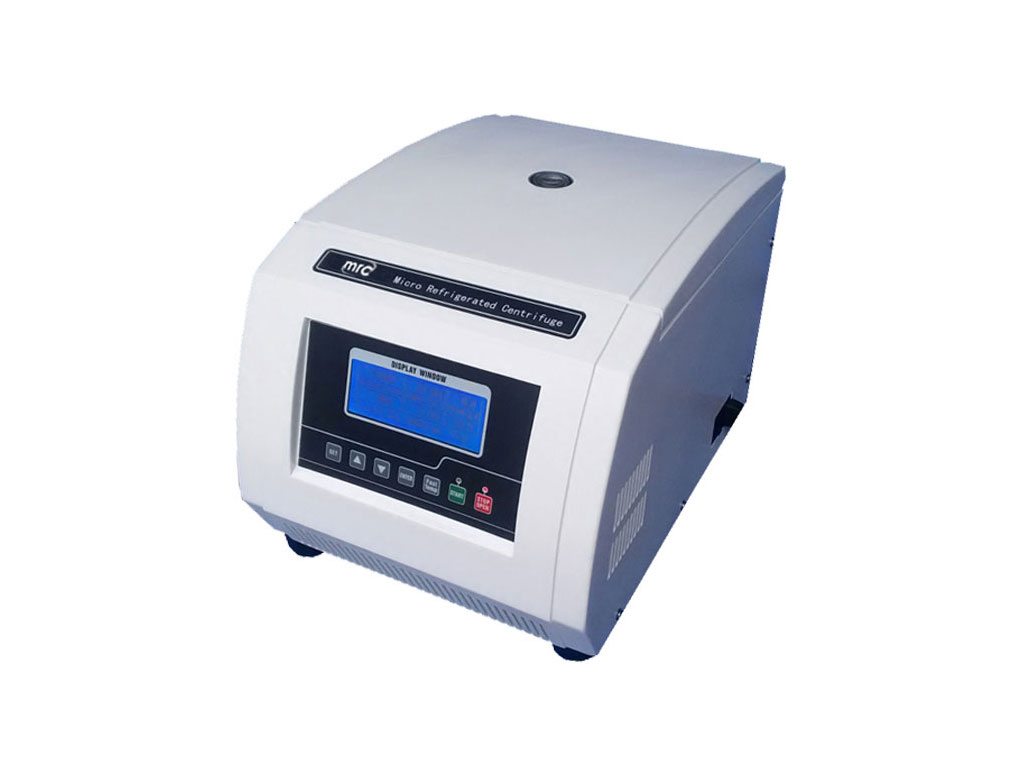
How does a laboratory centrifuge operate?
A laboratory centrifuge operates by spinning a tube or other container at high speeds, using centrifugal force to separate substances based on their densities. The tube or container is placed in a rotor, which is mounted on a spindle that is driven by an electric motor. The rotor is placed in a chamber that is sealed and contains a cooling system to dissipate heat generated by the spinning motion.
To operate a centrifuge, a sample is placed in the tube or container, which is then sealed and placed in the rotor. The rotor is then placed in the chamber, and the motor is activated to spin the rotor at a specific speed. The speed of the rotor determines the amount of centrifugal force that is applied to the sample, which in turn determines the separation of the substances in the sample based on their densities.
After a specified amount of time, the motor is turned off and the rotor is stopped. The separated substances can then be collected or further processed as needed. Some centrifuges are equipped with a refrigeration system to keep the samples at a specific temperature during the spinning process.
What is RPM in a centrifuge?
RPM stands for "revolutions per minute," and it is a measure of the speed at which a rotor in a centrifuge spins. The RPM of a centrifuge determines the amount of centrifugal force applied to the samples in the rotor, and this in turn determines the separation of the substances in the sample based on their densities.
Higher RPMs result in higher centrifugal forces and more rapid separations, while lower RPMs result in lower centrifugal forces and slower separations. The appropriate RPM for a particular application will depend on the properties of the samples being processed and the separation that is desired. Centrifuges are typically designed to operate over a range of RPMs, and the operator can adjust the speed as needed for different applications.
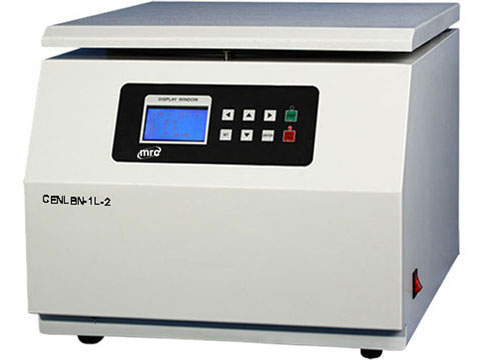
What are the parts of centrifuge?
The main parts of a laboratory centrifuge are:
Rotor: The rotor is the part of the centrifuge that holds the tube or container containing the sample. It is mounted on a spindle that is driven by an electric motor, and it spins at high speeds to generate the centrifugal force needed to separate the substances in the sample.
Motor: The motor is responsible for driving the rotor at a specific speed. It is usually an electric motor, but some centrifuges may use other types of motors, such as pneumatic or hydraulic motors.
Chamber: The chamber is the sealed enclosure that houses the rotor and motor. It may also contain a cooling system to dissipate heat generated by the spinning motion, as well as a refrigeration system to keep the samples at a specific temperature.
Control panel: The control panel is the part of the centrifuge that allows the operator to set and control the speed of the rotor and other parameters, such as the time of operation and the temperature of the samples.
Other parts of a centrifuge may include a lid or cover to enclose the chamber, a balancing system to ensure that the rotor is properly balanced during operation, and safety features such as emergency stop buttons and interlocks. Some centrifuges may also have additional features, such as a timer or a display screen to show the progress of the separation.
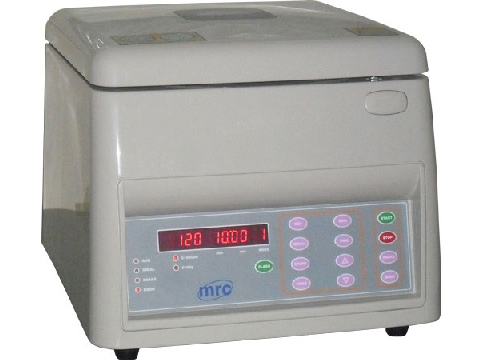
How RPM is calculated?
The RPM of a rotor in a centrifuge is calculated by dividing the number of revolutions that the rotor makes in a given time period by the length of that time period. The resulting value is expressed in revolutions per minute (RPM).
For example, if a rotor makes 60 revolutions in 1 minute, the RPM would be 60 RPM. If the rotor makes 120 revolutions in 2 minutes, the RPM would be 60 RPM (120 revolutions / 2 minutes = 60 RPM).
To calculate the RPM of a rotor, you will need to know the number of revolutions that the rotor makes and the length of the time period over which those revolutions occur. This information can usually be obtained from the manufacturer's specifications or by measuring the rotor's speed using a tachometer or other instrument.
What is g and RPM in centrifuge?
In a laboratory centrifuge, "g" refers to the gravitational force experienced by the samples in the rotor. It is a measure of the acceleration that the samples experience due to the centrifugal force generated by the spinning rotor. The unit of g is "g-force," which is a measure of the acceleration relative to Earth's gravitational acceleration (9.8 m/s^2).
The RPM of a rotor in a centrifuge is a measure of the speed at which the rotor is spinning, expressed in revolutions per minute (RPM). The RPM of the rotor determines the amount of centrifugal force that is applied to the samples in the rotor, which in turn determines the separation of the substances in the sample based on their densities.
The g-force and RPM of a centrifuge are related, as the g-force increases as the RPM of the rotor increases. In general, higher RPMs result in higher g-forces and more rapid separations, while lower RPMs result in lower g-forces and slower separations. The appropriate g-force and RPM for a particular application will depend on the properties of the samples being processed and the separation that is desired.
What is the maximum speed of centrifuge?
The maximum speed of a centrifuge, also known as the maximum RPM (revolutions per minute), depends on the type of centrifuge and the design of the rotor. Different types of centrifuges are designed for different applications and can spin at different speeds.
For example, benchtop centrifuges, which are commonly used in biology, chemistry, and medical laboratories, typically have maximum speeds ranging from about 4,000 to 15,000 RPM. High-speed centrifuges, which are used for more demanding applications, can have maximum speeds ranging from about 15,000 to 50,000 RPM. Ultracentrifuges, which are used for very high-speed separations, can have maximum speeds up to several hundred thousand RPM.
It is important to note that the maximum speed of a centrifuge should not be exceeded, as this can damage the centrifuge and/or create a safety hazard. It is also important to use the appropriate rotor and tube size for the desired speed, as using a rotor or tube that is not designed for the maximum speed of the centrifuge can also result in damage or a safety hazard.
What is the unit of speed of the centrifuge?
The unit of speed for a laboratory centrifuge is typically revolutions per minute (RPM). This is a measure of the number of revolutions that the rotor in the centrifuge makes in one minute. The RPM of the rotor determines the amount of centrifugal force applied to the samples in the rotor, and this in turn determines the separation of the substances in the sample based on their densities.
For example, a centrifuge with a rotor that spins at 10,000 RPM will apply a higher level of centrifugal force to the samples in the rotor than a centrifuge with a rotor that spins at 5,000 RPM. The appropriate RPM for a particular application will depend on the properties of the samples being processed and the separation that is desired.
It is important to note that the maximum RPM of a centrifuge should not be exceeded, as this can damage the centrifuge and/or create a safety hazard. It is also important to use the appropriate rotor and tube size for the desired RPM, as using a rotor or tube that is not designed for the maximum RPM of the centrifuge can also result in damage or a safety hazard.
What is K factor centrifuge?
In a laboratory centrifuge, the K factor is a measure of the relative centrifugal force (RCF) applied to the samples in the rotor. The K factor is calculated based on the speed of the rotor, the radius of the rotor, and the gravitational acceleration. The K factor is used to compare the centrifugal forces applied by different centrifuges or rotors, or to predict the separation of substances in a sample based on their densities.
The formula for calculating the K factor is: K = (RPM^2 * radius)/(g x 10^3), where RPM is the speed of the rotor in revolutions per minute, radius is the distance from the center of the rotor to the center of the sample in millimeters, and g is the gravitational acceleration (9.8 m/s^2).
For example, if a rotor spins at 10,000 RPM, has a radius of 50 mm, and is subjected to the standard gravitational acceleration of 9.8 m/s^2, the K factor would be calculated as follows: K = (10,000^2 * 50)/(9.8 x 10^3) = 25,000.
The K factor can be used to compare the RCF applied by different centrifuges or rotors, or to predict the separation of substances in a sample based on their densities. For example, a sample subjected to a K factor of 25,000 will experience a higher RCF than a sample subjected to a K factor of 10,000.
How do you calculate centrifuge speed?
To calculate the speed of a rotor in a laboratory centrifuge, you will need to know the number of revolutions that the rotor makes and the length of the time period over which those revolutions occur. The speed of the rotor is then calculated by dividing the number of revolutions by the length of the time period, and expressing the result in revolutions per minute (RPM).
For example, if a rotor makes 60 revolutions in 1 minute, the RPM would be 60 RPM. If the rotor makes 120 revolutions in 2 minutes, the RPM would be 60 RPM (120 revolutions / 2 minutes = 60 RPM).
To calculate the speed of the rotor, you may need to use a tachometer or other instrument to measure the number of revolutions, or you may be able to obtain this information from the manufacturer's specifications. It is important to use the appropriate time period for the calculation, as the RPM will vary depending on the length of the time period.
What is centrifugal field?
In a laboratory centrifuge, the centrifugal field is the force that is applied to the samples in the rotor by the spinning motion of the rotor. The centrifugal field is generated by the centrifugal force, which is a force that acts outward from the center of rotation. The centrifugal field is proportional to the speed of the rotor and the distance of the samples from the center of rotation.
The centrifugal field is used to separate substances of different densities in a sample. The substances in the sample will experience different amounts of centrifugal force based on their densities and the distance from the center of the rotor. This causes the heavier substances to be forced outward and the lighter substances to remain closer to the center of the rotor.
The strength of the centrifugal field can be expressed in terms of the relative centrifugal force (RCF), which is a measure of the acceleration experienced by the samples due to the centrifugal field. The RCF is calculated based on the speed of the rotor, the radius of the rotor, and the gravitational acceleration. It is expressed in units of g-force, which is a measure of acceleration relative to Earth's gravitational acceleration (9.8 m/s^2).
Types of laboratory centrifuge
There are several types of laboratory centrifuges, which are designed for different applications and can spin at different speeds. Some common types of laboratory centrifuges include:
Benchtop centrifuges: These are small, portable centrifuges that are commonly used in biology, chemistry, and medical laboratories. They are designed for low- to moderate-speed separations, with maximum speeds ranging from about 4,000 to 15,000 RPM. Benchtop centrifuges are often used for routine separations, such as separating blood into its different components or purifying cells or proteins.
High-speed centrifuges: These centrifuges are designed for more demanding applications, with maximum speeds ranging from about 15,000 to 50,000 RPM. They are often used for higher-resolution separations, such as isolating and purifying specific molecules or subcellular particles.
Ultracentrifuges: These are high-speed centrifuges that are designed for very high-speed separations, with maximum speeds up to several hundred thousand RPM. They are used for very sensitive or high-resolution separations, such as analyzing the structure and function of biological molecules or separating subcellular particles.
Microcentrifuges: These are small, portable centrifuges that are designed for low-speed separations, with maximum speeds ranging from about 3,000 to 15,000 RPM. They are often used for small-volume samples, such as microliters of DNA or proteins.
Clinical PRP/PRF Centrifuges-PRP (Platelet-Rich Plasma) and PRF (Platelet-Rich Fibrin) centrifuges are devices used in medical and aesthetic procedures to concentrate and extract platelets from a patient's blood. Platelets are a type of blood cell involved in clotting and wound healing, and they contain various growth factors that can stimulate tissue repair and regeneration.