The centrifuge is a laboratory apparatus that is utilized in the separation of gases, fluids, and liquids based on their density level. The purpose of the centrifuge differs by usage as it can be used for research or clinical purposes. For usage in clinical and research laboratories, they purify cells, viruses, proteins, and nucleic acids.
Also, apart from the use of the centrifuge as a purification tool, they can be used in the separation of whole-blood components when utilized by clinical laboratories. When clinical trials are also undertaken, centrifugation is initiated. In the formulation of serum, whole blood samples are allowed to clot, after which it is then centrifuged, thereby allowing the removal of the clot, which would leave the serum supernatant.
When it comes to plasma, the process is different from that of the serum, as it is usually derived from whole blood samples that aren't clotted and still possess the serum and clotting factors. In obtaining plasma from whole blood samples, anticoagulants are introduced into the tubes for their treatment which allows ease in centrifugation. Once that process has been done, both the cells and plasma supernatant are separated, and the cells can be removed.
What is the operational process of the Centrifuge?
Principle of Centrifugation
The functionality of the Centrifuge is simply the separation of particles that can be found suspended in liquids or fluids based on their density, particle size, the viscosity of the medium, and rotor speed.
Gravitational force is used in the centrifugation process, as it allows the particles with a higher density than the solvent to sink. When this happens, particles with less density than the solvent can be seen to float to the top of the solution. To make this process even more seamless, the centrifugation process relies on the tiniest change or difference in particle density to undertake the separation process.
The rotor is the major player in this process, as it spins the tubes at a fast pace around a central axis. This helps the apparatus generate a centrifugal force which would push the particles to the end of the tube and away from the rotational axis. The principle here is that once the force generated from the Centrifuge supersedes the buoyant forces in the liquid media and that of the liquid media, then sedimentation of the particles will occur.
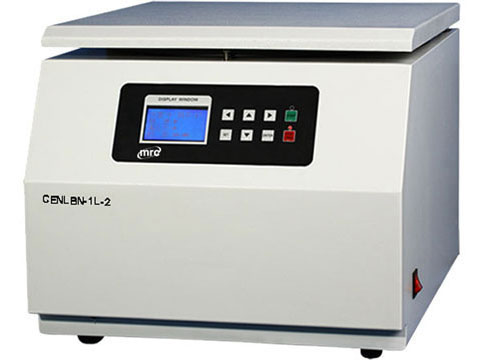
Types of Centrifuge Rotor
Regarding the types of Centrifuge Rotor designs available, we would mention two distinct and accessible designs, namely the swinging bucket and fixed angle. These Centrifuge rotors are distinct in their functionalities and efficacy. The swinging bucket design gives the tube the freedom to swing out from a vertical resting position towards a leaning parallel to horizontal leaning during the centrifugal process. This would, in turn let the particles reside at the bottom of the tube. The fixed angle, on the other hand, has a design where the tubes are held at a fixed angle and position which is 45° in tune with the rotational axis. This process allows the residue sediment on the side and bottom of the tube, unlike in the swinging bucket design.
If the intent of the process is for pellet application, then the fixed angle motor is a better option, as they enable easy particles removal and pellet recovery. The swinging bucket, on the other hand, are best fitted for separating samples of large volume as they operate at a low speed, and the separation is done in a rate-zonal gradient.
Balancing your Centrifuge
• Each tube facing each other must weigh the same for more balance
• When inserting the next set of tubes, rotate the tube in a 90° motion and add the next two evenly weighted tubes.
• Make sure the tubes are filled evenly and appropriately
• Repeat the above-mentioned process
Safety Precaution of a Centrifuge
• Keep the lids closed during rotation
• Refrain from using a vibrating or wobbly centrifuge
• Keep the Centrifuge balanced at all times
• Always keep the workspace sturdy
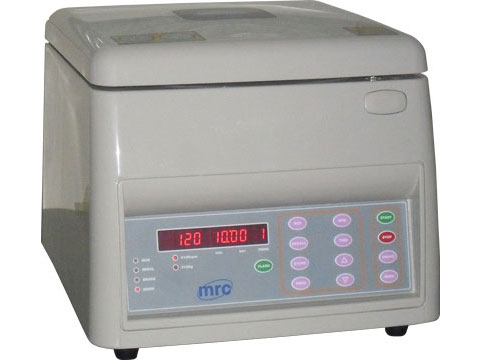
How to Maintain A Centrifuge
• To keep your Centrifuge in great condition, do the following:
• Give everyone who would use the proper Centrifuge orientation on its usage and maintenance.
• Ensure that the Centrifuge is properly lubricated. Also, O-rings help keep the Centrifuge safe from sample leakage.
• Cleaning the Centrifuge regularly with neutral cleaning solutions such as alcohol or alcohol based disinfectant helps keep it safe.
• Make to clean the Centrifuge daily, especially all its main components.
• Watch out for any irregular shaking, vibrations, or grinding during usage
How to find a suitable centrifuge?
Centrifuge Speed
In classifying Centrifuges, we would say they are judged based on total speed and measured as RPM( revolution per minute)—this RPM range from 0 to over 20,000RPM depending on the type of Centrifuge. In calculating a Centrifuge Speed, we'd say RCF in units of gravity (x g). However, the speed on most Centrifuges is measured in RPM. So when converting these metrics, we use this formula: g=(1.118 x 10⁻⁵) R S2.
R being rotor radius (cm) and S = Speed (RPM)
Centrifuge Size
Centrifuges are made in different models, which take the benchtop or floor-standing design. The Benchtop models are usually great for several purposes, and they also have a smaller footprint. With different models available, with distinct functionality. They usually operate at a low RPM and are best suited for diagnosis and debris washing from red blood cells.
In-floor standing models, users get enough sample capacity, and they usually reach a high RPM rate. With those with a superspeed design that can reach a maximum g-force, there are several variants to choose from based on their speed and capacity.