Are you a researcher, scientist, or a laboratory professional looking for an efficient way to count bacterial or fungal colonies? A laboratory colony counter is a tool that can help you accurately count colonies on agar plates. In this article, we will explore what a laboratory colony counter is, its benefits, how it works, and the factors to consider when choosing one.
What is a Laboratory Colony Counter?
A laboratory colony counter is a device that helps count bacterial or fungal colonies on agar plates. It is a useful tool for microbiologists, researchers, and laboratory professionals who need to count colonies in a fast and efficient manner.
Benefits of Using a Laboratory Colony Counter
Using a laboratory colony counter offers several benefits, including:
- Accuracy: They provide accurate counts of bacterial or fungal colonies, which is essential for research purposes.
- Time-Saving: Counting colonies manually can be time-consuming, but with a colony counter, you can count colonies in a matter of seconds.
- Consistency: It provides consistent results, which is important for comparing different experiments.
How does a Laboratory Colony Counter Work?
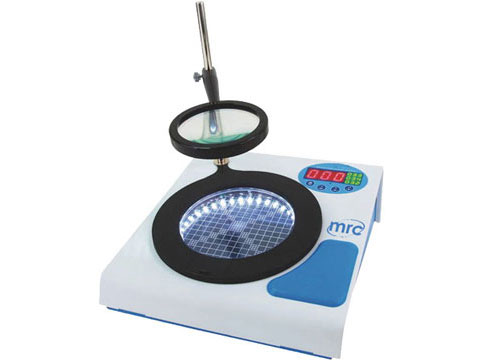
A colony counter typically consists of a light source, a magnifying lens, and a counting grid. The light source illuminates the agar plate, making the colonies visible. The magnifying lens helps you see the colonies clearly, while the counting grid helps you count them accurately.
To count colonies, place the agar plate on the counting surface, turn on the light source, and use the magnifying lens to observe the colonies. To count, mark each colony with a pen or by tapping a button on the device. The counter will keep track of the number of colonies you have counted.
Factors to Consider When Choosing a Laboratory Colony Counter
When choosing a laboratory colony counter, consider the following factors:
- Accuracy: Look for a machine that provides accurate counts.
- Ease of Use: Choose a device that is easy to use and does not require extensive training.
- Magnification: Look for a machine with a high magnification lens, which can help you see small colonies more clearly.
- Size: Choose a device that is compact and can fit on your laboratory bench.
- Cost: Consider the cost of the device and whether it fits within your budget.
Application of Laboratory Colony Counter
The laboratory colony counter has a wide range of applications in various industries, including medical, veterinary, food, and pharmaceuticals. Here are some of the common applications:
Microbial Detection: Used for the detection and enumeration of bacteria and fungi in food, water, soil, air, and other samples. It is used to detect the presence of pathogens in food and water, identify contaminants in pharmaceuticals, and assess the microbial load in environmental samples.
Antibiotic Susceptibility Testing: Used in antibiotic susceptibility testing to determine the effectiveness of antibiotics against different bacterial strains. This helps in the selection of appropriate antibiotics for the treatment of bacterial infections.
Microbial Ecology Studies: Used to study the microbial ecology of different environments such as soil, water, and air. It helps in the identification and quantification of microbial communities, their diversity, and their role in ecosystem processes.
Research and Development: Used in research and development activities to study the growth of microorganisms, their response to different treatments, and the development of new antimicrobial agents.
Quality Control: Used for quality control purposes in the food and pharmaceutical industries to ensure that products are free from microbial contamination. It is also used to monitor the microbial load in production facilities and to assess the efficacy of sanitation procedures.
Clinical Microbiology: Used in clinical microbiology to isolate and identify bacterial and fungal pathogens from patient samples. It is used to diagnose infections and to monitor the effectiveness of treatment.