Laboratory balances are precision instruments that are used to accurately measure the mass of objects in a laboratory setting. They are commonly used in schools, as well as in research and industrial settings. There are several types of laboratory balances available, including top loading balances, analytical balances, and microbalances.
MUNRO provides equipment for school laboratories and laboratory balances in particular
Top loading balances are the most common type of laboratory balances and are typically used for routine weighing tasks. They have a platform on which the object to be weighed is placed, and the balance measures the mass of the object by comparing it to a series of known weights.
Analytical balances are more precise than top loading balances and are commonly used for more precise measurements, such as in chemical analysis. They use a beam balance to measure mass, and are often equipped with a digital display to make it easier to read the results.
Microbalances are the most precise type of laboratory balance and are used to measure very small masses, such as those of individual atoms or molecules. They are typically used in research and are often equipped with specialized features such as temperature control and vibration isolation to improve accuracy.
Regardless of the type of balance, it is important to follow proper handling and maintenance procedures to ensure accurate results. This includes regularly calibrating the balance, handling it carefully to avoid damage, and keeping it clean and free from dust and other contaminants.
Why are laboratory balances used in schools?
Laboratory balances are commonly used in schools as a tool for teaching students about scientific measurement and the principles of mass and weight. They allow students to accurately measure the mass of objects and substances as part of their laboratory experiments and activities.
In addition to teaching students about measurement and scientific principles, laboratory balances can also be used in a variety of other educational contexts. For example, students may use them to calculate the density of a substance or to determine the composition of a mixture. They can also be used to teach students about the importance of precision and accuracy in scientific measurements, and to help them understand the limitations and uncertainties of different measurement techniques.
Overall, laboratory balances are an important tool for teaching students about science and helping them develop the skills and knowledge they need to succeed in a wide range of scientific fields.
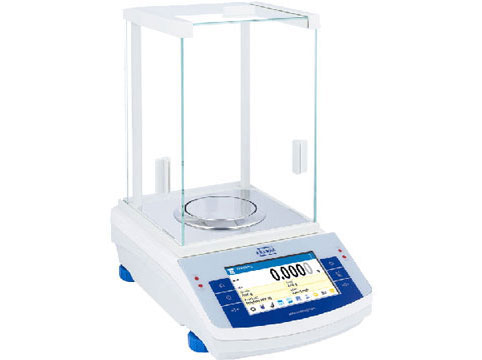
If you are looking to purchase a laboratory balance for a school, there are several factors to consider.
First, consider the type of balance that is appropriate for your needs. As mentioned earlier, there are several types of laboratory balances available, including top loading balances, analytical balances, and microbalances. Top loading balances are the most common and are typically used for routine weighing tasks, while analytical balances are more precise and are often used in chemical analysis. Microbalances are the most precise type of balance and are used to measure very small masses.
Next, consider the size and capacity of the balance. Make sure to choose a balance that is large enough to accommodate the objects you will be weighing, but not so large that it takes up too much space in the laboratory.
You should also consider the precision and accuracy of the balance. For most educational purposes, a balance with a precision of at least 0.1 grams is sufficient. However, if you need to measure very small masses or perform highly precise measurements, you may want to consider a balance with a higher level of precision.
Finally, consider the cost of the balance and whether it fits within your budget. Laboratory balances can vary significantly in price, depending on the type, size, and precision of the balance. It is important to balance the needs of your laboratory with the available budget when making a purchase.
There are many reputable suppliers of laboratory balances for schools, and you can often find a wide range of options by searching online or contacting scientific equipment suppliers in your area.
Uses of Laboratory balances
Laboratory balances are precision instruments that are used to accurately measure the mass of objects and substances. They are commonly used in a variety of settings, including schools, research laboratories, and industrial settings. Some of the main uses of laboratory balances include:
- Weighing objects: Laboratory balances are commonly used to determine the mass of a wide range of objects, from small samples of chemicals to larger objects such as packages or bags of materials.
- Determining the density of a substance: By weighing a sample of a substance and measuring its volume, scientists can calculate the density of the substance using the formula density = mass / volume.
- Analyzing the composition of a mixture: By weighing the individual components of a mixture and comparing their masses, scientists can determine the composition of the mixture.
- Conducting chemical reactions: Laboratory balances are often used to measure out precise amounts of chemicals for use in experiments or reactions.
- Teaching scientific principles: Laboratory balances are an important tool for teaching students about scientific measurement and the principles of mass and weight.
Aanalytical balances
Analytical balances are precision instruments that are used to accurately measure the mass of small samples, typically in the range of 0.1 mg to 500 g. They are commonly used in scientific research and chemical analysis, and are known for their high level of precision and accuracy.
Analytical balances use a beam balance to measure mass, and are often equipped with a digital display to make it easier to read the results. They also typically have a draft shield to protect the sample from external forces such as air currents, which can affect the accuracy of the measurement.
Analytical balances are designed to be highly sensitive and precise, and are often used to measure very small masses or to perform highly accurate measurements. They are commonly used in a wide range of applications, including chemical analysis, pharmaceutical research, and material science.
To ensure accurate results, it is important to properly calibrate and maintain analytical balances. This includes regularly checking the balance's calibration and handling the balance carefully to avoid damage. It is also important to keep the balance clean and free from dust and other contaminants, as these can affect the accuracy of the measurement.