Choosing between an overhead stirrer and a magnetic stirrer might sound like a small detail—until your experiment fails or your sample isn't properly mixed. Both stirrers serve the same core purpose: mixing substances. But they do so in very different ways, and knowing the difference can save you time, money, and a lot of lab headaches.
Let’s break down the differences, pros, cons, and ideal applications of each. Whether you're outfitting a university lab or working in pharmaceuticals, this guide will help you choose wisely.
What is a Laboratory Stirrer?
A laboratory stirrer is a tool used to mix, dissolve, or emulsify liquids and solids in laboratory settings. It ensures homogeneity and reaction efficiency in chemical, biological, and analytical procedures.
What is an Overhead Stirrer?
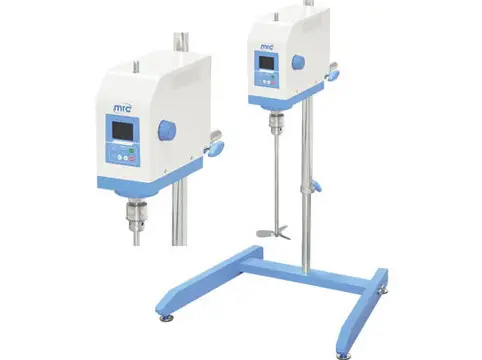
An overhead stirrer is a mechanical device that uses a motor to rotate a stirring shaft immersed in a container. The shaft is connected to different types of paddles or blades based on the application.
Applications:
- High-viscosity liquids
- Large-volume mixing
- Emulsions, suspensions, polymers
Advantages:
- Handles thick or viscous substances easily
- Allows for precise speed and torque control
- Accommodates large vessels
Limitations:
- Bulky and requires space
- More expensive
- Requires cleaning of stirring elements
What is a Magnetic Stirrer?
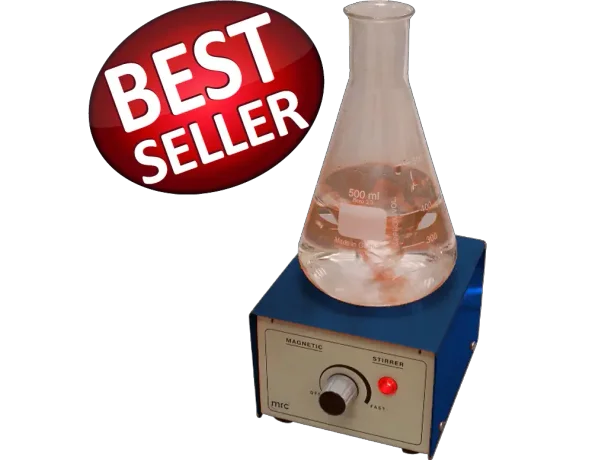
A magnetic stirrer uses a magnetic field to spin a stir bar inside a container. It’s compact, quiet, and very user-friendly—great for low-viscosity fluids.
Applications:
- Small-volume solutions
- Cell culture media
- Buffers and simple reactions
Advantages:
- Compact and quiet
- Easy to clean (no direct contact)
- Lower cost
Limitations:
- Limited to low-viscosity liquids
- Stir bar may decouple at high speeds
- Limited torque and volume capacity
Head-to-Head Comparison
Mixing Capacity
- Overhead: Up to 100 liters or more
- Magnetic: Ideal for <5 liters
Viscosity Handling
- Overhead: Excellent for thick substances
- Magnetic: Only for low-viscosity fluids
Durability and Build
- Overhead: Heavy-duty and robust
- Magnetic: Fragile stir bars can wear out or break
Ease of Use
- Magnetic: Plug, drop, and stir
- Overhead: Requires setup, shaft alignment
Maintenance Needs
- Overhead: Needs regular cleaning of shaft/paddle
- Magnetic: Easy—just clean the beaker
Precision and Control
- Overhead: Superior torque and programmable features
- Magnetic: Basic speed controls
Application Scenarios
When to Choose an Overhead Stirrer
- You're dealing with resins, slurries, polymers, or gels
- Mixing volumes exceed 5 liters
- Need precise torque and programmable functions
When a Magnetic Stirrer is Enough
- Low-viscosity solutions
- Educational labs
- Quick and routine mixing tasks
Overhead Stirrer: Best for Heavy-Duty Tasks
In industries like pharmaceuticals, cosmetics, and polymers, overhead stirrers are indispensable. They're built to manage thick, reactive, and high-volume mixtures—things magnetic stirrers simply can’t handle.
Magnetic Stirrer: Best for Everyday Lab Work
If you're doing titrations, heating buffers, or preparing solutions, a magnetic stirrer is your best friend. It's quiet, efficient, and space-saving—perfect for educational labs and general research.
Hybrid Approaches
Why not use both? Start with a magnetic stirrer for initial solubilization, then transfer to an overhead unit for high-load mixing. Some labs keep both on hand to maximize efficiency and adaptability.