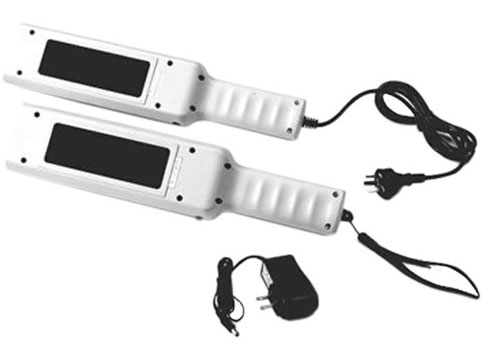
Below the visible light spectrum, in the ultraviolet (UV) spectrum, there are wavelengths from 10 nanometers (nm) to 400 nanometers (nm). This wavelength band of ultraviolet light is produced by UV lamps. Numerous fields, including geology and sterilizing, employ UV lights. Additionally, they are employed in laboratory research and analysis, including biological studies, as well as the curing of polymers and adhesives. In addition to gas discharge lamps, fluorescent and short-wave sources are frequently utilized in UV lamps.
UV Lamp Applications
UV Lamps find their applications in forensics, disinfection, sanitation, herpetology, aircraft, boats, swimming pools, hot tubs, pathology labs, etc.
Working of a UV Lamp:
On-demand UV electromagnetic radiation is emitted by industrial UV luminaires. Some commercial applications and manufacturing environments use them. A mercury vapor lamp, a curing system, a medical lamp, or a theatrical lamp is typically designed for certain applications. In contrast, a black light used in a stage show illuminates a large area and imposes an ambiance. In contrast, UV light used to cure adhesives on PCBs or electronic devices is usually rather small and focused.
A narrow range of UV wavelengths, which can be used for scientific purposes with fine resolution, is provided by the majority of UV lamps. In place of heat- and moisture-curing adhesives and coatings, manufacturers often find that UV lamps improve their processes and efficiency.
Types of UV Lamps:
UV lamps emit three different forms of UV light: UV-C and UV-B, which have wavelengths between 100 and 280 nanometers, and UV-A, which has a range of 315 to 400 nanometers.
- Gas-Discharge:
For applications that are scientific, these emit UV at precise spectral lines containing multiple gases. Sources of stability include deuterium and argon arc bulbs. The magnesium fluoride type of lamp incorporates a window. UV spectrometers are used for chemical analysis applications such as UV spectroscopy. Scientific applications of excimer lamps have been growing in recent years. Several wavelength bands in the vacuum ultraviolet are covered by the units, providing increased intensity and efficiency.
- Shortwave:
This includes fluorescent tubes without phosphor coatings. 85 to 90% of the energy produced by this lamp is produced at a wavelength of 253.7 nm, which is where the majority of its energy is supplied. Radiation with a wavelength of 253.7 nm can flow through fused quartz glass tubes as long as the 185 nm wavelength is blocked. Germicidal bulbs also clean surfaces in labs, food processing, and water treatment. These lights are two to three times more powerful than regular fluorescent bulbs.
- Ultraviolet LEDs:
Various curing applications and digital print activities employ LEDs that operate in the ultraviolet range. A similar set of elements is also required for inert curing environments.
- Black Light:
There is a small amount of visible radiation in this type of radiation, which emits longwave UVA. The inner tube surfaces of a fluorescent black light include phosphors, which cause them to release UVA energy instead of visible light. It is common for concerts and theatrical productions to use mercury-vapor mechanisms with wood-glass envelopes and phosphor coatings. Some wooden optical filters are available that almost completely block wavelengths longer than 400 nm.