A Peristaltic pump is a type of positive displacement pump which uses rotating rollers to squeeze a flexible tube or hose and move fluid through the tube. This pumping action is often used in food, beverage, chemical, and pharmaceutical processing industries. This pump is also known as the Rotary Positive Displacement Pump.
The hose is the only component within this type of pump that comes into contact with fluid, making it a reliable option. The tube also makes it suitable for handling clean and sterile fluids and containing abrasive particles. The pump is designed to limit the risk of contamination since there are no valves or impellers to clog or wear out.
The hose can be made with various materials like- Natural Rubber (FDA Approved), CSM Hypalon Rubber, Neoprene, Silicone, FKM – Viton, and EPDM.
Purpose Of Using A Peristaltic Pump
Peristaltic pumps are ideal for many applications due to their simplicity and versatility. As mentioned, they can handle a variety of liquids and particles, making them useful in all kinds of industries. They are ideal if you need a pump that can transport fluids without contamination.
This is because no valves or impellers could become clogged with debris. The pump's interior tubing is the only part that comes into contact with the substance being pumped, making it very unlikely for bacteria to grow.
They also require minimal maintenance since the only moving parts are the rollers. This means they can be left to run for long periods without having to worry about regular servicing. Additionally, these pumps have low power requirements and can operate safely at high temperatures and pressures.
These pumps are perfect for various uses, with a self-priming capability of 9.8 meters. This pump is perfect for liquids with high viscosity and solids. The bearings are heavy-duty to prevent wear and tear, and they're greased, so you don't have to regularly maintain the pump.
All in all, They provide an efficient and reliable solution for various industrial needs. With minimal maintenance required, they are easy to use and cost-effective too. If you need a pumping system that is versatile and safe to use, a peristaltic pump could be a perfect choice.
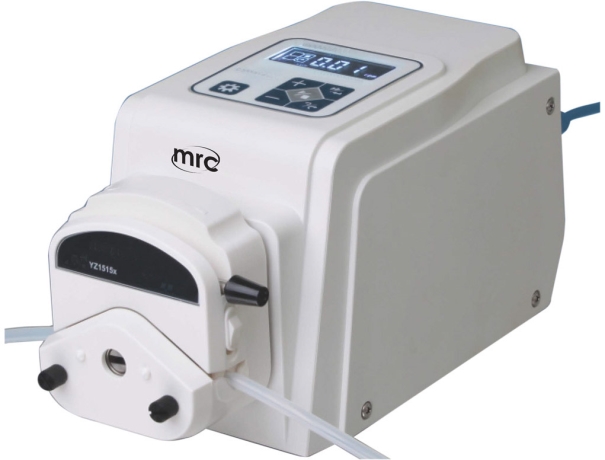
Peristaltic Pump Work Process
A Peristaltic pump compresses a flexible hose or tube that holds liquid. The pump has rollers that rotate inside the tube, squeezing it and moving liquid along its length as they turn.
Two rollers are positioned opposite each other on the pump's head and are driven by a motor to rotate in unison.
As they move around the bend of the tube, they press against the inside wall to create pressure, which pushes liquid along its path. The amount of pressure created depends on how much pressure the rollers apply as they turn.
The term "peristalsis" comes from biology, describing the muscles contracting in our stomach to allow food to push through. Similarly, the rollers contract and expand to push liquid through the tube. As one roller moves forward, it squeezes the tube from one side. When this roller passes its starting point, the next roller takes over and compresses the other side of the tube. This motion is repeated until all of the liquid has been pushed through.
Various Applications of Peristaltic Pumps
Peristaltic pumps are often used in chemical, food and beverage, pharmaceutical, medical, biotechnology agricultural applications such as irrigation and fertilization,, and water treatment applications. They are ideal for pumping fluids such as corrosive liquids, abrasive slurries, or viscous gels that would damage other pumps. can be used to accurately measure and control the flow rate of a variety of fluids. This is especially useful in laboratories where precise measurements are required. These pumps are often used to draw samples from tanks or pipes for analysis. This can help identify problems with fluid composition quickly and accurately.Also it can used in various food and beverage production processes due to their ability to handle liquids containing particles, air bubbles, and foam. These pumps can transfer fluids between containers or dispense fluids into various systems. They are also useful for filling bottles, bags, or vials with fluid samples.And used for precisely metering chemicals in manufacturing drugs and other pharmaceutical products. Also, used in mineral processing plants to pump abrasive slurries and other substances. You can also use them for precise dosing of chemicals in the process.
These pumps are ideal for pumping contaminated water as they will not allow cross-contamination, ensuring your end product is free from contamination. Additionally, you can use them to dose additives such as chlorine or potassium permanganate into a water treatment plant.
Peristaltic pumps transfer viscous chemical compounds, like crude oil, in many different settings. They can also be used for precisely metering chemicals into a reaction or storage tank. These pumps are often used in anaerobic digestion plants to pump sludge and other materials. They are especially useful for pumping slurries with high levels of debris or particles, which can damage traditional pumps.
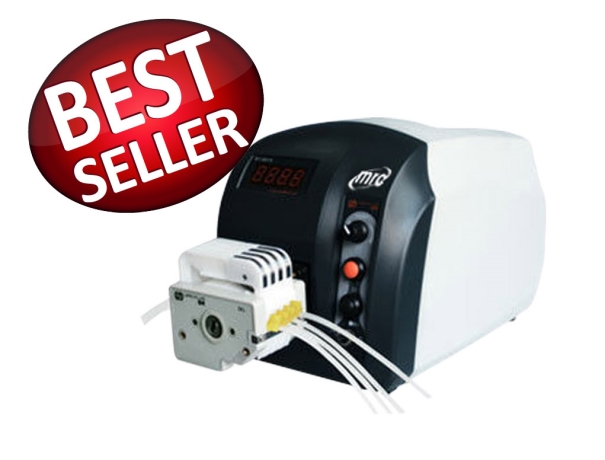
Peristaltic Pump vs. Diaphragm Pump
Peristaltic and diaphragm pumps are two of the most commonly used pumping methods. While both have their benefits, they differ substantially in terms of operation and cost.
Air Operated Diaphragm Pumps utilize compressed air to operate the diaphragm and can usually withstand higher pressures than a peristaltic pump. However, they are subject to wear and tear, meaning that periodic maintenance is required to keep them in good condition. Installation and maintenance costs are much higher for diaphragm pumps.
On the other hand, peristaltic pumps have few moving parts and require minimal maintenance. These pumps are also more cost-effective than diaphragm pumps due to their simplicity. They are ideal for applications requiring frequent flow rate changes or high accuracy requirements.
Diaphragm Pumps are inefficient due to air leakage, while Peristaltic Pumps do not have this issue. This means that peristaltic pumps are much more energy efficient than diaphragm pumps. Also, cleaning a Diaphragm Pump is complex, whereas changing tubing for a Peristaltic Pump is relatively simple.
Diaphragm Pumps rely on ball valves which do not work well for abrasive fluids, while Peristaltic Pumps are much better suited for this. Moreover, Peristaltic Pumps can also handle different viscosities and concentrations of particles in the pump age.