Phenotyping is the process of observing, measuring, recording, and analysing the visible or measurable traits of a living organism. In simple terms, it helps us understand how a plant, animal, cell, or human actually behaves and performs under real conditions. A phenotype can include physical appearance, growth rate, colour, size, yield, disease symptoms, stress response, metabolism, movement, behaviour, or physiological performance. Think of it like reading the “real-life report card” of biology: genes may provide the instructions, but phenotyping shows what actually happens when those instructions meet the environment.
The word is used across many scientific fields, but it is especially important in plant science, agriculture, genetics, medicine, biotechnology, animal research, and environmental research. In agriculture, phenotyping helps researchers identify crops that grow faster, tolerate drought better, produce higher yields, or resist disease. In medicine, it helps clinicians and researchers describe disease features accurately and link them with genetic, molecular, or clinical data. In laboratory research, phenotyping can be used to study cells, microorganisms, model organisms, and biological systems under controlled experimental conditions.
Phenotyping has become much more advanced in recent years because biology is no longer limited to manual observation. Modern phenotyping can involve digital cameras, multispectral imaging, hyperspectral imaging, chlorophyll fluorescence, thermal cameras, 3D scanners, LiDAR, weighing systems, environmental sensors, robotics, machine vision, and artificial intelligence. Instead of measuring a few samples by hand, scientists can now monitor hundreds or thousands of samples automatically, continuously, and non-destructively. This is the reason phenotyping has become a major tool in modern research and product development.
Phenotype vs. Genotype
To understand phenotyping properly, it helps to separate two terms that are often confused: genotype and phenotype. The genotype is the genetic code or inherited biological instruction set of an organism. The phenotype is the observable result of that genetic code interacting with the environment. A simple way to think about it is this: genotype is the recipe, phenotype is the finished dish. The same recipe can taste different depending on the ingredients, oven temperature, timing, and the person cooking it.
For example, two plants may carry similar genetic potential for growth, but one may perform better under drought, heat, salinity, low light, or poor soil. The difference may only become visible when both plants are exposed to the same stress condition and measured carefully. That visible or measurable difference is phenotypic information. This is why phenotyping is essential for breeding, screening, quality control, and biological research. Without it, researchers may know what genes are present, but not how those genes translate into practical performance.
The same logic applies in medicine. Two people may carry similar genetic variants, but their symptoms, disease severity, response to treatment, and clinical presentation can be different. This is where clinical phenotyping and deep phenotyping become important. Researchers need precise trait descriptions to connect genetic findings with real symptoms and outcomes. The more accurately the phenotype is described, the better the chance of understanding the disease mechanism or selecting an appropriate intervention.
Why Phenotyping Matters Today
Phenotyping matters because modern science is increasingly data-driven, but biological data is only useful when it reflects real performance. Genomics tells us what might happen, but phenotyping shows what is happening. In crop science, this distinction is critical because the world needs crops that can cope with climate pressure, unstable growing conditions, limited water, disease pressure, and demand for higher productivity. A crop variety is not valuable only because it has promising genes. It is valuable because it performs well in the field, greenhouse, growth chamber, or production system.
In research and industry, phenotyping also reduces guesswork. Instead of relying only on visual inspection, researchers can measure plant height, leaf area, canopy temperature, biomass, root architecture, photosynthetic efficiency, colour, chlorophyll content, fruit size, seed traits, and stress symptoms with far greater consistency. This turns subjective observation into measurable evidence. It also allows comparisons between treatments, genotypes, environmental conditions, and time points.
Phenotyping is also becoming important in precision agriculture. Farmers and agronomists increasingly need to know not only whether a crop is growing, but how efficiently it is using water, nutrients, and light. Sensors and imaging platforms can detect early signs of stress before they become visible to the naked eye. That early warning can support better irrigation, fertilisation, disease management, and harvest decisions. In other words, phenotyping helps move agriculture from reactive management to proactive decision-making.
How Phenotyping Works
Phenotyping usually starts with a clear biological question. A researcher may ask which plant variety is most drought-tolerant, which treatment improves growth, which disease symptoms are linked to a genetic mutation, or which cell population responds best to a drug. Once the question is defined, the next step is to decide which traits should be measured. These traits must be meaningful, measurable, and relevant to the goal of the experiment. Poor trait selection leads to weak data, even if the equipment is advanced.
After the traits are selected, the researcher chooses the measurement method. Some traits can be measured manually with rulers, scales, callipers, or visual scoring. Others require specialised systems such as imaging chambers, growth platforms, root scanners, gas exchange systems, fluorescence measurement, thermal cameras, or automated conveyors. The environment must also be controlled or recorded because phenotype is strongly influenced by conditions such as temperature, humidity, light, irrigation, soil type, nutrient availability, and stress exposure.
The final step is data analysis. In modern phenotyping, the measurement itself is only part of the work. Images, sensor readings, and time-series data must be cleaned, organised, processed, and interpreted. Artificial intelligence and machine learning are increasingly used to detect patterns, classify traits, segment images, count organs, estimate biomass, and predict biological outcomes. A good phenotyping workflow is not only about collecting data; it is about collecting the right data in a way that leads to reliable decisions.
Manual Phenotyping
Manual phenotyping is the traditional approach, and it is still useful in many research settings. It may involve counting leaves, measuring plant height, scoring disease symptoms, weighing biomass, observing animal behaviour, describing clinical symptoms, or measuring physical traits directly. The main advantage of manual phenotyping is flexibility. A trained researcher can notice unusual details, adjust the observation method, and apply expert judgement when needed. For small studies, manual measurement can be practical and cost-effective.
The weakness of manual phenotyping is that it can be slow, subjective, labour-intensive, and difficult to repeat consistently. Two observers may score the same disease symptom differently. A tired technician may measure less accurately after several hours. Manual measurements may also damage the sample, especially when biomass, tissue, root structure, or internal traits must be assessed destructively. These limitations become serious when researchers need to evaluate hundreds or thousands of samples.
Manual phenotyping is best suited for small-scale experiments, early exploratory studies, validation work, or traits that require expert interpretation. It is not always inferior to automated systems, but it has limits. In many modern laboratories, manual phenotyping is now used together with automated methods. The manual data can serve as ground truth for calibrating sensors, training algorithms, or validating automated measurements. This combination often gives the best balance between biological expertise and technical efficiency.
High-Throughput Phenotyping
High-throughput phenotyping, often shortened to HTP, refers to automated or semi-automated measurement of biological traits at large scale. In plant science, it commonly uses cameras, sensors, robotics, conveyors, drones, field vehicles, imaging cabinets, and software platforms to measure many plants quickly and objectively. The goal is to reduce manual labour, improve consistency, increase sample size, and capture dynamic changes over time. Instead of taking one measurement at the end of an experiment, researchers can monitor development every day or even continuously.
This is especially powerful because many biological responses are dynamic. A plant under drought stress may change leaf angle, temperature, growth rate, water use, and colour before it visibly wilts. A high-throughput system can detect these early changes and create a much richer picture of stress response. This helps breeders and researchers identify promising genotypes faster and with more confidence. It also allows experiments to include more replications, more treatments, and more environmental scenarios.
High-throughput phenotyping does not automatically mean better science. The system must be properly designed, calibrated, and matched to the research question. A camera can capture thousands of images, but if the lighting is inconsistent or the algorithm is poorly trained, the output may be misleading. The best HTP systems combine good experimental design, reliable hardware, clean metadata, strong data management, and biological interpretation. Technology is the engine, but scientific planning is the steering wheel.
Main Types of Phenotyping
Phenotyping is not one single method. It is a broad category that changes depending on the organism, research question, and required trait. The most common areas include plant phenotyping, animal phenotyping, human phenotyping, cellular phenotyping, microbial phenotyping, and clinical phenotyping. Each area has its own tools, vocabulary, standards, and challenges. A plant scientist may care about canopy temperature and root architecture, while a medical geneticist may care about developmental delay, facial features, organ abnormalities, or disease symptoms.
In commercial and research environments, phenotyping can also be divided by scale. Some systems work at the cell level, using microscopy and image analysis. Others work at the whole-organism level, such as plant growth chambers or animal behaviour systems. Field phenotyping operates in outdoor conditions, often using drones, tractors, mobile platforms, or handheld sensors. Clinical phenotyping focuses on patient characteristics, symptoms, diagnostic findings, and health outcomes.
The right type of phenotyping depends on what needs to be understood. If the goal is crop improvement, plant phenotyping is the natural focus. If the goal is drug discovery, cellular or animal phenotyping may be more relevant. If the goal is rare disease diagnosis, clinical deep phenotyping is essential. The common thread is that all phenotyping tries to turn biological observation into structured, useful, and comparable data.
Plant Phenotyping
Plant phenotyping is one of the fastest-growing areas because agriculture faces increasing pressure to produce more food with fewer resources. Plant phenotyping measures traits such as height, leaf area, canopy structure, root growth, flowering time, biomass, yield components, disease response, drought tolerance, salinity tolerance, nutrient efficiency, photosynthesis, transpiration, and colour. These traits help breeders and researchers understand how different varieties perform under different conditions.
Plant phenotyping can be done in growth chambers, greenhouses, laboratories, nurseries, or open fields. Controlled environments are useful because temperature, humidity, light, irrigation, and nutrients can be standardised. Field phenotyping is important because it shows how plants behave under real agricultural conditions. Each environment has trade-offs. Greenhouses offer control, while fields offer realism. The strongest research programs often use both.
Modern plant phenotyping equipment may include RGB cameras, multispectral cameras, hyperspectral sensors, thermal imaging, fluorescence systems, root imaging, weighing lysimeters, gas exchange tools, soil moisture sensors, and climate monitoring systems. These systems help researchers detect changes that are difficult or impossible to see by eye. For example, thermal imaging can indicate water stress, while fluorescence can provide information related to photosynthetic performance. When combined with AI analysis, these measurements can support faster and more accurate crop selection.
Animal Phenotyping
Animal phenotyping focuses on measurable traits in animals, including growth, body composition, fertility, feed efficiency, behaviour, movement, metabolism, disease resistance, stress response, and welfare indicators. It is used in livestock research, veterinary medicine, laboratory animal studies, genetics, nutrition, and pharmaceutical research. As with plant phenotyping, the aim is to understand how biology performs under specific genetic, environmental, nutritional, or treatment conditions.
In livestock systems, phenotyping can help improve breeding decisions and farm management. Traits such as weight gain, feed conversion, milk yield, heat tolerance, disease resistance, and reproductive performance are economically important. Measuring these traits accurately helps producers select better animals and improve efficiency. In research settings, animal phenotyping may involve behavioural tracking, metabolic cages, imaging, activity monitoring, blood markers, and physiological measurements.
Ethics and welfare are especially important in animal phenotyping. A good system should reduce stress, minimise unnecessary handling, and collect meaningful data without compromising animal wellbeing. Automated monitoring can help because it allows continuous observation with less human interference. However, researchers must still design experiments carefully and follow all relevant ethical standards. The best phenotyping systems improve both data quality and animal care.
Human and Clinical Phenotyping
Human phenotyping describes observable traits in people, from physical characteristics to clinical symptoms, laboratory results, imaging findings, behavioural traits, and disease patterns. In medicine, phenotyping is especially important because patients with the same diagnosis may not present in the same way. One patient may have mild symptoms, another may have severe complications, and another may respond differently to treatment. Accurate phenotyping helps clinicians and researchers understand these differences.
Clinical phenotyping is central to rare disease diagnosis, genetic medicine, epidemiology, and precision medicine. When symptoms are described in a structured and standardised way, they can be compared across patients, databases, and research studies. This is why vocabularies such as the Human Phenotype Ontology are important. They help turn complex clinical descriptions into searchable, comparable data. Without standard language, the same symptom may be described in many different ways, making research and diagnosis harder.
Deep phenotyping goes even further. It aims to describe clinical features in great detail, often combining physical examination, imaging, laboratory data, genomics, medical history, and digital health data. This approach can reveal patterns that are missed by broad diagnostic labels. In an age of precision medicine, the phenotype is not just a description; it is a bridge between genes, disease mechanisms, treatment response, and patient outcomes.
Technologies Used in Phenotyping
Phenotyping technology depends on the organism and the trait, but several tool categories appear again and again. Imaging systems are among the most common because they allow non-destructive measurement of visible and invisible traits. Sensors are also widely used because they can monitor environmental conditions and physiological responses. Software platforms are essential because modern phenotyping produces large amounts of data that must be processed, stored, and interpreted.
In plant phenotyping, cameras and sensors can be installed in growth chambers, greenhouse conveyors, field robots, drones, or fixed monitoring stations. In clinical phenotyping, digital tools may include electronic health records, structured clinical vocabularies, medical imaging, wearable devices, and AI-assisted analysis. In cellular phenotyping, microscopy and automated image analysis are commonly used to measure morphology, viability, movement, protein expression, and response to treatment.
The biggest shift in recent years is the move from isolated measurements to integrated systems. A modern phenotyping platform may combine imaging, environmental control, weighing, irrigation, barcode tracking, database management, and automated analysis. This integration matters because phenotype is influenced by context. A plant’s growth data is more valuable when linked to light, temperature, humidity, irrigation, genotype, treatment, and time. Good phenotyping is not just measurement; it is measurement with context.
Imaging Systems
Imaging is one of the most powerful tools in phenotyping because it captures detailed information without destroying the sample. Standard RGB cameras are used for colour, shape, size, and visible growth measurements. Multispectral and hyperspectral cameras can capture information beyond normal human vision, including spectral signatures related to pigments, water content, disease symptoms, and stress response. Thermal cameras can help detect temperature differences linked to transpiration and water status.
In plant research, imaging can measure leaf area, canopy cover, plant height, flowering, senescence, fruit traits, seed traits, and disease progression. In medicine and cell biology, imaging can support tissue analysis, cell morphology, digital pathology, and disease classification. In animal research, imaging can help measure movement, body shape, posture, and behaviour. The value of imaging increases when measurements are repeated over time because researchers can see biological change as a process rather than a single snapshot.
However, imaging requires careful control. Lighting, camera angle, distance, background, calibration, and image processing all affect the result. A poorly designed image setup can create false differences between samples. For example, a shadow may look like disease, or uneven lighting may distort colour measurements. Reliable phenotyping imaging needs consistent conditions, calibration standards, good software, and validation against real biological measurements.
Sensors and Environmental Monitoring
Sensors are essential because phenotype cannot be understood without environment. Temperature, humidity, light intensity, carbon dioxide, soil moisture, electrical conductivity, pH, nutrient level, airflow, and water availability can all influence biological performance. In plant phenotyping, environmental sensors help researchers connect growth and stress responses to actual growing conditions. Without this information, it is difficult to know whether a plant performed poorly because of genetics, treatment, or an uncontrolled environmental factor.
Physiological sensors can also measure the organism itself. In plant systems, this may include transpiration, stomatal conductance, chlorophyll fluorescence, canopy temperature, gas exchange, sap flow, or water use efficiency. In animal systems, sensors may measure movement, feeding, temperature, heart rate, or activity. In clinical settings, wearables and digital health devices can capture real-world phenotypes such as sleep, movement, heart rhythm, and physical activity.
The main advantage of sensors is continuity. A manual measurement may capture one moment, but sensors can record patterns across hours, days, or weeks. This is important because biological systems often respond gradually. A stress response may begin long before a visible symptom appears. Continuous monitoring helps researchers detect early signals and understand the timing of biological change.
AI and Data Analysis
Artificial intelligence is changing phenotyping because the volume of data is too large for manual analysis alone. A high-throughput phenotyping platform can generate thousands of images, sensor records, and trait measurements. AI can help segment plants from backgrounds, count organs, classify disease symptoms, estimate biomass, detect stress, identify outliers, and predict outcomes. In clinical research, AI can help structure phenotype descriptions, analyse imaging, and detect patterns in complex patient data.
Machine learning is especially useful when traits are visually complex. For example, disease severity, root architecture, leaf shape, and canopy structure can be difficult to measure with simple formulas. AI models can learn patterns from labelled data and apply them at scale. This reduces manual scoring and can improve consistency. However, AI is only as good as the data used to train and validate it. Biased, incomplete, or poorly labelled data can produce unreliable results.
The future of phenotyping will likely depend on human expertise and AI working together. Researchers still need to define the biological question, design the experiment, validate the results, and interpret the meaning. AI can accelerate analysis, but it cannot replace scientific judgement. The strongest systems will combine automation, transparency, validation, and domain expertise.
Phenotyping in Agriculture
Agriculture is one of the most important applications of phenotyping because farmers and breeders need crops that perform reliably under real-world pressure. Traditional breeding has always depended on observing plant traits, but modern phenotyping makes this process faster, more precise, and more scalable. Instead of selecting plants only by visual appearance or final yield, researchers can measure the underlying traits that explain performance. This may include water use, root development, heat tolerance, disease resistance, canopy structure, and photosynthetic efficiency.
Phenotyping also helps connect genetics with practical outcomes. A genetic marker may suggest that a plant has drought-tolerance potential, but phenotyping confirms whether that potential appears under actual drought conditions. This is why phenotyping is often described as a bottleneck in plant breeding. Genotyping has become fast and relatively affordable, but measuring real plant performance at scale is still challenging. High-throughput phenotyping helps close that gap.
For growers and agronomists, phenotyping supports smarter crop management. Imaging and sensor systems can identify stress zones, irrigation problems, nutrient deficiency, disease spread, and uneven growth. In controlled environments, phenotyping can help optimise lighting, irrigation, fertilisation, and climate conditions. In open fields, drones and mobile platforms can scan large areas quickly. The result is better data for decisions that affect yield, quality, and sustainability.
Crop Breeding and Stress Testing
Crop breeding depends on selecting plants with desirable traits, but many of the most valuable traits only appear under stress. A plant may look excellent under ideal conditions but fail under drought, heat, salinity, low nutrients, or disease pressure. Phenotyping allows breeders to test plants under controlled stress conditions and measure how they respond. This is critical for developing varieties that can survive and produce under changing climates.
Stress testing can involve withholding water, increasing temperature, changing nutrient levels, introducing disease pressure, or exposing plants to salinity. The phenotyping system then measures traits such as wilting, growth reduction, canopy temperature, root development, chlorophyll fluorescence, biomass, and recovery after stress. Recovery is especially important because a resilient plant may not avoid stress entirely, but it may recover faster and maintain yield.
Good stress phenotyping must be carefully designed. If the stress is too mild, differences between genotypes may not appear. If it is too severe, all plants may fail and useful variation may be lost. The goal is to create a controlled challenge that reveals meaningful biological differences. This is where accurate environmental monitoring, replication, and time-series measurement become essential.
Greenhouse and Field Applications
Greenhouse phenotyping provides controlled conditions, which makes it easier to compare genotypes and treatments. Automated greenhouse systems may use conveyors, imaging stations, weighing units, irrigation control, and barcode tracking. Plants can be moved through measurement stations at scheduled intervals, creating consistent and repeatable data. This is useful for early-stage screening, controlled stress experiments, and detailed physiological studies.
Field phenotyping is more complex because outdoor conditions are variable. Light changes, wind moves plants, soil is uneven, and weather can shift quickly. Still, field data is essential because crops ultimately need to perform outside controlled environments. Field phenotyping often uses drones, tractor-mounted sensors, handheld devices, fixed cameras, or robotic platforms. These systems can measure canopy cover, plant height, vegetation indices, temperature, flowering, lodging, disease symptoms, and yield-related traits.
The best phenotyping strategy often combines greenhouse and field work. Greenhouse studies help researchers understand mechanisms under controlled conditions. Field studies show whether those mechanisms translate into real-world performance. This combined approach gives breeders and researchers a stronger foundation for decision-making.
Phenotyping in Medicine and Life Sciences
In medicine and life sciences, phenotyping helps researchers understand disease, treatment response, and biological function. A disease is rarely just a name. It is a pattern of symptoms, signs, laboratory results, imaging findings, progression, severity, and response to therapy. Clinical phenotyping turns these patterns into structured information. This is especially important in rare diseases, where small differences in symptoms can point to different genetic causes.
In drug discovery, phenotypic screening can identify compounds based on their effect on cells or organisms, even when the exact molecular target is not fully known. This approach can be powerful because it starts with a functional outcome. If a compound improves a disease-relevant phenotype, it may be worth further investigation. Cellular phenotyping can measure cell shape, viability, movement, protein expression, organelle structure, and response to stress or treatment.
Phenotyping is also important in model organism research. Scientists use organisms such as mice, zebrafish, fruit flies, plants, and microorganisms to study gene function and disease mechanisms. When a gene is changed, phenotyping helps reveal what effect that change has. The observable result may include altered development, behaviour, metabolism, fertility, growth, or survival. This helps connect genes to biological function.
Deep Phenotyping
Deep phenotyping means describing traits in a highly detailed and structured way. In clinical settings, this may include physical examination, symptoms, medical history, imaging, laboratory tests, developmental features, behavioural observations, and genetic data. The goal is to create a complete and precise picture of the patient’s phenotype. This is particularly useful when diagnosing rare genetic disorders or comparing patients with similar but not identical clinical presentations.
Deep phenotyping can reveal patterns that are missed by broad labels. For example, two patients may both be described as having developmental delay, but one may also have a specific facial feature, heart defect, skeletal finding, eye abnormality, or metabolic marker. These details may point toward different diagnoses. Structured phenotyping helps clinicians search databases, compare cases, and interpret genetic variants more accurately.
The same idea applies outside medicine. Deep phenotyping in plants might involve not only measuring height and biomass, but also root architecture, photosynthesis, transpiration, leaf temperature, spectral reflectance, flowering time, and stress recovery. The deeper the trait profile, the more complete the biological understanding. The challenge is to collect detailed data without creating noise, confusion, or unnecessary complexity.
Disease Research and Precision Medicine
Precision medicine depends on understanding individual variation. Patients with the same disease may differ in symptoms, severity, biomarkers, genetics, environment, and treatment response. Phenotyping helps organise these differences so they can be studied and used clinically. Without accurate phenotyping, genetic data can be difficult to interpret. A genetic variant becomes more meaningful when it is connected to a well-described clinical picture.
Disease research also benefits from phenotyping because it helps define subgroups. A broad disease category may contain several biological subtypes. By studying phenotypic patterns, researchers can identify groups that progress differently or respond differently to treatment. This can support better trial design, more targeted therapies, and improved diagnosis. In complex diseases, the phenotype may be the key to finding hidden structure inside a messy clinical category.
Digital health is expanding the reach of phenotyping. Wearables, mobile apps, home monitoring tools, imaging systems, and electronic health records can capture real-world patient data outside the clinic. This creates opportunities, but also challenges. Data privacy, standardisation, accuracy, and clinical relevance must be handled carefully. More data is not automatically better; the data must be trustworthy and meaningful.
Choosing Phenotyping Equipment
Choosing phenotyping equipment should start with the research question, not the technology. Many organisations make the mistake of buying an advanced system before defining exactly what they need to measure. A hyperspectral camera may sound impressive, but it is not useful if the target trait can be measured more reliably with a simple RGB image or weight sensor. The best equipment is the equipment that produces valid, repeatable, and decision-ready data for the specific application.
Important questions include: What organism will be measured? Which traits matter? How many samples must be analysed? Is the measurement destructive or non-destructive? Will the work be done in a laboratory, greenhouse, growth chamber, clinic, or field? Does the system need environmental control? How often must measurements be taken? What level of automation is required? How will the data be stored, processed, and exported?
Support and usability also matter. A phenotyping system that is too complex may sit unused, even if it is technically powerful. Researchers need training, calibration procedures, maintenance support, software access, and clear workflows. Data format is another key issue. If the system cannot export data in a usable way, analysis becomes difficult. A good phenotyping platform should fit both the scientific goal and the daily reality of the users.
Key Buying Considerations
When comparing phenotyping systems, the first consideration is trait compatibility. The system must measure the traits that actually matter, whether that is plant height, canopy temperature, root structure, fluorescence, biomass, disease symptoms, cell morphology, or clinical features. The second consideration is throughput. A small laboratory may need a compact system for dozens of samples, while a breeding program may need high-capacity screening for thousands of plants.
Accuracy and repeatability are just as important as speed. A fast system that produces inconsistent data is not useful. Calibration, validation, lighting control, sensor stability, and software reliability should be evaluated carefully. Integration with existing workflows also matters. The system should work with the user’s sample sizes, containers, growth conditions, data systems, and reporting needs.
The final consideration is long-term value. Phenotyping equipment is not only a purchase; it becomes part of the research workflow. Buyers should consider service, spare parts, software updates, training, documentation, and future expansion. A modular system may be more valuable than a closed system if research needs are likely to change. The right choice should support today’s experiments while leaving room for tomorrow’s questions.
Phenotyping Instruments
Seed and Germination Phenotyping
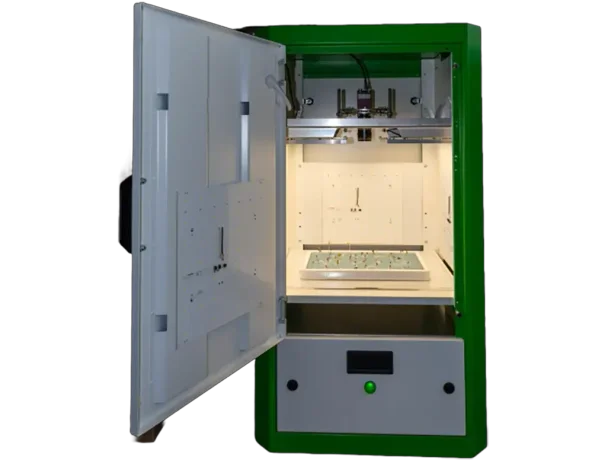
Seed and germination phenotyping systems are designed for accurate, repeatable and non-destructive analysis of seeds, seedlings and early plant development stages. These systems help researchers evaluate germination performance, seedling vigour, uniformity, growth rate and early morphological traits under controlled imaging conditions.
Using high-resolution top-view RGB imaging, the system enables detailed visual assessment of samples placed in trays, Petri dishes or similar laboratory formats. The controlled illumination environment helps reduce variation caused by shadows, reflections or inconsistent external light, allowing more reliable image acquisition and better comparison between samples.
This type of phenotyping is particularly useful in seed science, crop breeding, plant physiology, agronomy and quality control. It allows laboratories to monitor early growth stages without disturbing the sample, making it possible to follow development over time and collect objective visual data instead of relying only on manual scoring.
Typical applications include germination rate analysis, seedling emergence monitoring, growth uniformity assessment, treatment comparison, stress response studies and screening of seed lots. By combining precise imaging with repeatable measurement conditions, seed and germination phenotyping provides researchers with a practical tool for improving experimental accuracy and accelerating decision-making in plant research.
Multimodal Plant Phenotyping
Multimodal plant phenotyping systems provide advanced, high-content analysis of plants by combining several imaging technologies within one controlled platform. Instead of relying on a single visual measurement, multimodal phenotyping allows researchers to collect complementary data from RGB imaging, root imaging, hyperspectral imaging and 3D scanning.
RGB imaging can be used to evaluate visible plant traits such as leaf area, plant height, canopy structure, colour changes and overall morphology. Side-view and top-view imaging options allow analysis from different angles, while motorised sample rotation can support multi-view imaging for more complete plant characterisation.
For below-ground analysis, root-view imaging enables observation of root development in transparent pots or columns. This is especially valuable for studies focused on root architecture, root growth patterns, nutrient response, drought tolerance and plant-soil interactions.
Hyperspectral imaging adds another analytical layer by capturing spectral information beyond standard visible images. VNIR and SWIR imaging can help detect physiological and biochemical changes that may not yet be visible to the human eye. This makes the system suitable for stress detection, disease research, water status evaluation, nutrient studies and plant performance screening.
3D laser scanning provides structural information such as plant volume, geometry, canopy architecture and height-related traits. Together, these imaging modes create a powerful research platform for laboratories, universities, breeding programmes and agricultural research centres that need deeper, data-rich analysis of plant growth and response.
Whole-Plant Bioluminescence Imaging
Whole-plant bioluminescence imaging systems are designed for sensitive detection of weak light signals from luminescent biological samples. This technology is especially useful in plant molecular biology, gene expression studies, reporter gene assays, circadian rhythm research and plant-pathogen interaction studies.
The system combines a highly sensitive cooled camera for long exposure luminescence imaging with an RGB camera for standard visible-light documentation. This allows researchers to capture both the luminescent signal and the physical appearance of the sample in a controlled imaging environment.
Whole-plant bioluminescence imaging is particularly valuable when researchers need to monitor biological processes over time without destroying the sample. It can be used with single plants, seedlings, small trays, multi-pot pallets, Petri dishes, microtiter plates, leaf disks, fungi, insects, tissue cultures and isolated plant parts such as leaves, roots, fruits or blossoms.
Because the system supports non-destructive measurement, the same sample can be imaged repeatedly across different time points. This is important for dynamic biological studies where changes in signal intensity, spatial distribution or timing are key research outcomes.
Typical applications include monitoring promoter activity, gene expression patterns, biological rhythms, defence responses, metabolic activity and interaction studies involving plants and microorganisms. The combination of low-light sensitivity and controlled illumination makes the system suitable for demanding research environments where weak signals must be captured reliably.
Non-Destructive Laboratory Plant Phenotyping
Non-destructive laboratory plant phenotyping systems are designed to measure and document plant growth without damaging or disturbing the sample. This makes them ideal for repeated measurements over time, allowing researchers to follow the same plant or sample through different growth stages, treatments or environmental conditions.
The system uses high-resolution RGB imaging from a top-view position, supported by homogeneous LED illumination and controlled imaging conditions. This helps produce consistent, repeatable images that can be used for quantitative analysis of plant traits.
Non-destructive phenotyping is suitable for measuring visible plant characteristics such as leaf area, projected biomass, colour, morphology, growth rate, canopy coverage and treatment response. Because the plant remains intact, researchers can build time-series datasets and compare changes in development across days, weeks or experimental phases.
This approach is especially useful in plant physiology, crop science, breeding, stress biology, seedling research, environmental response studies and laboratory-based agricultural research. It reduces the need for destructive sampling and helps improve experimental efficiency by enabling repeated observation of the same biological material.
The compact laboratory format makes the system suitable for research facilities that require accurate imaging performance but do not need a large greenhouse-scale phenotyping platform. It provides a practical solution for controlled plant imaging, objective data collection and standardised comparison between experimental groups.