Force meters are devices used to measure the force applied to an object. They are widely used in various industries, research, and educational settings to quantify forces and ensure proper functioning and safety of products and systems.
Can Force Meters be used in different scientific experiments?
Yes, Force Meters, also known as Force Gauges or Dynamometers, can be used in a wide range of scientific experiments to measure forces and tensions in various applications. These instruments are designed to quantify the amount of force applied to them, making them valuable tools in many research fields and industries. Here are some examples of how Force Meters can be utilized in different scientific experiments:
- Physics Experiments: Used in physics laboratories to measure forces like tension, compression, and gravitational forces. They can be employed to study Newton's laws of motion, elastic and inelastic collisions, and the behavior of materials under different forces.
- Materials Testing: In material science and engineering, T HE Meters can assess the mechanical properties of materials, such as tensile strength, compression strength, and yield strength. These measurements aid in evaluating material performance and suitability for specific applications.
- Biomechanics: In biomechanical research, They are used to study the forces exerted by muscles, tendons, and bones during human or animal movements. They help in understanding gait analysis, sports performance, and ergonomic assessments.
- Product Testing: In industries like manufacturing and quality control, Force Meters are employed to test the integrity and durability of products. For instance, they can be used to measure the force required to activate buttons, press switches, or open/close doors and lids.
- Adhesion Studies: Used to measure adhesion forces between surfaces, coatings, or adhesives. This is particularly useful in the study of surface interactions and to determine the effectiveness of bonding agents.
- Tensile Testing: Force Meters are essential in tension testing, where they can assess the strength and elongation of materials such as wires, ropes, and textiles.
- Fluid Dynamics: In fluid mechanics, Used to measure forces exerted by fluids on objects, helping in the study of aerodynamics and hydrodynamics.
- Astronomy and Space Research: Force Meters are also employed in space missions to measure microgravity and forces acting on spacecraft during maneuvers or landings.

What are the key factors to consider when choosing a Force Meter for specific applications?
When choosing, there are several key factors to consider to ensure you select the right instrument for your needs. These factors include:
Force Range: Determine the maximum and minimum force levels you expect to measure in your application. Choose One that can accurately measure forces within this range. Selecting an instrument with an appropriate force range prevents damage to the equipment and ensures accurate readings.
Accuracy and Resolution: Consider the required level of precision in your measurements. Higher accuracy and resolution are essential for applications where precise force measurements are crucial. Keep in mind that higher accuracy typically comes with a higher price tag.
Unit of Measurement: Check whether the Force Meter displays force in the units required for your application, such as Newtons, pounds, or kilogram-force. Ensure that the selected unit aligns with your project requirements.
Load Cell Type: Force Meters use different types of load cells to sense the force applied. Common types include strain gauge load cells, piezoelectric load cells, and capacitive load cells. Each type has its advantages and is suitable for specific applications. Consider the load cell type that best matches your needs.
Sample Rate and Data Logging: For dynamic force measurements or applications with rapidly changing forces, a high sample rate is essential. Some of them also offer data logging capabilities to record and analyze force data over time.
Environmental Conditions: Assess the environmental conditions in which the Force Meter will be used. Consider factors like temperature, humidity, and possible exposure to dust or liquids. Choose a device that can withstand and perform reliably in your specific environment.
Display and Interface: Ensure that the Force Meter has a clear and easy-to-read display. Check the available interface options (e.g., USB, Bluetooth) for data transfer and compatibility with your data acquisition system.
Size and Portability: Depending on your application, the size and portability of the Force Meter may be important. If you need to move the equipment frequently or use it in tight spaces, consider a compact and lightweight device.
Calibration and Maintenance: Regular calibration is vital for accurate measurements. Check the calibration requirements and availability of calibration services for the chosen . Additionally, consider the maintenance needs and associated costs.
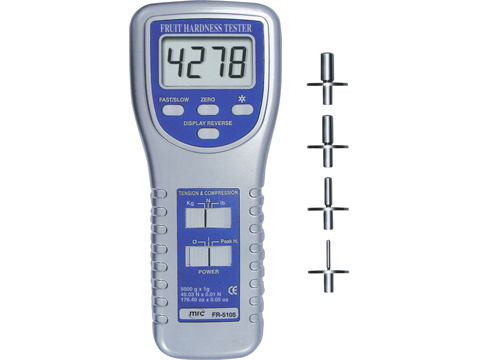
How can Force Meters be used in sports and athletics for performance measurement?
These devices can accurately measure the amount of force applied to them, helping coaches, athletes, and researchers gain insights into various aspects of athletic performance. Here are some ways force meters can be used in sports and athletics:
- Jump Performance: Used to assess an athlete's jumping ability. By jumping onto a force plate, the device can measure the ground reaction forces during take-off and landing. This data provides information on jump height, power output, and asymmetries, helping athletes optimize their jumping technique.
- Running Biomechanics: They can be embedded in tracks or treadmills to analyze an athlete's running biomechanics. The data collected can reveal information about stride length, ground contact time, and vertical oscillation, which aids in refining running form and reducing the risk of injuries.
- Balance and Stability: In sports that require good balance and stability, such as gymnastics or martial arts, They used to assess an athlete's stability during different movements. The information can help in designing targeted training programs to improve balance and reduce the risk of falls.
- Strength and Power Training: Can be utilized in strength and power training exercises to quantify the amount of force generated during weightlifting, squats, or other resistance exercises. This allows athletes and coaches to track progress, set goals, and optimize training routines for maximum performance gains.
- Rehabilitation and Injury Prevention: They are valuable in sports medicine and rehabilitation settings. They can aid in assessing an athlete's recovery progress after an injury by monitoring force imbalances or asymmetries. This information guides rehabilitation programs and ensures a safe return to sport.
- Sports Equipment Design: Force meters are utilized in sports equipment research and development. They help evaluate the performance of different sports gear, such as footwear, insoles, or racquets, to optimize design and enhance an athlete's performance.
- Biomechanical Research: Researchers use Them to conduct studies on the biomechanics of sports movements. The data collected helps understand the mechanics of specific sports actions, identify performance-enhancing techniques, and make evidence-based recommendations.
- Skill Assessment: The meters can assess an athlete's skill level by measuring the force and timing of movements during specific tasks. This information is useful in talent identification and development programs.
Describe the role of Force Meters in quality control and product testing processes.
These devices are used to measure the force or tension applied to an object, allowing manufacturers and quality control professionals to assess the strength, durability, and performance of products. Here's a detailed description of their role in quality control and product testing:
Quality Control in Manufacturing: Force meters are utilized to ensure that products meet certain quality standards during the manufacturing process. They help verify that components are assembled correctly, with the appropriate amount of force applied to achieve the desired fit and functionality. By measuring the force applied during assembly, manufacturers can identify any variations or defects that may impact the product's performance or safety.
Material Testing: In industries where material strength is critical, they are used to evaluate the tensile and compressive properties of materials. For example, in the automotive industry, they used to test the strength of metals, plastics, and other materials used in vehicle components, ensuring they meet the required safety and performance standards.
Product Performance Testing: Force meters are employed in conducting performance tests on various products. For instance, in the electronics industry, they can be used to test the actuation force of buttons on a keyboard or the pressure sensitivity of touchscreens. In the medical field, Used to assess the force required to operate medical devices or the strength of sutures and other medical equipment.
Calibration and Verification: To maintain accuracy and reliability, they need to be regularly calibrated. In quality control processes, force meters are used to calibrate other testing equipment, ensuring consistency and accuracy in force measurements throughout the testing process.
Research and Development: Used in research and development to evaluate new materials and designs. Engineers and researchers use force measurements to understand the behavior of materials under different forces and to optimize the performance of products and prototypes.
Safety Testing: In industries where safety is paramount, such as aerospace and construction, force meters are used to evaluate the structural integrity of components and assemblies. By subjecting products to controlled forces, engineers can determine their breaking points and safety margins.
Consumer Product Testing: Force meters are commonly employed in testing consumer products like toys, packaging, and household appliances. They help ensure that these products are safe for use and meet regulatory standards regarding force thresholds.