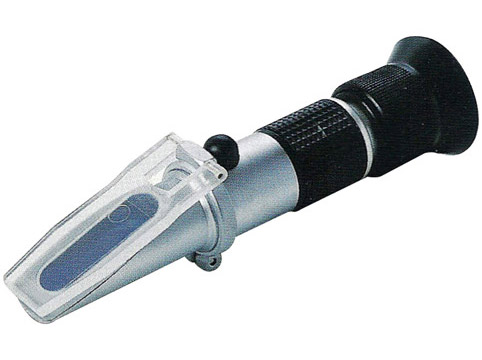
A refractometer is a scientific instrument used to measure the refractive index of a substance. The refractive index is a dimensionless quantity that indicates how much light is bent or refracted when it passes through a material. It provides valuable information about the composition, purity, concentration, and quality of a sample.
Uses
Refractometers are commonly used in various industries, including chemistry, physics, biology, food and beverage, pharmaceuticals, and gemology. They are particularly useful for determining the concentration of dissolved solids or solutes in a liquid or for assessing the sugar content in fruits and beverages.
Working principle
The basic principle of a refractometer involves measuring the angle at which light is bent as it passes through a sample. This angle is directly related to the refractive index of the material being tested. Refractometers typically consist of a light source, a prism or a sample holder, and a scale or a digital display that provides the refractive index or a related measurement.
To use a refractometer, a small amount of the sample is placed on the prism or in the sample holder. The light source is then directed through the sample, and the resulting refracted light is measured. This measurement is compared to a scale or a known reference value to determine the refractive index or other relevant parameters.
What Refractometers Measure
Refractometers measure the refractive index of a sample, which is the degree to which light is bent, or refracted, when it moves from air into the sample. The refractive index is used to determine the concentration of solutes in liquids. This principle is widely used to measure parameters such as sugar content (Brix), salinity, and specific gravity in various liquids.
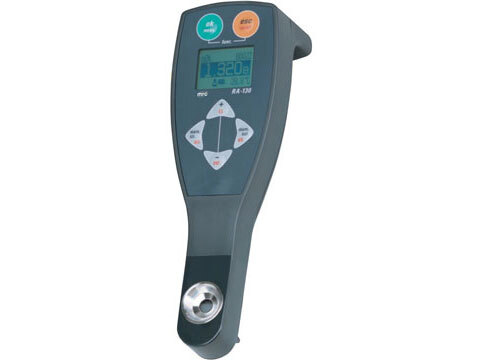
Applications:
Munro refractometers are versatile tools used in a multitude of applications, including:
Food and Beverage Industry:
Sugar Content: Determining the Brix value in juices, soft drinks, and other beverages.
Dairy Products: Measuring the concentration of milk and other dairy products.
Quality Control: Ensuring consistency in product formulation and final product quality.
Pharmaceutical Industry:
Concentration Measurements: Ensuring the correct formulation of pharmaceuticals.
Purity Analysis: Checking the purity of ingredients and final products.
Chemical Industry:
Solution Concentration: Measuring the concentration of chemicals in various solutions.
Quality Assurance: Maintaining the quality and consistency of chemical products.
Agriculture:
Soil Analysis: Measuring the refractive index of soil solutions to determine nutrient levels.
Plant Sap Analysis: Assessing the health and nutrient content of plants.
Automotive and Industrial Fluids:
Coolants and Lubricants: Measuring the concentration and quality of antifreeze, coolants, and lubricants.
Battery Fluids: Checking the specific gravity of battery acid.
Clinical Laboratories:
Urine Specific Gravity: Measuring the concentration of solutes in urine samples.
Blood Serum Analysis: Determining the refractive index of blood serum for various diagnostic purposes.
Key Features of Munro refractometers
Munro refractometers come equipped with a range of features that make them stand out in the market:
High Accuracy and Precision:
Advanced optics and digital technology ensure precise and accurate measurements.
Wide Measurement Range:
Capable of measuring a broad range of refractive indices, catering to various applications.
User-Friendly Interface:
Intuitive controls and clear display screens make them easy to operate, even for non-specialists.
Robust and Durable Construction:
Designed to withstand harsh industrial environments, ensuring longevity and reliability.
Automatic Temperature Compensation (ATC):
Automatically adjusts readings to account for temperature variations, providing consistent results.
Digital and Analog Options:
Available in both digital and traditional analog models to suit different user preferences and applications.
Portability:
Many models are portable, allowing for on-site measurements and fieldwork.
Calibration and Maintenance:
Easy calibration procedures and low maintenance requirements enhance their usability.