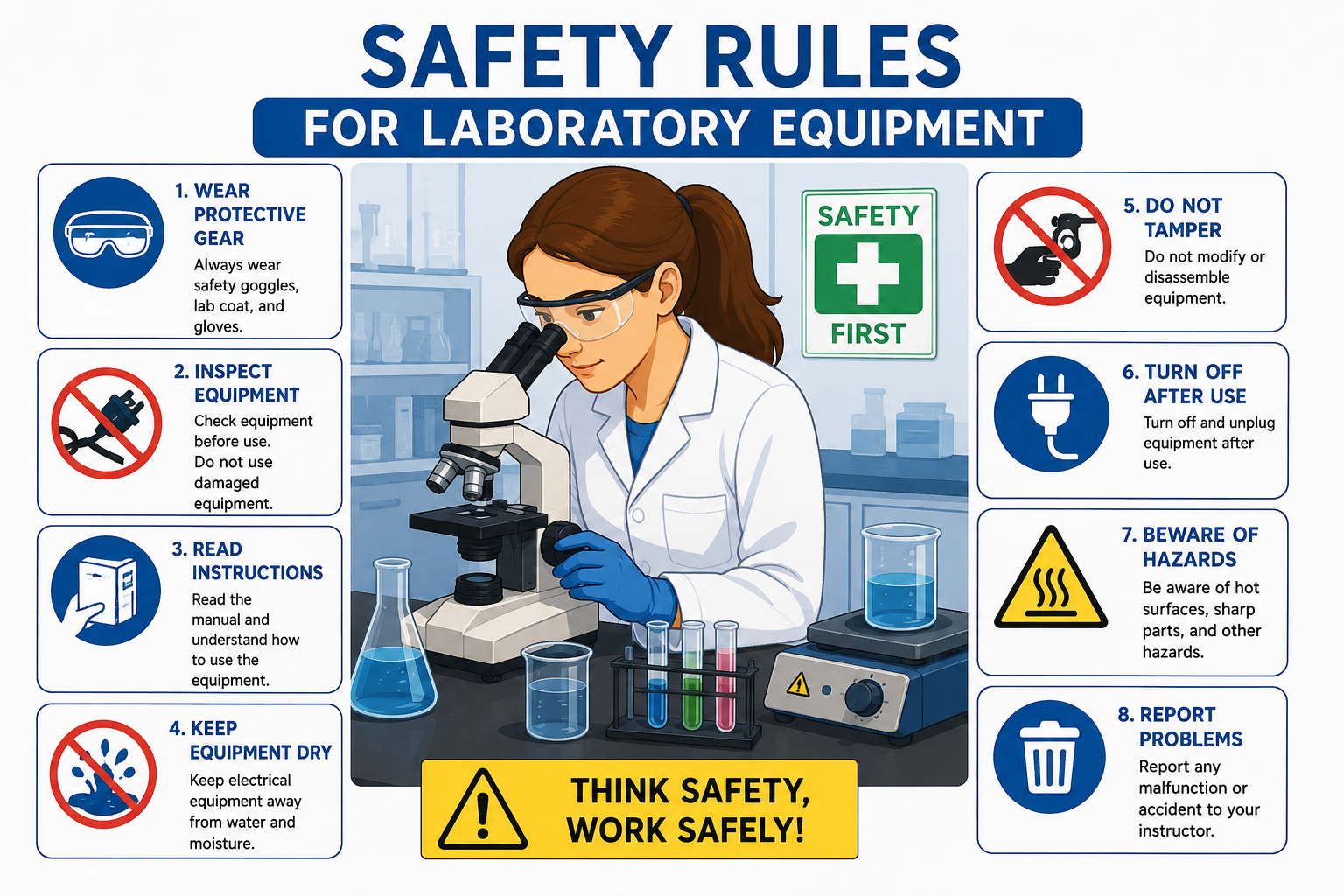
Laboratory equipment makes scientific work more accurate, repeatable and efficient. It also introduces risk if it is selected poorly, installed incorrectly, used without training or maintained badly.
A centrifuge can fail if it is loaded incorrectly. A hotplate can ignite vapours or cause burns. A fume hood can give a false sense of safety if airflow is poor. An autoclave can be dangerous if sealed containers are placed inside it. Even simple equipment can become hazardous when users ignore instructions or work in a rushed environment.
Safe laboratory work is therefore not based on one rule. It depends on the right combination of risk assessment, training, equipment condition, personal protective equipment, maintenance, ventilation and emergency planning.
This guide outlines practical safety rules for working with laboratory equipment in research, education, clinical, industrial and quality-control laboratories.
1. Understand the Risk Before Using the Equipment
Every item of laboratory equipment should be connected to a known task and a known risk.
Before using equipment, ask:
- What is the purpose of this equipment?
- What hazards does it create?
- What hazards come from the sample or material?
- What could happen if the equipment fails?
- What protection is required?
- What training is needed?
- What emergency action is required?
Laboratory risk is rarely caused by the machine alone. It usually comes from the combination of equipment, material, user behaviour and environment.
For example:
- A hotplate is more hazardous when heating flammable solvents.
- A centrifuge is more hazardous when tubes are unbalanced or infectious samples are used.
- A fume hood is less effective if the sash is too high or airflow is disrupted.
- A refrigerator becomes unsafe if flammable solvents are stored in an unsuitable unit.
Safety starts with understanding the full process, not just the product.
2. Use a Risk Assessment, Not Guesswork
A risk assessment identifies hazards and decides how they should be controlled.
It should consider:
- Chemicals
- Biological agents
- Heat
- Pressure
- Electricity
- Moving parts
- Sharp items
- Glassware
- Cryogenic materials
- UV light
- Lasers
- Noise
- Ergonomics
- Waste
- Maintenance tasks
In the UK, employers have duties to assess and control laboratory risks, including risks from hazardous substances. Open University safety guidance notes that laboratory work involving chemical or biological agents requires risk assessment, and that employees also have duties to take reasonable care of themselves and others.
The risk assessment should not sit unread in a folder. It should shape how the equipment is installed, labelled, operated and maintained.
3. Read the Manual and Follow the Rated Limits
The equipment manual is not optional.
Before operation, users should understand:
- Permitted applications
- Maximum temperature
- Maximum speed
- Maximum load
- Pressure limits
- Electrical requirements
- Compatible accessories
- Cleaning methods
- Prohibited materials
- Maintenance instructions
- Alarm meanings
- Shutdown procedure
Do not exceed rated limits.
Examples:
- Do not run centrifuge tubes above their rated RCF.
- Do not heat vessels above their safe temperature.
- Do not autoclave sealed containers unless approved.
- Do not overload shelves, rotors, platforms or chambers.
- Do not use a fume hood or biological safety cabinet for work it was not designed to control.
Using equipment outside its intended limits can damage the equipment, invalidate results and create injury risk.
4. Check Equipment Before Use
A short pre-use check can prevent many incidents.
Before starting, check:
- The equipment is clean.
- There is no visible damage.
- The power cable is intact.
- The plug and socket are suitable.
- Guards, lids or shields are in place.
- Alarms or indicators are normal.
- Moving parts are secure.
- The correct accessories are fitted.
- The work area is clear.
- The equipment is positioned securely.
- Required ventilation or extraction is working.
- The user knows how to stop the equipment.
If something looks wrong, do not use the equipment until it has been checked.
This is especially important for equipment that involves heat, pressure, high speed, vacuum, hazardous materials or biological samples.
5. Make Sure Users Are Trained
Laboratory equipment should only be used by people who understand both the equipment and the task.
Training should cover:
- Purpose of the equipment
- Basic operating procedure
- Main hazards
- Correct PPE
- Pre-use checks
- Normal operating limits
- Cleaning procedure
- Emergency stop
- What alarms mean
- What faults must be reported
- What users must never do
Training is particularly important for:
- Autoclaves
- Centrifuges
- Fume hoods
- Biological safety cabinets
- Ovens and furnaces
- Vacuum systems
- Cryogenic storage
- High-voltage equipment
- Pressurised systems
A user who can press “start” is not automatically trained.
6. Use the Correct PPE, But Do Not Rely on PPE Alone
Personal protective equipment is important, but it is the last line of defence.
PPE may include:
- Lab coat
- Safety glasses
- Chemical splash goggles
- Face shield
- Gloves
- Heat-resistant gloves
- Cryogenic gloves
- Closed shoes
- Respiratory protection where required
- Hearing protection where required
PPE must match the hazard. For example, thin disposable gloves may not protect against all solvents, and normal gloves are not suitable for handling very hot items.
Safety Data Sheets provide information about hazards, exposure controls, first aid, spill response and disposal requirements for substances.
However, PPE should not replace better controls such as fume hoods, guards, shields, closed systems, substitution of hazardous materials or safe work procedures.
7. Keep the Work Area Clear and Organised
A cluttered laboratory increases risk.
Around equipment, keep clear space for:
- Loading and unloading
- Air circulation
- Emergency access
- Spill control
- Safe handling of hot or fragile items
- Cable management
- Waste containers
- User movement
Avoid:
- Storing chemicals around electrical equipment
- Placing paper near hot surfaces
- Blocking ventilation slots
- Running cables across walkways
- Stacking items on equipment
- Keeping waste containers too close to heat or sparks
- Using equipment as storage space
Good housekeeping is not just about appearance. It improves safety, repeatability and workflow.
8. Control Chemical Exposure Properly
When equipment is used with chemicals, the chemical risk must be assessed separately.
Important questions:
- Does the material produce vapours?
- Is it flammable?
- Is it corrosive?
- Is it toxic?
- Can it react with heat, water, air or pressure?
- Does it require local exhaust ventilation?
- Does the equipment material resist the chemical?
- What spill procedure is required?
COSHH requires hazardous substances to be controlled so exposure is prevented or adequately controlled. The HSE-related guidance on COSHH describes control measures such as changing the process, substituting safer materials, enclosure and extraction equipment.
Examples:
- Heat volatile chemicals only with appropriate ventilation and risk controls.
- Use fume hoods for hazardous vapours where required.
- Do not store flammable solvents in unsuitable refrigerators.
- Do not use corrosive chemicals in equipment not designed for them.
- Do not autoclave bleach-containing waste unless the procedure specifically allows it.
9. Use Ventilation and Containment Equipment Correctly
Ventilation equipment only protects users when it is suitable and used correctly.
Chemical Fume Hoods
A fume hood is used mainly for chemical vapours, fumes and gases.
Safe use includes:
- Keeping the sash as low as practical
- Working inside the hood, not at the front edge
- Not blocking baffles
- Keeping the hood free from storage
- Checking airflow indicators
- Responding to alarms
Biological Safety Cabinets
A biological safety cabinet is used for suitable biological work involving aerosols or contamination risk.
Safe use includes:
- Keeping front and rear grilles clear
- Allowing airflow to stabilise
- Using correct cleaning and disinfection
- Avoiding open flames
- Not treating a BSC as a chemical fume hood
Laboratory guidance notes that limitations of biological safety cabinets should be clearly posted and that cabinets should be certified by a competent person at installation, after HEPA filter change, after moving and after repairs that may affect filter seal.
The key rule is simple: use the right containment device for the hazard.
10. Manage Electrical Safety
Many laboratory devices use electricity near liquids, chemicals or metal surfaces.
Electrical safety rules include:
- Do not use damaged cables.
- Keep plugs and sockets dry.
- Do not overload sockets.
- Keep cables away from hot surfaces.
- Avoid trailing cables.
- Do not use equipment with exposed wiring.
- Switch off equipment before cleaning unless the procedure says otherwise.
- Report shocks, sparks, burning smells or repeated tripping.
- Use equipment suitable for the environment.
In laboratories where flammable atmospheres may occur, electrical equipment may require special precautions. HSE guidance on hazardous area classification explains that laboratories using dangerous substances may need to assess whether explosive atmospheres can form and whether equipment needs special protective features.
11. Take Heat, Fire and Burn Risks Seriously
Heating equipment is common in laboratories, but it creates several hazards.
Examples include:
- Hotplates
- Ovens
- Furnaces
- Incubators
- Water baths
- Heating mantles
- Autoclaves
- Drying systems
Safety rules include:
- Keep combustibles away from heat.
- Do not heat sealed containers.
- Use heat-resistant gloves.
- Label hot items where needed.
- Allow cooling time.
- Avoid unattended hazardous heating.
- Use suitable vessels.
- Do not place hot glass on cold or wet surfaces.
- Keep flammable vapours away from ignition sources.
A hot surface may not look hot. A vessel may remain hot long after the equipment is switched off.
12. Control Moving Parts and Mechanical Hazards
Equipment with moving parts should be treated carefully.
Examples include:
- Centrifuges
- Shakers
- Mixers
- Homogenizers
- Pumps
- Motors
- Crushers
- Mills
- Stirrer shafts
Safety rules include:
- Keep guards in place.
- Tie back loose hair.
- Keep loose clothing away.
- Do not reach into moving parts.
- Stop equipment before adjustment.
- Balance rotating loads.
- Secure vessels and clamps.
- Do not bypass interlocks.
- Report vibration, unusual noise or instability.
If equipment moves unexpectedly, stop and investigate before continuing.
13. Label Equipment and Keep Records
Clear labels reduce mistakes.
Useful labels include:
- Equipment name
- Owner or responsible person
- Last service date
- Next service due date
- Status: in service, out of service, awaiting repair
- Main hazards
- Emergency contact
- Required training
- Calibration status
- Maximum load or temperature where relevant
Records should include:
- Maintenance
- Calibration
- Repairs
- Cleaning
- Faults
- Incidents
- Training
- Safety checks
Good records help laboratories prove that equipment has been managed, not just purchased.
14. Maintain Equipment Before It Fails
Routine maintenance is one of the most important safety controls.
The current article correctly notes that routine maintenance is required whether equipment is used in schools, research laboratories or industrial laboratories.
Maintenance may include:
- Cleaning
- Lubrication where required
- Filter replacement
- Seal inspection
- Calibration
- Electrical checks
- Rotor inspection
- Temperature verification
- Alarm testing
- Safety interlock testing
- Replacement of worn accessories
Do not wait for equipment to fail during use.
For critical equipment, maintenance should be planned and documented.
15. Clean Equipment Safely
Cleaning is not always simple.
Before cleaning, consider:
- Does the equipment need to be switched off?
- Are surfaces hot?
- Are chemicals present?
- Is biological contamination possible?
- Which disinfectant or cleaning agent is compatible?
- Could liquid enter electrical parts?
- Are gloves, goggles or face protection required?
- Is waste generated during cleaning hazardous?
Using the wrong cleaning agent can damage equipment, corrode surfaces or create chemical exposure.
For biological contamination, follow the laboratory’s disinfection procedure. For chemical contamination, follow the Safety Data Sheet and local spill procedure.
16. Know What to Do When Something Goes Wrong
Every laboratory should have clear procedures for:
- Spills
- Fire
- Burns
- Cuts
- Chemical exposure
- Biological exposure
- Equipment failure
- Power failure
- Alarm activation
- Broken glass
- Leaks
- Unusual smell
- Smoke
- Overheating
Users should know:
- How to stop the equipment
- Who to call
- Where spill kits are stored
- Where eyewash and safety showers are located
- How to isolate the area
- How to report incidents
- When not to clean up alone
A small equipment fault can become a serious incident if users improvise.
Common Mistakes with Laboratory Equipment Safety
Common mistakes include:
- Using equipment without training
- Ignoring the manual
- Assuming PPE is enough
- Using damaged cables
- Overloading equipment
- Blocking ventilation
- Ignoring alarms
- Using the wrong containment device
- Heating flammable materials without proper controls
- Failing to balance centrifuge tubes
- Cleaning with incompatible chemicals
- Leaving faults unreported
- Treating maintenance as optional
- Using laboratory equipment as storage space
- Not reviewing risk assessments when the process changes
A Practical Safety Mindset
Safe equipment use is not only about rules. It is about habits.
Before starting, ask:
- Is this the right equipment for the task?
- Is it in safe working condition?
- Am I trained to use it?
- Are the hazards controlled?
- Is the area clear?
- Do I know what to do if something goes wrong?
During work, ask:
- Is the equipment behaving normally?
- Are alarms clear?
- Is the process stable?
- Is anyone else at risk?
After work, ask:
- Is the equipment clean?
- Is it switched off or left in the correct state?
- Was any fault noticed?
- Does anything need to be recorded?
A safe laboratory is created by repeated small decisions, not by a single safety poster.
Laboratory Equipment from MUNRO Scientific
MUNRO Scientific supplies laboratory equipment for research, education, healthcare, quality control and industrial laboratories.
The available range includes laboratory balances, autoclaves, centrifuges, ovens, incubators, fume hoods, biological safety cabinets, refrigerators, freezers, hotplates, stirrers, shakers and measuring instruments.
When selecting equipment, laboratories should consider not only performance and price, but also safe installation, training, maintenance, spare parts, documentation and long-term support.