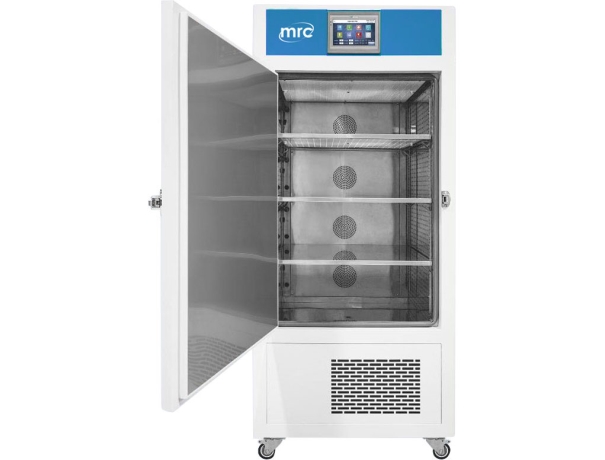
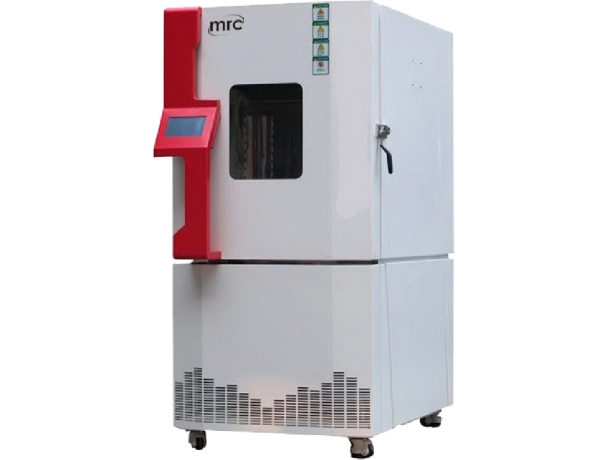
A temperature humidity chamber is used to expose products, components, materials or samples to controlled temperature and relative humidity conditions.
It is also known as a temperature and humidity chamber, environmental test chamber, climate chamber or climatic chamber.
The purpose is simple: to understand how a product behaves when exposed to environmental stress before it reaches the customer, storage site, transport route or field environment.
A chamber can simulate hot, cold, humid, dry or changing conditions in a controlled laboratory setting. This allows manufacturers and laboratories to study performance, durability, shelf life, packaging protection and failure risk.
Temperature humidity chambers are used in product development, quality control, research, validation, stability studies and reliability testing.
Why Temperature and Humidity Testing Matters
Many products fail not because they are poorly designed in normal conditions, but because they cannot tolerate real-world environmental change.
Temperature and humidity can affect:
- Materials
- Coatings
- Adhesives
- Packaging
- Electronics
- Mechanical parts
- Pharmaceutical formulations
- Food products
- Cosmetics
- Rubber
- Plastics
- Solar panels
- Sensors
- Batteries
- Labels
- Seals
A product may perform correctly at room temperature but fail after exposure to moisture, heat, condensation, cold storage or repeated cycling.
Temperature and humidity chambers help laboratories identify these weaknesses earlier.
Environmental chambers are widely used for drug stability studies, shelf-life testing, controlled temperature storage and biological research applications.
What Does a Temperature Humidity Chamber Test?
A temperature humidity chamber can be used to test how a product responds to specific environmental conditions.
Typical test goals include:
- Checking shelf life
- Evaluating material ageing
- Testing packaging protection
- Studying moisture absorption
- Checking corrosion risk
- Simulating transport conditions
- Testing electronics reliability
- Comparing product formulations
- Validating storage conditions
- Assessing seal performance
- Studying dimensional stability
- Finding hidden design weaknesses
- Supporting quality control and release testing
The test does not simply ask whether a product survives.
A good test asks:
What changed, how much did it change, and does that change matter?
Temperature Humidity Chamber Applications by Industry
| Industry | Typical test purpose | Examples |
|---|
| Pharmaceuticals | Stability and shelf-life testing | Tablets, capsules, packaging, biologics |
| Electronics | Reliability under heat and humidity | PCBs, sensors, connectors, displays |
| Solar energy | Outdoor exposure simulation | Photovoltaic modules, junction boxes, seals |
| Automotive | Component durability | Interior parts, adhesives, coatings, wiring |
| Aerospace and defence | Environmental stress testing | Materials, electronics, assemblies |
| Food and packaging | Shelf life and packaging performance | Dry foods, labels, cartons, films |
| Cosmetics | Product stability | Creams, emulsions, packaging |
| Plastics and rubber | Ageing and dimensional stability | Seals, gaskets, moulded components |
| Construction materials | Moisture and temperature resistance | Coatings, boards, adhesives |
| Research laboratories | Controlled environmental exposure | Materials, biological or chemical samples |
Constant climate chambers are commonly used for environmental simulation tests to determine service life and durability, including in pharmaceutical, food, cosmetics and research sectors.
The Difference Between Temperature Testing and Humidity Testing
Temperature testing studies the effect of heat, cold or temperature changes.
Humidity testing studies the effect of moisture in the air.
In practice, the two are closely connected.
A product exposed to 40°C / 75%RH is not only exposed to heat. It is exposed to a specific moisture condition at a specific temperature.
The same humidity percentage at another temperature may create a different moisture load on the product.
That is why a temperature humidity chamber must be selected and programmed according to both parameters together.
Common Types of Temperature Humidity Tests
1. Constant Climate Testing
In constant climate testing, the chamber holds one temperature and humidity condition for a defined period.
Example:
This type of test is common in stability, shelf-life and material-conditioning work.
2. Temperature Humidity Cycling
In cycling tests, the chamber moves between different conditions.
Example:
25°C / 60%RH for 4 hours 40°C / 90%RH for 4 hours Repeat for 10 cycles
Cycling can reveal failures caused by expansion, contraction, condensation, moisture movement or repeated environmental stress.
3. Accelerated Ageing
Accelerated ageing uses harsher conditions to speed up degradation.
The goal is to identify likely long-term weaknesses in a shorter period.
This approach is common in materials, packaging, electronics, cosmetics and pharmaceutical development.
4. Storage Simulation
Storage simulation checks whether a product remains stable under expected warehouse, pharmacy, transport or end-user storage conditions.
5. Transport Simulation
Transport conditions may include hot vehicles, cold routes, humidity changes or temporary exposure to uncontrolled environments.
A chamber can help test whether packaging and product performance remain acceptable after exposure.
6. Condensation or Damp Heat Testing
Damp heat tests expose products to high humidity and elevated temperature.
These tests are used where moisture ingress, corrosion, swelling, insulation breakdown or coating failure may be a concern.
Some temperature-humidity chambers are used for standards such as damp heat or alternating moist heat methods, depending on model capability and test protocol.
Example of a Temperature Humidity Test Profile
Instead of writing only “test under humidity”, a proper test profile should define the exact conditions.
Example profile:
| Test stage | Temperature | Relative humidity | Duration | Purpose |
|---|
| Stabilisation | 25°C | 50%RH | 2 hours | Bring sample to baseline |
| Stress exposure | 40°C | 75%RH | 72 hours | Evaluate accelerated moisture exposure |
| Recovery | 25°C | 50%RH | 24 hours | Assess permanent or reversible changes |
| Inspection | Ambient | Ambient | After recovery | Measure performance, weight, appearance or function |
This style of planning is more useful than simply placing a sample in a chamber and waiting.
What to Define Before Starting a Test
A reliable temperature humidity test begins with a written plan.
Define:
- Product or sample description
- Number of samples
- Sample condition before testing
- Temperature setpoint
- Humidity setpoint
- Test duration
- Ramp rate
- Stabilisation time
- Recovery time
- Loading pattern
- Acceptance criteria
- Measurement method
- Data logging interval
- Alarm limits
- What to do if the chamber deviates
- Final inspection method
The more important the product, the more important the test plan becomes.
Chamber Range Is Not the Same as Test Performance
A chamber may list a wide temperature and humidity range, but the important question is whether it can perform accurately at the exact conditions required by the test.
Check:
- Temperature range
- Humidity range
- Temperature stability
- Humidity stability
- Temperature uniformity
- Humidity uniformity
- Recovery after door opening
- Ramp rate
- Heat load from the sample
- Chamber volume
- Airflow pattern
- Water quality requirements
- Data logging capability
Some chambers offer temperature ranges such as -70/-40/-20/0°C to +150°C and humidity ranges such as 20% to 98%RH, depending on model and configuration.
However, the test should always be matched to the model’s actual performance envelope, not just the headline range.
Stability, Uniformity and Recovery
Three performance terms matter in almost every test.
Stability
Stability describes how well the chamber holds the set temperature and humidity over time after conditions have stabilised.
Environmental test chamber guidance often describes control tolerance after stabilisation, because chamber surfaces and the unit under test must also settle before readings are meaningful.
Uniformity
Uniformity describes how similar the temperature and humidity are at different locations inside the chamber.
Poor uniformity can mean one sample is tested under different conditions from another.
Recovery
Recovery describes how quickly the chamber returns to the set conditions after a door opening, sample loading or disturbance.
A chamber with poor recovery may not be suitable for tests where doors are opened often or the load is large.
Sample Loading: A Common Source of Bad Results
The chamber may be accurate, but the test can still be poor if the samples are loaded incorrectly.
Avoid:
- Blocking air outlets
- Placing samples against walls
- Overloading shelves
- Placing samples directly in front of sensors
- Stacking samples too tightly
- Mixing hot and cold samples without stabilisation
- Opening the door too often
- Using inconsistent sample placement between tests
Good airflow is essential because temperature and humidity must reach the samples evenly.
For repeatable tests, use the same loading pattern each time.
What Should Be Measured After the Test?
A temperature humidity test is only useful if the result is measured clearly.
Depending on the product, evaluation may include:
- Visual inspection
- Weight change
- Moisture absorption
- Colour change
- Cracking
- Swelling
- Warping
- Corrosion
- Adhesion loss
- Electrical resistance
- Insulation performance
- Mechanical strength
- Seal integrity
- Package leakage
- Functional test
- Assay result
- Potency or stability result
- Shelf-life assessment
Define pass/fail criteria before the test begins.
Industry Examples
Electronics
In electronics, temperature and humidity testing can reveal corrosion, condensation effects, insulation failure, leakage current, solder joint stress, connector degradation and coating weakness.
Temperature/humidity environmental chambers are used to investigate the impact of controlled environments on electronic products and systems.
Pharmaceuticals and Biotechnology
Pharmaceutical and biotechnology laboratories use controlled climate conditions to study product stability, packaging protection and storage performance.
Climate chambers are used for ICH-related stability testing, where predefined climate parameters must be maintained reliably for long periods.
Food and Packaging
Food and packaging laboratories may use temperature humidity chambers to test shelf life, packaging barrier performance, label durability, moisture absorption and storage behaviour.
Solar and Outdoor Equipment
Outdoor products such as photovoltaic components, communication equipment, seals and sensor housings may be exposed to heat, cold, moisture and daily environmental changes.
Testing helps identify moisture ingress, material ageing, coating weakness and long-term reliability problems.
Plastics, Rubber and Adhesives
Temperature and humidity can affect flexibility, hardness, dimensional stability, bonding strength and ageing behaviour.
Testing may reveal swelling, cracking, softening, embrittlement or adhesive failure.
When a Temperature Humidity Chamber Is Not Enough
A standard temperature humidity chamber may not be suitable for every environmental test.
Specialist equipment may be needed for:
- Salt spray corrosion testing
- UV weathering
- Thermal shock
- Dust testing
- Rain testing
- Vibration combined with climate testing
- Pressure or altitude simulation
- Explosive atmospheres
- Highly corrosive vapours
- Large products requiring walk-in chambers
Do not assume that one chamber can reproduce every outdoor or transport condition.
Mistakes That Make Environmental Tests Unreliable
Common mistakes include:
- Choosing conditions without a clear test purpose
- Using a chamber only because it is available
- Not defining acceptance criteria
- Starting measurement before the chamber stabilises
- Ignoring sample temperature before loading
- Overloading the chamber
- Blocking airflow
- Opening the door too often
- Not recording actual conditions
- Ignoring alarm events
- Comparing tests with different loading patterns
- Using unrealistic conditions that do not answer the real product question
- Forgetting recovery time after exposure
- Assuming a pass in one test proves full field durability