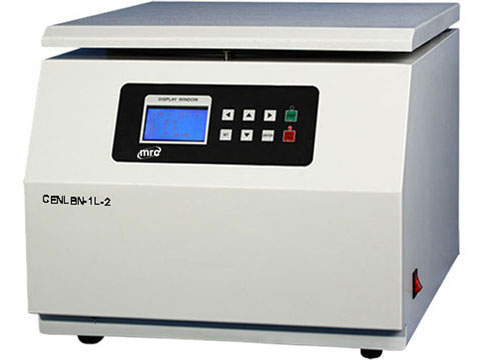
A laboratory centrifuge is used to separate components in a sample by spinning tubes or containers at high speed.
During centrifugation, denser particles or materials move outward under centrifugal force, while lighter components remain closer to the centre of rotation or stay in the liquid phase.
Centrifuges are used in clinical, research, microbiology, biotechnology, pharmaceutical, educational and quality-control laboratories.
Common applications include:
- Separating blood components
- Collecting cells
- Pelleting bacteria
- Clarifying liquids
- Separating serum or plasma
- Preparing DNA or RNA samples
- Protein work
- Cell culture workflows
- Microbiology sample preparation
- Environmental and food testing
Correct centrifuge operation is essential. Poor balancing, incorrect rotor selection, unsuitable tubes or excessive speed can damage samples, break tubes, harm the instrument or create safety risks.
What Does a Centrifuge Do?
A centrifuge accelerates separation.
Under normal gravity, particles may settle slowly according to density and size. A centrifuge increases this effect by spinning the sample at high speed.
The separation depends on several factors:
- Particle size
- Particle density
- Liquid density
- Liquid viscosity
- Rotor speed
- Rotor radius
- Run time
- Temperature
- Tube type
- Rotor angle
A centrifuge separates suspended particles according to particle size and density, the viscosity of the medium and rotor speed. (labmanager.com)
Main Parts of a Laboratory Centrifuge
A basic laboratory centrifuge includes several key parts.
Rotor
The rotor holds the tubes, bottles or plates.
It is the part that spins.
The rotor determines:
- Tube capacity
- Maximum speed
- Maximum RCF
- Sample angle
- Pellet position
- Tube compatibility
- Balance pattern
Motor
The motor drives the rotor.
It must accelerate, maintain and decelerate the selected speed safely.
Chamber
The chamber surrounds the rotor.
It may include a protective bowl, drain, lid lock and, in refrigerated centrifuges, a cooling system.
Lid and Lid Lock
The lid protects the user and must remain locked while the rotor is moving.
Modern centrifuges normally include an interlock that prevents opening during operation.
Control Panel
The control panel allows the user to set:
- Speed
- Time
- Temperature
- Acceleration
- Deceleration
- Programmes
- Rotor type
- Imbalance limits
Refrigeration System
Refrigerated centrifuges maintain samples at a selected temperature.
This is important for heat-sensitive biological samples, proteins, enzymes, cells or clinical materials.
RPM vs RCF: The Most Important Operating Difference
One of the most common centrifuge mistakes is using RPM when the protocol actually requires RCF.
What Is RPM?
RPM means revolutions per minute.
It tells you how many times the rotor turns each minute.
RPM describes rotor speed, but it does not directly describe the force applied to the sample.
What Is RCF?
RCF means relative centrifugal force.
It is usually written as:
RCF describes the force applied to the sample relative to gravity.
For example:
2,000 ×g ,10,000 ×g, 20,000 ×g
Why RCF Matters More Than RPM
Two different rotors can spin at the same RPM but produce different RCF values.
That is because RCF depends on both:
Professional centrifugation protocols often specify acceleration in ×g rather than RPM because rotor radius changes the force experienced by the sample. (wikipedia.org)
If a protocol states 10,000 ×g, do not simply enter 10,000 rpm.
Use the centrifuge’s RCF setting or convert RPM to RCF using the rotor radius.
Basic Centrifuge Operating Workflow
Step 1: Check the Protocol
Before using the centrifuge, confirm:
- Required RCF or RPM
- Run time
- Temperature
- Rotor type
- Tube type
- Sample volume
- Acceleration and deceleration settings
- Whether braking should be used
- Whether samples are hazardous or infectious
Do not guess settings from memory if a protocol exists.
Step 2: Choose the Correct Rotor
Select a rotor that fits:
- The tube type
- Sample volume
- Required RCF
- Required temperature
- Required separation type
- Biosafety requirements
Check the maximum speed and maximum RCF of both the rotor and the tube.
Never exceed the lower limit between the rotor and the tube.
Step 3: Inspect Tubes and Containers
Before loading, check that tubes are:
- Designed for centrifugation
- Compatible with the required RCF
- Not cracked
- Not deformed
- Properly capped
- Chemically compatible with the sample
- Filled within the permitted volume range
Do not use damaged tubes.
A cracked or unsuitable tube can fail during centrifugation and contaminate the rotor and chamber.
Step 4: Balance the Tubes
Balancing is essential.
Always balance tubes by mass, not only by eye.
Use:
- Same tube type
- Same cap type
- Same liquid level where possible
- Same total mass
- Symmetrical rotor positions
If there is an odd number of samples, prepare a balance tube with water or compatible liquid at the same mass.
Poor balancing can cause vibration, rotor stress, instrument damage and safety hazards.
Step 5: Load the Rotor Symmetrically
Place tubes opposite each other in matching positions.
For swinging-bucket rotors, ensure buckets are correctly seated and move freely.
For fixed-angle rotors, make sure tubes fit fully into the cavities and are supported correctly.
Always check the rotor loading diagram in the manual.
Step 6: Secure the Rotor and Lid
Before starting:
- Confirm the rotor is seated correctly.
- Tighten the rotor lid if required.
- Check bucket caps or aerosol-tight lids where used.
- Close the centrifuge lid.
- Confirm the lid lock engages.
Do not bypass lid locks or safety features.
Step 7: Set the Run Parameters
Set:
- RCF or RPM
- Time
- Temperature
- Acceleration rate
- Deceleration or brake
- Rotor programme if available
If working with delicate pellets or gradients, a slower deceleration may be needed to prevent disturbing layers.
Step 8: Start and Observe the Run
Stay nearby during acceleration.
Stop the centrifuge if you notice:
- Excessive vibration
- Loud knocking
- Grinding sounds
- Imbalance warning
- Burning smell
- Unusual movement
- Error message
Do not ignore abnormal operation.
Step 9: Wait for Complete Stop
Do not open the lid until the rotor has stopped completely.
Never try to slow a rotor manually.
Opening the lid too early can create serious injury risk.
Step 10: Remove Samples Carefully
After the run:
- Open the lid slowly.
- Check for tube leaks or breakage.
- Remove tubes without disturbing pellets.
- Keep tubes upright where required.
- Handle biohazard samples according to procedure.
- Clean spills immediately according to laboratory SOP.
How to Balance a Centrifuge Correctly
Balancing is one of the most important centrifuge skills.
Opposite Positions Must Match
In a simple rotor, each tube should have a matching tube directly opposite it.
The matching tube should have the same mass.
Balance by Mass
Two tubes that look equally filled may not have the same mass if:
- Different liquids are used
- Different caps are used
- Tube types differ
- Labels or adapters differ
- Volumes are slightly different
For critical or high-speed centrifugation, use a balance to match tube masses.
Balance Swinging Buckets
For swinging-bucket rotors:
- Buckets must be installed in opposite pairs.
- Buckets must swing freely.
- Tube inserts must match.
- Caps or lids must be secured.
- Opposing buckets should contain equal mass.
Balance Plates
For plate centrifuges:
- Balance plates with another plate of equal mass.
- If using only one plate, use a balance plate.
- Make sure plates are sealed if required.
- Confirm the rotor supports the plate type.
Rotor Types and How They Affect Operation
Fixed-Angle Rotor
In a fixed-angle rotor, tubes are held at a fixed angle.
Typical advantages:
- Faster pelleting
- Compact rotor design
- High-speed capability
- Good for microcentrifuge tubes
Pellets usually form along the side and bottom of the tube.
Swinging-Bucket Rotor
In a swinging-bucket rotor, buckets swing outward during spinning.
Typical advantages:
- Horizontal separation
- Clear layer formation
- Useful for blood tubes
- Useful for density gradients
- Easier separation of supernatant from pellet in some workflows
Pellets often form at the bottom of the tube.
Microcentrifuge Rotor
A microcentrifuge rotor is designed for small tubes, often 1.5 ml or 2.0 ml.
It is commonly used in molecular biology, DNA/RNA work and protein preparation.
Plate Rotor
A plate rotor holds microplates or PCR plates.
It is used for plate spin-down, sample collection and assay preparation.
Refrigerated Rotor Applications
Refrigerated centrifugation is useful when samples are temperature sensitive.
Examples include:
- Proteins
- Enzymes
- Cells
- Clinical materials
- RNA work
- Heat-sensitive reagents
Temperature Control During Centrifugation
Centrifugation can generate heat through motor operation and air friction.
Heat may affect sensitive samples.
A refrigerated centrifuge can help maintain a set temperature during the run.
Use temperature control when working with:
- Cells
- Proteins
- Enzymes
- Nucleic acids
- Temperature-sensitive reagents
- Clinical samples
- Long run times
- High-speed runs
Let refrigerated centrifuges pre-cool when the protocol requires it.
Working with Biological or Hazardous Samples
Centrifugation can create aerosols if a tube leaks, cracks or breaks.
For biological or infectious samples:
- Use sealed tubes.
- Use aerosol-tight rotors or safety caps where required.
- Load and unload according to biosafety procedures.
- Inspect tubes before use.
- Do not overfill tubes.
- Open aerosol-tight rotors in a biological safety cabinet if required.
- Follow spill procedures if breakage occurs.
Do not open the centrifuge immediately after a suspected tube break involving hazardous material. Follow the laboratory’s biosafety procedure.
Common Centrifuge Settings and What They Mean
Speed
Speed may be set as RPM or RCF.
Use RCF when possible for reproducibility.
Time
Run time affects separation.
Too short a run may leave particles suspended. Too long a run may compact pellets excessively or damage sensitive samples.
Temperature
Temperature protects sensitive samples and supports consistent results.
Acceleration
Acceleration controls how quickly the rotor reaches set speed.
Fast acceleration saves time, but some gradients or delicate samples may require slower acceleration.
Brake or Deceleration
Brake controls how quickly the rotor stops.
Strong braking can disturb loose pellets or gradients.
Gentle deceleration may be required for density-gradient work or fragile layers.
Maintenance Basics
Routine maintenance helps prevent failures and contamination.
After Routine Use
- Wipe spills immediately.
- Keep the chamber dry.
- Remove adapters if wet.
- Leave the lid open where appropriate to reduce condensation.
- Clean the rotor according to the manual.
Regular Checks
Check:
- Rotor for cracks, corrosion or scratches
- Buckets and adapters
- Tube cavities
- O-rings and seals
- Lid lock
- Rotor lid
- Chamber condition
- Imbalance warnings
- Unusual noise or vibration
Rotor failure can be serious because high-speed rotors contain substantial kinetic energy. Laboratory centrifuge safety information notes that rotor failure can be catastrophic, especially in larger centrifuges. (wikipedia.org)
Cleaning and Disinfection
Use cleaning agents compatible with the rotor and chamber material.
Avoid strong corrosive chemicals unless the manufacturer approves them.
After biological spills, use the disinfectant and contact time required by the laboratory procedure.
Service and Inspection
Follow the manufacturer’s maintenance schedule.
Record:
- Service dates
- Rotor inspections
- Repairs
- Spills
- Breakages
- Cleaning and decontamination
- Calibration or speed checks where required
Common Centrifuge Operation Mistakes
Common mistakes include:
- Using RPM when the protocol specifies RCF
- Failing to balance tubes
- Balancing by volume instead of mass
- Using cracked or unsuitable tubes
- Overfilling tubes
- Loading the rotor incorrectly
- Exceeding tube or rotor limits
- Forgetting rotor lids or bucket caps
- Opening before the rotor stops
- Ignoring vibration or noise
- Using the wrong brake setting
- Running heat-sensitive samples without temperature control
- Failing to clean spills
- Using damaged or corroded rotors
- Treating all rotors as interchangeable
Troubleshooting During Operation
The Centrifuge Vibrates
Possible causes:
- Tubes are unbalanced
- Rotor is loaded incorrectly
- Buckets are not seated
- Tube adapters are mismatched
- Rotor is damaged
- Centrifuge is not level
Stop the run and check the loading.
The Centrifuge Makes Unusual Noise
Possible causes:
- Rotor not seated correctly
- Loose rotor lid
- Damaged bucket
- Bearing issue
- Foreign object in chamber
Stop the centrifuge and report the issue.
The Sample Does Not Separate
Possible causes:
- RCF too low
- Run time too short
- Wrong rotor
- Incorrect temperature
- Incorrect sample preparation
- Wrong brake setting
- Pellet disturbed during removal
Check the protocol and repeat under corrected conditions if appropriate.
Tubes Break
Possible causes:
- Wrong tube type
- Tube not rated for required RCF
- Overfilled tube
- Chemical incompatibility
- Tube already cracked
- Wrong adapter
- Excessive speed
Clean and decontaminate according to procedure before reuse.
What is the basic principle of centrifuge operation?
A centrifuge spins samples at high speed to create centrifugal force. Denser particles or materials move outward through the liquid, allowing components to separate according to density, size and sample conditions.
What is the difference between RPM and RCF?
RPM is the number of rotor revolutions per minute. RCF, written as ×g, is the actual relative centrifugal force applied to the sample. RCF depends on both rotor speed and rotor radius.
Why must centrifuge tubes be balanced?
Tubes must be balanced to prevent vibration, rotor stress, instrument damage and possible safety hazards. Balance should be based on mass, not only volume.
Can I open a centrifuge while it is spinning?
No. The lid should remain locked until the rotor has stopped completely. Never try to open the centrifuge or slow the rotor manually during operation.
What should I do if the centrifuge vibrates?
Stop the run if safe, wait for the rotor to stop and check tube balance, rotor loading, buckets, adapters and tube placement. Do not continue if vibration remains unexplained.
When is a refrigerated centrifuge needed?
A refrigerated centrifuge is useful when samples are temperature sensitive, such as proteins, enzymes, cells, nucleic acids or clinical materials.