When it comes to laboratory sample preparation, precision is everything. Whether you're working with soil, food samples, or pharmaceuticals, accurate grinding and cutting are essential to obtaining reliable data. One of the most efficient tools for this task is the basic cutting sample mill. This guide will walk you through everything you need to know about these versatile laboratory devices, including how they work, where they are used, and how to select the right one for your lab.
What is a Basic Cutting Sample Mill?
A basic cutting sample mill is a piece of laboratory equipment designed to cut, grind, and homogenize dry materials into fine, consistent particles. These mills use sharp blades or knives to slice through samples efficiently, ensuring uniformity and reproducibility across experiments.
Purpose of Cutting Mills in Laboratory Sample Preparation
Cutting mills are important role in breaking down complex materials into smaller, manageable samples. This is vital for chemical analysis, quality control, and research to ensure that tests and experiments are conducted on representative portions of the material.
Importance of Precision in Sample Preparation
Accurate sample preparation is the foundation of meaningful scientific results. If samples are not ground or homogenized correctly, the outcome of the analysis may be skewed, leading to incorrect conclusions. Cutting mills guarantee uniformity in sample size, which enhances the reliability of subsequent experiments.
How Cutting Sample Mills Work
Key Components of a Cutting Sample Mill
Blades and Cutting Mechanisms
The heart of any cutting mill is its blades, which come in various shapes and materials to handle different types of samples. Some models use stainless steel blades for general use, while others employ hardened steel for tougher materials.
Sample Chambers and Collection Containers
Cut samples are deposited into chambers or containers, ensuring the material is contained for easy collection and further processing.
Operating Principle of Cutting Mills
The cutting process involves placing the sample into the mill’s chamber, where blades rotate at high speeds to shred it into finer particles. The ground material is then collected in containers, ready for analysis or further processing.
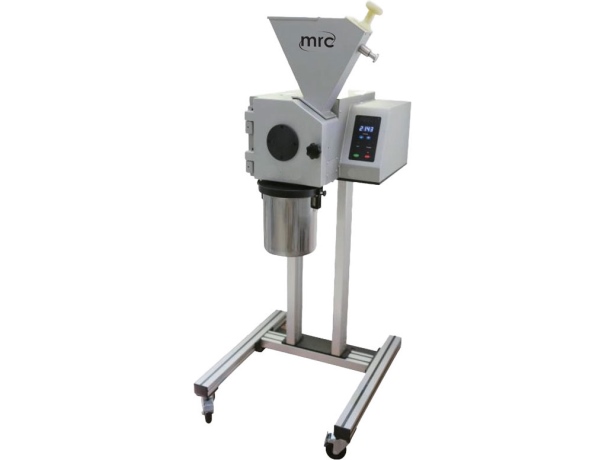
Types of Cutting Sample Mills for Laboratories
Small-Scale vs Large-Scale Cutting Mills
Small-scale Laboratory mills are ideal for research labs with limited sample sizes, while larger mills can handle bulk processing for pilot studies or industrial applications.
Variable-Speed vs Fixed-Speed Cutting Mills
Variable-speed mills provide flexibility to adjust for different materials, while fixed-speed models offer consistency for repetitive tasks.
Batch vs Continuous Cutting Mills
Batch mills process samples in discrete amounts, while continuous mills allow for uninterrupted sample processing, improving efficiency.
Applications of Basic Cutting Mills for Dry Materials
In Pharmaceutical Research
Laboratory Cutting mills are used to break down herbs, tablets, and other pharmaceutical ingredients for formulation testing.
In Food and Agricultural Science
They help scientists analyze food components and agricultural products like grains and seeds by grinding them into uniform samples.
In Environmental Studies and Soil Analysis
Cutting mills prepare soil and environmental samples for testing, ensuring consistent particle size across measurements.
How to Choose the Right Cutting Sample Mill for Your Laboratory
Material Hardness and Abrasion Resistance
Consider the hardness of the samples you’ll process. Harder materials may require mills with stronger blades to prevent wear and tear.
Sample Size and Output Requirements
Determine how much material you need to process and select a mill with a suitable chamber size.
Speed and Blade Options for Specific Samples
Some samples may need slower speeds to prevent heat buildup, while others require high speeds for quick cutting.
Benefits of Using Cutting Sample Mills in Laboratories
High Precision in Sample Preparation
Cutting mills ensure consistent particle size, which improves the accuracy of analytical results.
Time-Efficiency for Lab Operations
These mills process materials quickly, saving valuable time in busy laboratories.
Versatility for Various Research Fields
From pharmaceuticals to environmental studies, cutting mills adapt to a wide range of applications.
Maintenance and Cleaning of Cutting Sample Mills
Cleaning Blades and Chambers After Use
Thorough cleaning prevents cross-contamination between different samples.
Lubrication and Preventive Maintenance
Regular lubrication ensures smooth operation and extends the life of the mill.
Replacing Worn-Out Blades and Parts
Monitor the condition of the blades and replace them as needed to maintain performance.
What types of materials can a cutting sample mill process?
Cutting mills can handle a variety of dry materials, including grains, herbs, soil, and tablets.
Can I use the same mill for multiple sample types?
Yes, but thorough cleaning is required between samples to avoid cross-contamination.
How often should blades be replaced?
Blade replacement depends on usage frequency, but regular inspections will help identify when they are worn.
Are cutting mills suitable for wet samples?
Most cutting mills are designed for dry materials. Wet samples require specialized mills.
What safety features should I look for in a cutting mill?
Look for mills with safety guards, overload protection, and automatic shut-off features.