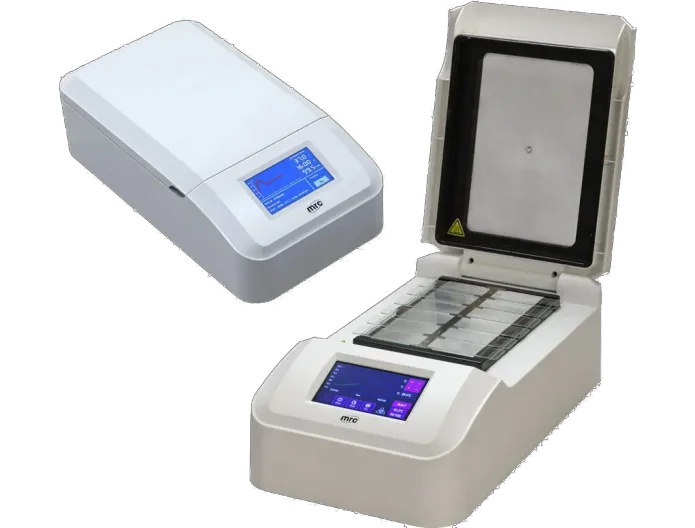
In modern molecular diagnostics and cytogenetic analysis, precision and consistency are paramount. The Slide Denaturation/Hybridization System is a vital instrument designed to standardize and streamline critical steps in slide-based hybridization protocols such as FISH (Fluorescence In Situ Hybridization) and ISH (In Situ Hybridization).
What Is a Slide Denaturation/Hybridization System?
This system automates and precisely controls two essential phases in hybridization workflows:
-
Denaturation: The double-stranded DNA on the slide is separated into single strands to allow probe binding.
-
Hybridization: A specific DNA or RNA probe binds to the target sequence on the slide under controlled temperature and humidity conditions.
By integrating programmable temperature control, humidity regulation, and consistent timing, these systems eliminate user error and improve reproducibility—crucial factors in diagnostic and research settings.
These systems are widely used across the following types of laboratories:
-
Cytogenetics Laboratories
-
Detection of chromosomal abnormalities using FISH.
-
Applications in prenatal testing, oncology, and constitutional genetics.
-
Molecular Pathology Laboratories
-
Tissue-based hybridization assays for cancer biomarkers.
-
Detection of viral nucleic acids (e.g., HPV, EBV).
-
Hospital Diagnostic Labs
-
Research and Academic Labs
-
Fertility Clinics and PGT Labs
Why Use a Slide Denaturation/Hybridization System?
-
Accurate Temperature and Timing: Ensures high hybridization efficiency.
-
Improved Reproducibility: Reduces variability between users and runs.
-
Time-Saving: Simplifies workflows and improves lab throughput.
-
Optimized for Various Slide Types: Compatible with most FISH/ISH protocols.
-
Essential for Diagnostic Reliability: Particularly in clinical and regulated labs.