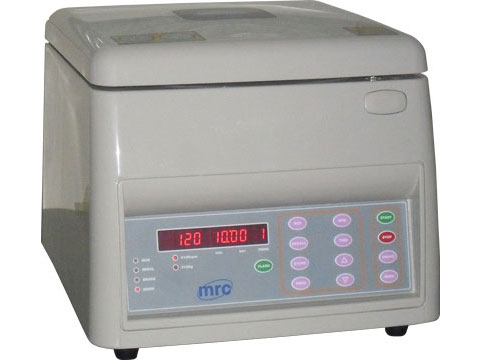
Many variables must be considered when selecting the proper centrifuge. The speed, capacity, rotational speed, and type of rotor all play important roles. The centrifuge’s rotor/basket design must be considered, as can the rotor dimensions. Obtaining the maximum centrifugal force and the rotor’s ability to support the weight of the sample are other important considerations.
There are many different types of laboratory centrifuges, depending upon what application the centrifuge will be used for.Mini-centrifuges can hold small tubes, while large-capacity can accommodate larger volumes. The swing-out rotor is the most common type used in laboratories. High-capacity centrifuges can have a swing-bucket rotor. Some of them have a fixed-angle rotor, and others have a horizontal rotor.
The selection of the appropriate centrifuge is further complicated by additional features such as refrigeration.
There are 2 main types of centrifuges
Ventilated and refrigerated are the two major types of Laboratory centrifuges. They are available in different sizes and have their own sets of features.
Ventilated:
The ventilated centrifuge rotors are those that come with openings or vents. These vents help to release heat while the centrifuge is in operation. This type of rotor is used for samples that require faster Spin rates. The air is drawn into the vents and helps to cool the samples as they are being centrifuged.
With this centrifuge, the temperature of your sample will rise during a standard 10-minute cycle. The degree Celsius increase is anticipated to be within several degrees; however, this type is only appropriate for applications that do not demand definitive temperature regulation.
Refrigerated:
The refrigerated centrifuge rotors come with a cooling system. This helps maintain the sample's temperature and prevents it from getting degraded. The refrigerated rotors are used for heat-sensitive samples.
They are the very best solution in areas where precise temperature control is critical. This is because they do not produce heat, allowing more accurate results. However, they do not always have the ventilation necessary to deal with all the fumes produced by the chemicals in the solution.
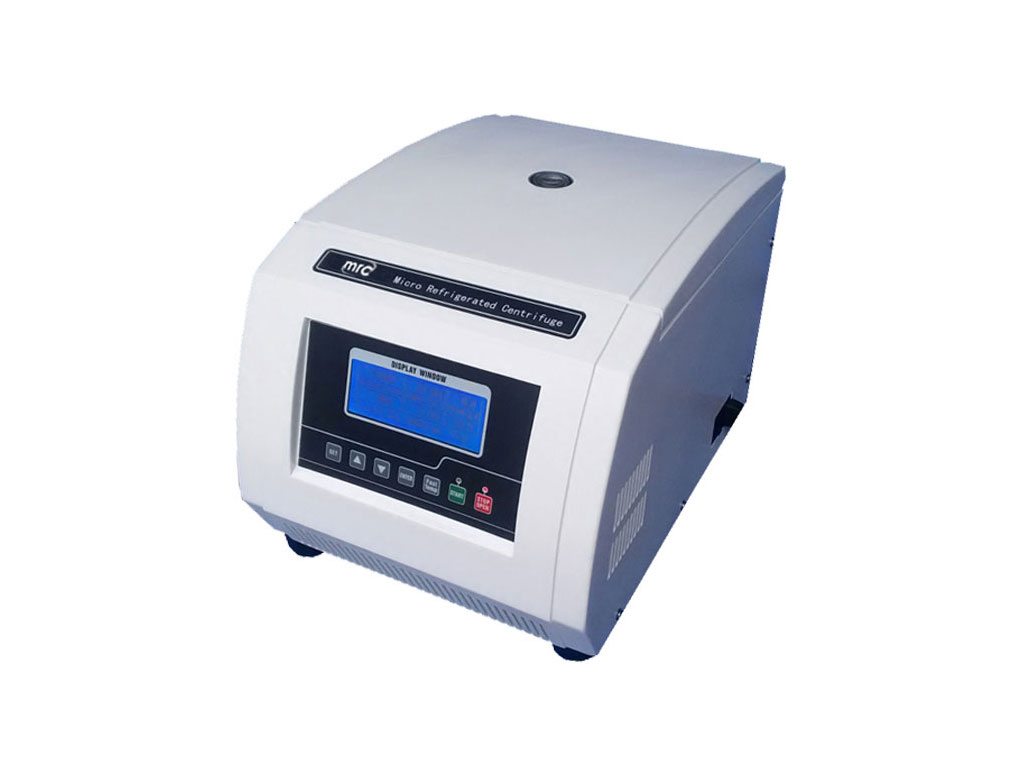
Choose The Right Speed For You
Unlike a ventilated system, a refrigerated centrifuge can operate at higher speeds. they use cold air to condense the vapor from liquid samples. The air is then directed back into the workspace, leaving the samples at the exact temperature required for further analysis. The optimum speed of a centrifuge might differ for each application, but generally, a higher speed results in a shorter centrifugation time and greater efficiency.
Besides having an optimal speed range, also has a maximum speed. The max speed is the fastest for a centrifuge to rotate without breaking apart. The max speed is affected by many factors, such as the type of rotor used, the weight and size of the load, and the amount of liquid in the tubes.
There are two main types of rotors: angular and swinging buckets. Angular rotors have a fixed angle, while bucket rotors can swing out to accommodate different tube sizes. The weight and size of the load also affect the max speed. For example, if you are centrifuging a large number of heavy tubes, the max speed will be lower than if you are centrifuging a small number of light tubes.
A fixed-angle rotor, or fixed-angle rotor, is used to keep the angle between the sample tubes and the centrifuge rotor constant during centrifugation. The fixed-angle rotor can typically spin at three or four times the speed of a swinging bucket rotor for the same sample volume. The fixed-angle rotor spins faster than a swinging bucket rotor because it needs only 15 to 20 percent more power than the bucket rotor. The fixed-angle rotor is a type of fixed-angle rotor.
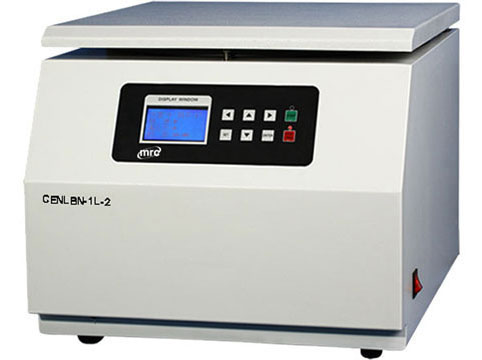
Determine The Size of Tubes You Need
The fixed capacity of the centrifuge is an important issue to consider when using a centrifuge. It may not be able to hold a minimum amount of sample tubes during a run. If the centrifuge has a capacity that is too small, the tubes may not be able to get up to speed and will not be properly centrifuged.
The tube size also determines how much liquid can be centrifuged at once. If the tube is too small, there may not be enough room for all the liquid. For example, if you are using a 15 mL tube, you can only centrifuge a maximum of 10 mL of liquid. Bucket rotors can accommodate a range of tube sizes, while fixed-angle rotors are limited to specific sizes.
Correctly shaped tubes must be used to avoid damage to the rotor. Most commercial rotors have cylindrical wells to match common tube sizes. Tubes too small can slip out of the well and may not be properly centrifuged. Tubes that are too large may not fit in the well at all and could break the rotor.
Different Sizes of Centrifuges
The machine's size and capacity must be considered to ensure it will fit in the available space. The smallest centrifuges are designed for use on a laboratory bench and have a limited capacity. Large centrifuges are floor-mounted and have a much greater capacity. Mid-sized are available that offer a compromise between size and capacity.
The centrifuge size also affects the speed at which it can operate. Smaller typically have lower maximum speeds than larger ones. This is because smaller machines are less stable at high speeds. Bench-mounted centrifuges are shorter in height but wider in width. Floor-mounted centrifuges are taller but smaller in width.
Things to Consider Before Choosing A Centrifuge
There are many factors to consider when choosing, including ease of use, safety features, and cost. You should also consider the centrifuge’s speed, size, and number of channels.
Another characteristic to consider is user-friendliness. Because the centrifuge is easy to use, both beginner and experienced users can utilize it without issue. This results in no health or safety concerns for the samples.
The safety is paramount. A safety switch that prevents the centrifuge from being turned on when the lid is open should be included. In addition, a brake should stop the rotation of the rotor immediately if the power is lost.
The cost will vary depending on its features and specifications. A more expensive does not necessarily mean better quality, so it is important to compare models before purchasing.