One of the essential pieces of lab equipment is laboratory vacuum pumps. These tools are used for a variety of purposes by engineers, scientists, etc. In order to generate an area free of air or gas, vacuum pumps mechanically remove air and gas molecules from a sealed space. Its applications include liquid filtering, decreasing vapor pressure, gathering gas samples, etc.
Types of Vacuum Pumps in Laboratories:
Vacuum Scroll Pumps:
The design of Scroll Vacuum Pumps includes non-hazardous applications like freeze-drying. Since it is a dry pump and there is no requirement for oil to operate, maintenance is not necessary. One of its benefits, in addition to quiet operations, is that it takes little upkeep to function.
Vacuum Pumps with Rotary Vanes:
The most often used type of vacuum pump is the rotary vane because they are the least expensive. For testing methods that need continuous suction, the dry gas extraction technique is advised. This type of material features essential air filters that aid in removing undesired tiny dust particles. Due to its direct usage in the environment, rotary vane vacuum pumps are a fairly simple sort of instrument.
Pumps with a diaphragm:
Diaphragm Vacuum Pumps do not need oil to function, in contrast to Rotary Vane Pumps. A revolving piston accomplishes the operation of sucking air via its diaphragms as they oscillate back and forth. Over other types of equipment with specialized duties, specifically built laboratory equipment is chosen because it has features like filtration, liquid degassing, and backup pumps. To conduct evaporative tests, however, a specialized type of diaphragm pump is the best choice, such as those that have been explicitly designed for chemistry use.
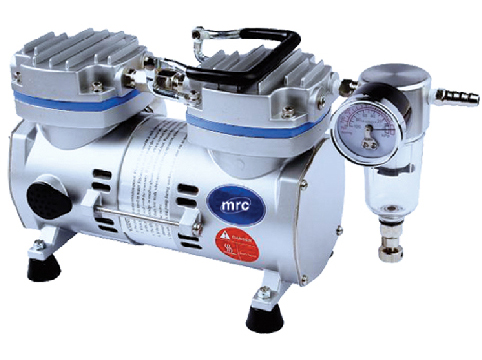
How should a vacuum pump be chosen for usage in a lab?
Laboratory Vacuum pump selection depends on the application of the pump. Dry pumps are often the best solution for simple suction applications in tests like filtration and aspiration. Machinery that is oil-based is required for heavy-duty tasks.
Besides determining the lower pressure level provided by the pump, there is also another factor to consider, such as the pressure level at the pump stops allowing evaporation to take place. As a rule, corrosive or noncorrosive substances must be considered when working with them.
You must also take pumping speed into account while choosing your pumps. The pumping rate determines vapour mobility. Evaporation would happen more quickly if the pumping rate is higher.
Application of laboratory Vacuum Pumps
Rotary Evaporation:
Vacuum pumps are essential in rotary evaporation processes, where solvents are removed from samples under reduced pressure. This technique is widely used in chemistry and biochemistry laboratories for concentration and purification of liquids.
Vacuum Filtration:
In laboratories, vacuum filtration is employed to separate solid precipitates from liquid samples. Vacuum pumps create the necessary suction to pull the liquid through the filter paper, leaving behind the solid components.
Vacuum Distillation:
Vacuum distillation is utilized to separate components of a mixture with high boiling points under reduced pressure. Vacuum pumps lower the boiling points of substances, making distillation more efficient and effective.
Gas Sampling:
Vacuum pumps are employed in collecting gas samples for analysis. They help in drawing gas into containers or analytical instruments for various applications, such as environmental monitoring or gas composition analysis.
Centrifugal Concentration:
Laboratories are often used in conjunction with centrifuges for the concentration of samples. This process is especially useful in molecular biology and biochemistry for concentrating DNA, RNA, or proteins.
Freeze Drying (Lyophilization):
Vacuum pumps are integral to the freeze-drying process, where water is removed from substances without transitioning through a liquid phase. This is commonly used for preserving perishable materials, such as food, pharmaceuticals, and biological samples.
Semiconductor Processing:
In semiconductor fabrication, vacuum pumps are employed to create a vacuum environment for processes like chemical vapor deposition (CVD), physical vapor deposition (PVD), and other thin-film deposition techniques.
Mass Spectrometry:
Used in mass spectrometers to create a low-pressure environment in the ionization chamber. This allows for the analysis of ionized samples by separating ions based on their mass-to-charge ratios.
Vacuum Ovens:
Vacuum ovens are utilized for processes such as drying heat-sensitive materials or conducting reactions under controlled atmospheric conditions. Vacuum pumps help maintain the desired low-pressure environment within the oven.
Research and Development: