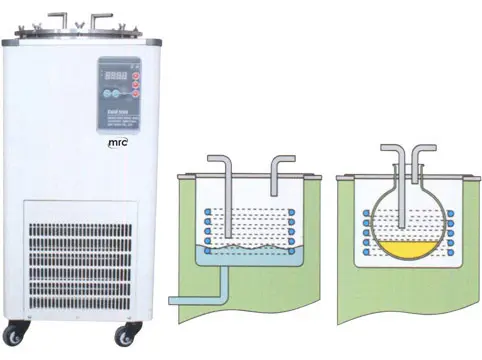
A cold trap is a device integrated into vacuum or freeze-drying systems, designed to capture and collect vapors, gases, or volatile substances before they reach the vacuum pump.
By doing so, it protects the pump, improves vacuum quality, and extends the lifespan of the equipment.
The cold trap is an essential component in any vacuum system where volatile vapors are present. It ensures pump integrity, enables deeper vacuum levels, enhances operational safety, and prevents back contamination of the system.
How a Cold Trap Works
Basic operating principle:
- Vapors extracted from the chamber (e.g., water, volatile organic compounds) are directed through tubing into the trap.
- The trap contains a highly cooled surface—usually cooled by liquid nitrogen or a thermoelectric (Peltier) mechanism.
- When vapors hit the cold surface, they condense or freeze onto it, accumulating as ice or solidified material.
- The vacuum pump only draws in gases that did not condense—typically inert gases or trace vapor residues.
Why Use a Cold Trap?
1. Protection of the vacuum pump:
Vapors of water, acids, oils, or organic solvents can damage oil-sealed pumps, degrade lubrication, and even cause rust or wear. The cold trap prevents such contaminants from entering the pump.
2. Improved vacuum quality:
Water or solvent vapors limit the achievable low pressure. When these vapors are captured in the trap, the system can reach a deeper vacuum.
3. Prevention of back contamination:
Materials that could flow back from the pump into the system are stopped by the trap.
Common Applications
- Freeze drying
- Rotary evaporation
- Gas removal in reactive systems
- Mass spectrometry under vacuum
- Vacuum coating processes
Types of Cold Traps
| Type | Operating Temperature | Cooling Source | Notes |
| Liquid Nitrogen | ~ -196°C | Liquid nitrogen tank | Suitable for vapors like water, alcohol, formaldehyde |
| Electronic Cooling (Peltier) | ~ -40°C | Electric power | Easy to maintain but suitable only for easily condensable substances |
| Dry Cold Trap | ~ -80°C | Compressor-based | Common solution in biological laboratories |
Important Operational Guidelines
- Do not operate the cold trap without an active vacuum—this may cause direct condensation of moisture from ambient air.
- Regularly empty the trap—accumulated volatile materials may pose explosion or contamination risks.
- Use an appropriate container for handling liquid nitrogen for safety purposes.