Scales for weighing goods have always been important in trading. They have been referred to by a number of names, such as weight scales and balances. But from a scientific standpoint, scales are different from balances.
A Weighing Scale:
A weighing scale is a device that is used to measure the weight or mass of an object. Weighing scales come in a variety of shapes and sizes and can be used for a wide range of applications. Traditional weighing scales contain strain gauges and springs as their load cells of choice. These tools calculate the reading of the weight with the measurement of the deflection. The accuracy of the scale is often rated as below average. As a result, it has been widely utilized in big production businesses, including the food industry, for stock-keeping operations or for tracking well-being and fitness in gyms.
A Balance:
Two pans hanging on a fulcrum are the basic components of a balance. One pan is used to measure any known item, while the second pan is used to weigh another unknown thing. If there is any equilibrium in this mechanism, then this unknown mass is believed to be equivalent to the mass that is known.
Weighing balances are a practical need for industrial and commercial applications in laboratories. Because balances are more precise and sophisticated as compared to weighing scales, scientists and other professionals use them for scientific weighing that is advanced. With weighing balances, reliable measurements may be obtained consistently.
The main reason labs choose balances is that they can precisely measure the mass of almost any substance. When handling chemical compounds for experimentation or testing, weighing scales must consistently deliver reliable results. These balances should also be capable of accurately measuring sample quantities and weighing materials.
Balance and scale are not the same things:
Scales and balances are tools used to weigh. A weighing scale is used to determine weight depending on the gravitational pull of an item, while a weighing balance is used to compare masses of things that are unrelated. Scales, as well as balances, vary from one another with regard to their functionality and readability.
How Should Weighing Balances Be Chosen for Labs?
Weighing balances these days use sophisticated software to capture and analyze output measurements in order to provide results that are accurate. The setting and purpose for which the balances will be employed must also be taken into consideration while choosing them.
Kinds Of Balances That Are Used In Laboratories:
There are several types of weighing balances that are commonly used in laboratories:
- Analytical balances: These balances are designed for extremely precise measurements, typically in the milligram range. They use a set of interlocking pans and a sensitive load cell to measure mass. Analytical balances often have features like temperature compensation to ensure accurate measurements even if the temperature changes, and automatic calibration, to ensure that the balance is always accurate.
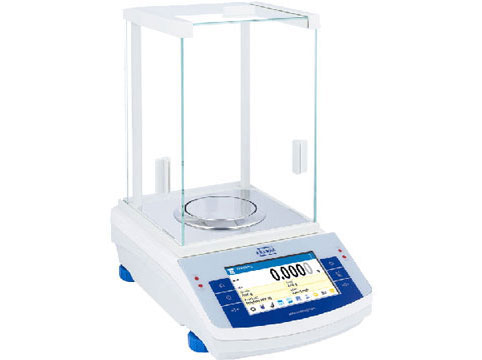
- Precision balances: These balances are designed for slightly less precise measurements than analytical balances, typically in the gram range. They use a set of interlocking pans and a sensitive load cell to measure mass. Precision balances often have features like tare functions and hold functions to make it easier to use them.
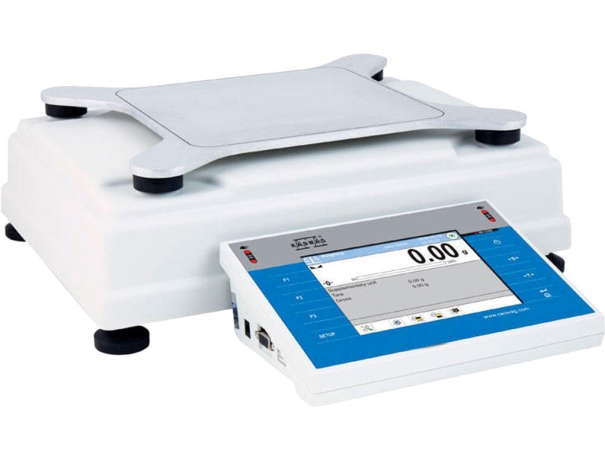
- Top-loading balances: These balances are designed for measuring mass in the gram-to-kilogram range. They use a set of interlocking pans and a load cell to measure mass. Top-loading balances are often less precise than analytical or precision balances, but they are faster and easier to use.
- Microbalances: These balances are used to measure very small masses, typically in the microgram range. They use a set of interlocking pans and a sensitive load cell to measure mass. Microbalances are often used in research applications where extremely precise measurements are required.

Before purchasing, it's important to think about the weighing balance's intended environment and tasks. Also, check that the Laboratory balance can be read by you and your teams and meets your standards for readability. There are a lot of options available, so choose one carefully!