Rotary evaporators are laboratory equipment used for the evaporation and concentration of solutions. They are commonly used in chemistry, biology, and pharmaceutical research for the extraction and purification of organic compounds. This article will provide a comprehensive guide to rotary evaporators, including their design, operation, and applications.
What are Rotary Evaporators?
Rotary evaporators are laboratory equipment used for the evaporation and concentration of solutions. They work by reducing the pressure in the system, which lowers the boiling point of the solvent and allows it to evaporate more easily. This makes them particularly useful for the extraction and purification of organic compounds, which can be sensitive to high temperatures and can decompose or degrade during conventional distillation.
How do Rotary Evaporators Work?
Rotary evaporators work by creating a vacuum in the system, which reduces the pressure and lowers the boiling point of the solvent. The solution is placed in a flask and rotated at a constant speed, which increases the surface area of the liquid and promotes even evaporation. The rotating flask is partially immersed in a water bath, which regulates the temperature of the solution and prevents overheating.
As the solvent evaporates, it passes through a condenser, where it is cooled and condensed back into a liquid. The condensed solvent is collected in a separate flask, while the remaining solution is left behind in the rotary flask. The vacuum pump maintains a constant low pressure throughout the process, which ensures that the solvent evaporates quickly and efficiently.
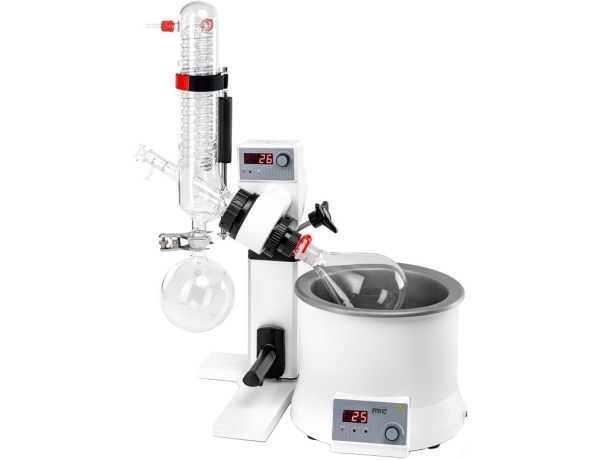
Components of a Rotary Evaporator
Rotary evaporators consist of several components that work together to facilitate the evaporation and concentration of solutions. The main components are:
1. Rotary Flask
The rotary flask, also known as the evaporation flask, is a pear-shaped glass vessel that holds the solution to be evaporated. It is rotated at a constant speed to increase the surface area of the liquid and promote even evaporation.
2. Water Bath
The water bath is a separate vessel that holds water and regulates the temperature of the solution in the rotary flask. The rotary flask is partially immersed in the water bath, which prevents overheating and ensures even heating of the solution.
3. Condenser
The condenser is a coiled glass tube that is cooled by a stream of cold water or air. It is used to condense the solvent vapors as they exit the rotary flask, returning them to a liquid state for collection.
Operating a Rotary Evaporator
Operating a rotary evaporator involves several steps, including preparation, assembly, and operation.
1. Preparation
Before using a rotary evaporator, it is important to ensure that all the necessary components are clean and in good condition. The rotary flask should be free of cracks or chips, and the joints between the various components should be properly lubricated with vacuum grease.
2. Assembly
To assemble a rotary evaporator, first attach the rotary flask to the motor unit and secure it with a clamp. Next, insert the condenser into the flask and attach it to the vacuum source using a rubber hose. Finally, place the water bath beneath the flask and connect it to a temperature controller.
3. Operation
To operate a rotary evaporator, first turn on the vacuum pump and adjust the pressure to the desired level. Next, turn on the motor and adjust the rotation speed to the desired level. Finally, adjust the temperature of the water bath to the desired level and begin the evaporation process. As the solvent evaporates, it will condense in the condenser and collect in a separate flask.
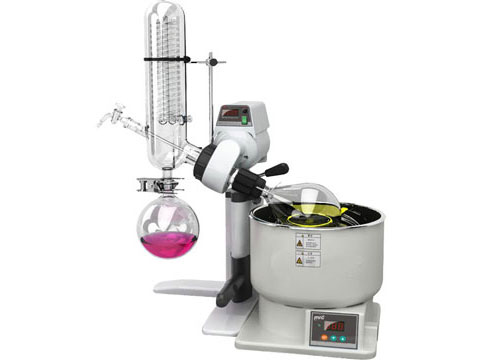
Applications of Rotary Evaporators
Rotary evaporators are used in a wide range of applications, including:
- Chemical synthesis and purification
- Essential oil extraction
- Pharmaceutical research and production
- Food and beverage analysis
- Environmental analysis
- Cannabis extraction
Advantages of Rotary Evaporators
Rotary evaporators offer several advantages over traditional distillation techniques, including:
- Higher evaporation rates
- Lower operating temperatures
- Better control over the evaporation process
- Higher purity of the final product
Tips for Choosing a Rotary Evaporator
When choosing a rotary evaporator, it is important to consider several factors, including:
- Capacity
- Speed range
- Temperature range
- Vacuum strength
- Condenser type
- Safety features
Safety Considerations
When using a rotary evaporator, it is important to follow proper safety precautions, including:
- Wearing appropriate personal protective equipment, such as gloves and safety glasses
- Keeping flammable materials away from the heating mantle and vacuum pump
- Monitoring the temperature of the water bath to prevent overheating
- Using proper ventilation to prevent the buildup of toxic vapors
- Turning off the vacuum pump before removing the sample