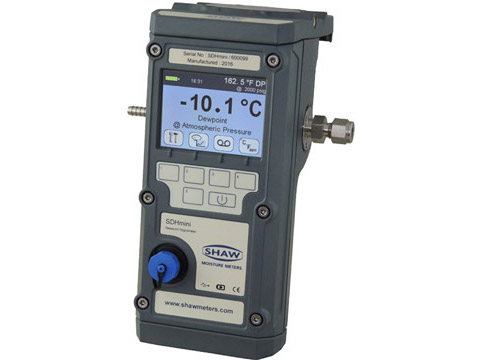
The dew point is the temperature at which air becomes saturated with moisture and water vapor starts to condense into liquid. It's a critical indicator of atmospheric moisture content and is essential in various fields, from meteorology to manufacturing.
Industrial Applications
Manufacturing Processes
In manufacturing, controlling humidity is vital to ensure product quality. Dew point meters help maintain optimal conditions for processes like drying, coating, and assembly.
Chemical Industry
The chemical industry relies on dew point meters to prevent condensation in pipelines and reactors, which can lead to contamination and process inefficiencies.
Pharmaceutical Industry
Maintaining precise environmental conditions is crucial in pharmaceutical production. Dew point meters help control humidity levels in cleanrooms and storage areas.
Environmental Applications
Weather Forecasting
Meteorologists use dew point measurements to predict weather patterns, such as fog and frost formation, which are critical for accurate weather forecasting.
Climate Research
Dew point data is essential in studying climate change and atmospheric conditions. Researchers use this information to understand long-term climate trends and variability.
Environmental Monitoring
Environmental monitoring stations use dew point meters to track humidity levels, contributing to the assessment of air quality and ecosystem health.
HVAC Systems
Air Conditioning Systems
In HVAC systems, dew point meters help maintain comfortable indoor climates by controlling humidity levels in air conditioning units.
Heating Systems
Heating systems use dew point measurements to prevent condensation and ensure efficient operation, particularly in industrial and commercial settings.
Ventilation Systems
Ventilation systems rely on dew point data to regulate airflow and maintain healthy indoor environments by preventing mold and mildew growth.
Energy Sector
Natural Gas Processing
In the energy sector, dew point meters are used to prevent hydrate formation in natural gas pipelines, ensuring smooth and efficient operations.
Power Generation
Power plants use dew point measurements to monitor and control humidity in turbines and boilers, optimizing performance and reducing maintenance costs.
Renewable Energy
Renewable energy facilities, such as wind farms and solar power plants, use dew point data to manage environmental conditions and enhance energy production efficiency.
Food and Beverage Industry
Food Storage
Dew point meters are crucial in maintaining optimal storage conditions for food products, preventing spoilage and extending shelf life.
Beverage Production
In beverage production, controlling humidity levels is essential to ensure product quality and prevent contamination during brewing, fermentation, and packaging.
Packaging
Packaging facilities use dew point meters to control moisture levels, ensuring the integrity and longevity of packaged goods.
Agricultural Applications
Greenhouse Management
In agriculture, dew point meters help regulate humidity in greenhouses, promoting healthy plant growth and preventing disease.
Crop Storage
Proper storage conditions for crops are maintained using dew point meters, preventing mold and rot, and preserving product quality.
Livestock Comfort
Maintaining appropriate humidity levels in livestock facilities is essential for animal health and comfort, and dew point meters play a key role in this.
Electronics Industry
Semiconductor Manufacturing
In semiconductor manufacturing, precise humidity control is vital to prevent defects and ensure the quality of microchips and electronic components.
Electronics Storage
Electronics storage facilities use dew point meters to prevent moisture damage to sensitive components, ensuring product reliability.
Cleanroom Environments
Cleanrooms rely on dew point measurements to maintain strict environmental conditions necessary for high-tech manufacturing and research.
Automotive Industry
Paint Booths
Automotive paint booths use dew point meters to control humidity levels, ensuring high-quality paint finishes and preventing defects.
Engine Testing
Engine testing facilities use dew point measurements to simulate real-world conditions, ensuring accurate performance assessments.
Interior Climate Control
In vehicle manufacturing, controlling interior climate conditions is crucial for product testing and quality assurance, supported by dew point meters.
Aerospace Industry
Aircraft Maintenance
Aircraft maintenance facilities use dew point meters to control humidity levels, preventing corrosion and ensuring the longevity of aircraft components.
Cabin Environmental Control
In aerospace applications, dew point meters help maintain comfortable and safe cabin environments for passengers and crew.
Fuel Systems
Monitoring humidity in fuel systems is critical to prevent condensation and ensure the efficient operation of aircraft engines.
Medical Applications
Medical Gas Systems
Dew point meters are used to monitor and control humidity in medical gas systems, ensuring patient safety and system efficiency.
Laboratory Environments
Laboratories rely on dew point measurements to maintain precise environmental conditions for research and testing purposes.
Sterilization Processes
In medical settings, controlling humidity is essential for effective sterilization, and dew point meters play a key role in these processes.
Dew Point Meters in Research
Scientific Experiments
Researchers use dew point meters in experiments requiring precise humidity control, such as material science and biological studies.
Material Science
In material science, understanding the impact of humidity on materials is crucial, and dew point meters provide the necessary data.
Meteorological Studies
Meteorologists use dew point measurements to study atmospheric conditions, contributing to a deeper understanding of weather and climate phenomena.