Laboratory balances are essential tools in educational settings, particularly in science classrooms. They provide students with hands-on experience in measuring mass and other related properties, which is crucial for understanding various scientific principles. This article explores the various measurements that can be performed using laboratory balances in schools, highlighting their importance in enhancing student learning.
Types of Laboratory Balances
Analytical Balances
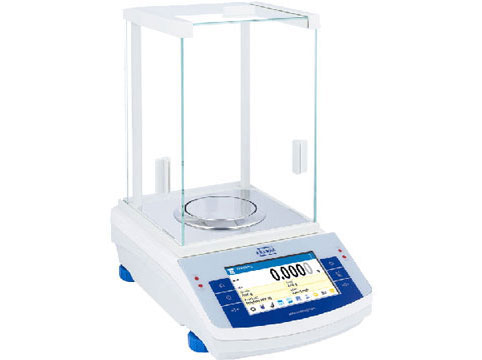
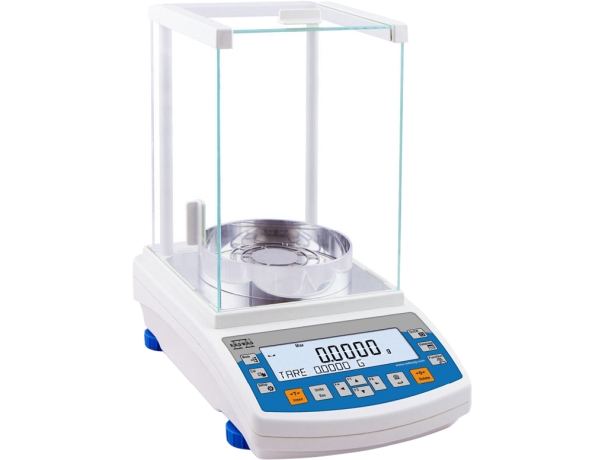
Analytical balances are high-precision instruments used to measure small masses with a high degree of accuracy, typically to the nearest 0.0001 grams. They are essential in experiments requiring precise measurements, such as chemical analysis and preparation of standard solutions.
Precision Balances
Precision balances offer a higher capacity than analytical balances but with slightly less precision. They are commonly used in educational labs for experiments that require accurate mass measurements without the need for the extreme precision of analytical balances.
Top-Loading Balances
Top-loading balances are user-friendly and suitable for general laboratory use. They provide accurate measurements and are ideal for routine weighing tasks, making them popular in school laboratories.
Measuring Mass
Definition of Mass
Mass refers to the amount of matter in an object, usually measured in grams or kilograms. It is a fundamental property in science that helps in understanding various physical and chemical phenomena.
Importance in Science Experiments
Measuring mass is crucial in science experiments as it helps in determining the quantity of substances involved. Accurate mass measurements ensure the reliability and reproducibility of experimental results.
Examples of Mass Measurement in School Labs
In school laboratories, students often measure the mass of different substances, such as chemicals, metals, and biological samples, to study their properties and reactions Using School Science Laboratory Equipment. For example, determining the mass of a reactant before and after a chemical reaction can illustrate the conservation of mass.
Measuring Density
Definition of Density
Density is the mass per unit volume of a substance, often expressed in grams per cubic centimeter (g/cm³) or kilograms per cubic meter (kg/m³).
Formula for Density Calculation
The formula for calculating density is:
Density=MassVolume\text{Density} = \frac{\text{Mass}}{\text{Volume}}Density=VolumeMass
Experiments Involving Density Measurement
Students can perform experiments to measure the density of various materials, such as metals, liquids, and gases. By measuring the mass and volume of an object, they can calculate its density and compare it with known values to identify the substance.
Measuring Volume
Volume by Displacement
Volume can be measured using the displacement method, where an object is submerged in water, and the volume of water displaced is equal to the volume of the object.
Volume by Calculation
Volume can also be calculated using geometric formulas for regular-shaped objects, such as cubes and spheres. For irregular objects, the displacement method is often more accurate.
Practical Applications in School Experiments
Measuring volume is essential in experiments involving liquids and gases. For instance, determining the volume of a gas produced in a chemical reaction helps in understanding reaction stoichiometry.
Measuring Chemical Reactions
Reactant and Product Mass
Measuring the mass of reactants and products in a chemical reaction helps in verifying the law of conservation of mass, which states that mass is neither created nor destroyed in a chemical reaction.
Law of Conservation of Mass
This fundamental principle can be demonstrated in school laboratories by conducting simple chemical reactions and measuring the mass before and after the reaction.
Real-Life Classroom Examples
Students can conduct experiments such as the reaction between vinegar and baking soda to produce carbon dioxide. By measuring the mass of the reactants and the remaining products, they can observe the conservation of mass in action.
Measuring Solution Concentration
Preparing Standard Solutions
Standard solutions with known concentrations are prepared by accurately measuring the mass of solute and dissolving it in a specific volume of solvent. This process requires precise mass measurements to ensure accurate concentration.
Titration Experiments
Titration involves measuring the volume of a solution of known concentration required to react completely with a solution of unknown concentration. Laboratory balances are used to prepare standard solutions and weigh the analytes.
Importance in Chemistry Labs
Accurate measurement of solution concentration is vital in various chemical analyses and experiments, helping students understand stoichiometry and reaction dynamics.
Measuring Purity of Substances
Identifying Impurities
Measuring the mass of a pure substance and comparing it with the expected mass can help in identifying impurities.
Melting Point Determination
The purity of a substance can also be assessed by determining its melting point, which requires precise mass measurements of the sample.
Application in School Laboratories
Students can learn to identify and quantify impurities in substances, enhancing their understanding of material properties and chemical composition.
Measuring Material Properties
Hardness and Softness
Mass measurements can help in studying the hardness and softness of materials by determining the force required to deform them.
Elasticity and Plasticity
Elasticity and plasticity are material properties that can be studied by measuring the mass and observing the behavior under applied forces.
Relevance in Physics Experiments
These measurements are crucial in physics experiments, helping students understand material properties and their applications in real-life scenarios.
Measuring Temperature Changes
Thermal Expansion
Temperature changes cause materials to expand or contract. Measuring the mass of materials before and after heating can help in studying thermal expansion.
Specific Heat Capacity
Specific heat capacity is the amount of heat required to change the temperature of a unit mass of a substance by one degree Celsius. Accurate mass measurements are essential in these experiments.
Applications in Thermodynamics
Understanding temperature changes and heat transfer is vital in thermodynamics, and laboratory balances play a key role in these experiments.
Measuring Pressure
Understanding Pressure Concepts
Pressure is the force exerted per unit area, and it can be measured using various instruments in conjunction with mass measurements.
Barometer and Manometer Usage
Barometers and manometers are used to measure atmospheric and fluid pressures, respectively, often requiring precise mass measurements for calibration.
Experiments in Physics Labs
Students can perform experiments to measure the pressure of gases and liquids, helping them understand the principles of pressure and its applications.
Measuring Forces
Newton's Laws of Motion
Measuring forces is essential in studying Newton's laws of motion, which describe the relationship between the motion of an object and the forces acting on it.
Friction and Tension
Experiments involving friction and tension require accurate mass measurements to determine the forces involved.
Practical Classroom Experiments
Students can perform various experiments to measure forces, such as using spring balances to measure tension or friction forces in different materials.
Measuring Light Intensity
Understanding Lumens and Lux
Light intensity is measured in lumens or lux, and it can be quantified using light meters in conjunction with laboratory balances for calibration.
Usage of Light Meters
Light meters help in measuring the intensity of light in different settings, providing valuable data for various scientific studies.
Experiments Involving Light Measurement
Students can conduct experiments to measure the intensity of light from different sources, helping them understand the properties of light and its applications.
Measuring Electric Current
Ammeters and Voltmeters
Ammeters and voltmeters are used to measure electric current and voltage, respectively, often requiring calibration using precise mass measurements.
Ohm's Law Applications
Ohm's law relates the current flowing through a conductor to the voltage across it and the resistance. Experiments involving Ohm's law require accurate measurements of current and voltage.
Electrical Circuit Experiments
Students can build and analyze electrical circuits, measuring current and voltage to understand the principles of electricity and magnetism.