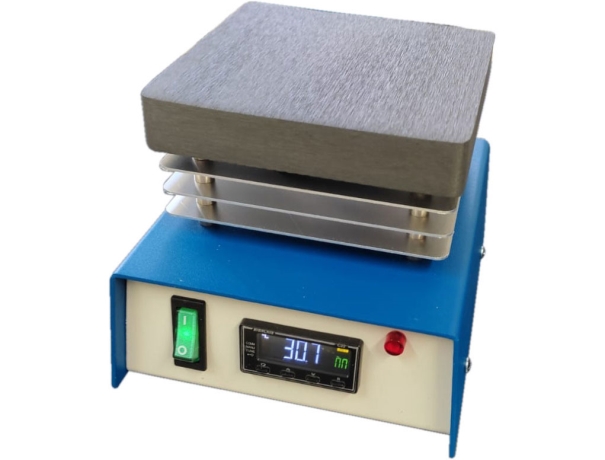
Laboratory hot plates are essential equipment in scientific labs, widely used to heat liquids or substances at controlled temperatures. They provide a steady and reliable heat source, making them indispensable for experiments requiring precise temperature control. But how hot can these devices actually get? And why does the temperature range matter? Let’s dive in and find out everything you need to know about the temperature range of laboratory hot plates.
What is a Laboratory Hot Plate?
A laboratory hot plate is a flat heating device used to heat samples in scientific experiments. Unlike Bunsen burners, which use an open flame, hot plates rely on electricity to generate heat, making them safer and more efficient for modern labs. Most laboratory hot plates come with a flat heating surface—typically made from ceramic, aluminum, or glass—and are equipped with temperature control knobs or digital displays that allow users to adjust the heat output.
The Importance of Temperature Control in Lab Experiments
Temperature plays a crucial role in many laboratory experiments, especially those involving chemical reactions, biological growth, or material testing. For reactions to proceed correctly, the temperature needs to be both accurate and stable. A small change in heat can alter the course of a reaction, potentially affecting the entire experiment’s outcome. This is why having a hot plate with precise temperature control is so important.
General Temperature Range of Laboratory Hot Plates
Most laboratory hot plates operate within a temperature range of 25°C to 550°C (77°F to 1022°F). However, the actual range can vary based on the model and application. Hot plates designed for different purposes will have varying maximum and minimum temperature capabilities. Let’s break down the temperature ranges into three main categories: low, medium, and high.
Low-Temperature Hot Plates
Low-temperature hot plates typically operate between 25°C and 150°C (77°F and 302°F). These are often used for applications such as warming samples, gently heating liquids, or processes like slow evaporation. They are ideal for tasks that require minimal heat to avoid altering sensitive materials.
Medium-Temperature Hot Plates
Medium-temperature hot plates have a range between 150°C and 350°C (302°F and 662°F). This is the most common temperature range for general laboratory work. Medium-heat plates are used for tasks like heating solvents, stirring chemical reactions, or incubating biological cultures.
High-Temperature Hot Plates
High-temperature hot plates can reach maximum temperatures between 350°C and 550°C (662°F and 1022°F). These are suitable for more intense applications such as melting solid samples, performing high-temperature chemical reactions, or conducting materials testing that requires extreme heat.
Types of Heating Surfaces and Their Influence on Temperature
The heating surface material affects the temperature range and heat distribution on the hot plate. Common materials include:
- Ceramic: Known for even heat distribution, ceramic plates are ideal for maintaining uniform temperatures. They can handle both low and high temperatures but can be more fragile.
- Aluminum: Aluminum hot plates heat up quickly and are highly efficient at transferring heat, though they may have uneven heat distribution.
- Glass: Glass surfaces are non-reactive, making them suitable for specific chemical applications. However, they tend to be more sensitive to extreme temperature fluctuations.
Power and Voltage Impact on Heating Capacity
The power source and voltage of the hot plate also determine how hot it can get. Hot plates with higher wattages (e.g., 1200W or more) tend to reach higher temperatures faster, making them more suited for tasks requiring intense heat. Voltage settings can vary depending on the lab’s electrical infrastructure, which is why it’s important to match the device to the lab’s power capacity.
Temperature Sensors and Safety Features in Modern Hot Plates
Modern hot plates often come with built-in temperature sensors that ensure accurate readings and maintain steady temperatures. These sensors, often connected to digital displays, allow users to closely monitor the heat output.
Safety features such as automatic shut-off functions and overheat protection are essential for preventing accidents, especially when the hot plate is left unattended during experiments.
Choosing the Right Hot Plate for Your Laboratory
When selecting a hot plate, consider the specific temperature range required for your experiments. If your work involves high-temperature reactions, you’ll need a device with a broader range. On the other hand, if precision is more important than raw heating power, a low-temperature plate with fine-tuned control might be the best option.
Precision vs. Range: What to Prioritize?
There’s often a trade-off between precision and temperature range. Some hot plates offer incredibly accurate temperature control but might have lower maximum temperature capabilities. Others can heat up to extreme temperatures but might not provide the same level of precision. The key is to balance your needs based on the type of experiments you’re conducting.
FAQs About Laboratory Hot Plates
1. What is the maximum temperature a lab hot plate can reach?
Most lab hot plates reach a maximum of 550°C (1022°F), though some specialized models can go higher.
2. How do you calibrate a laboratory hot plate?
Calibrating a hot plate typically involves using a temperature probe to measure actual temperatures and adjusting the device’s settings to match the displayed temperature.
3. Are all laboratory hot plates equipped with temperature sensors?
Not all models have built-in sensors. Basic models may only have manual control knobs, while more advanced versions feature digital sensors and displays.
4. Can a hot plate overheat?
Yes, without proper safety features, a hot plate can overheat. It’s essential to use models with overheat protection and auto shut-off mechanisms to prevent accidents.
5. How can I extend the life of my lab hot plate?
To extend your hot plate’s life, avoid overheating, clean it regularly, and follow the manufacturer’s maintenance guidelines.