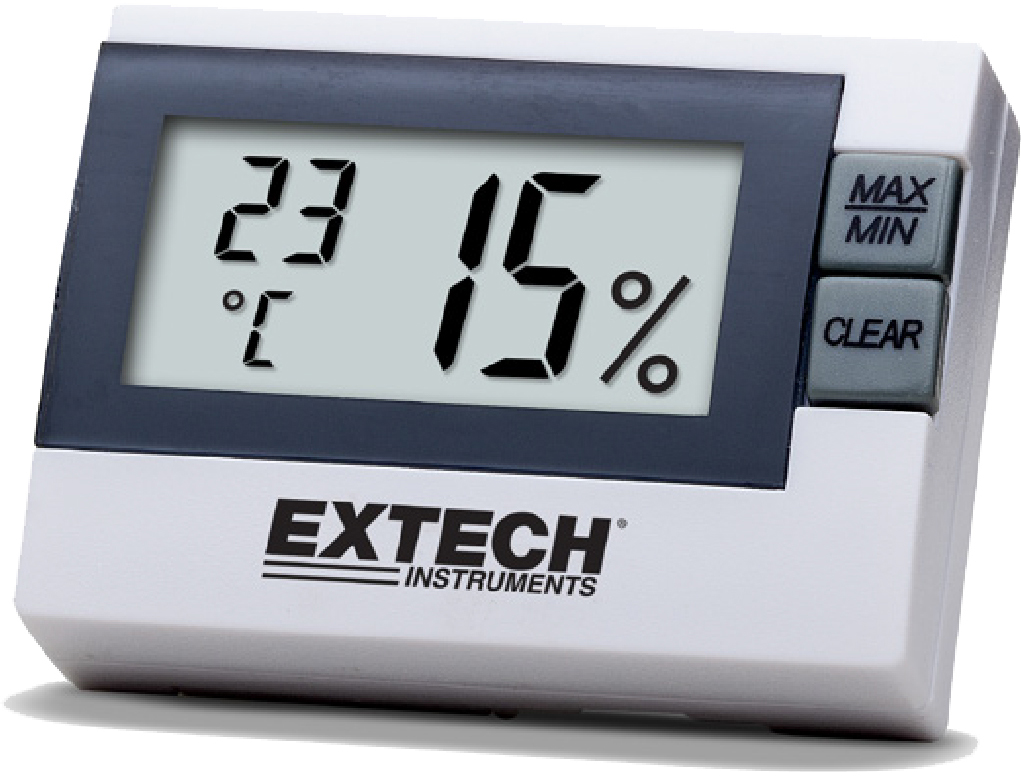
Accurate measurements ensure controlled environments, reliable equipment performance, and high-quality experimental results. Laboratory humidity and temperature meters achieve this precision by using various advanced sensors.
Types of Sensors in Laboratory Meters
Temperature Sensors
Temperature measurement is one of the key functions of laboratory meters. Several types of sensors are used for this purpose, each with its unique characteristics.
Thermistors
Thermistors are temperature-sensitive resistors whose resistance changes with temperature. They are highly sensitive, making them ideal for detecting even minor temperature variations in laboratory settings. Their compact size and affordability also make them a popular choice for lab instruments.
Resistance Temperature Detectors (RTDs)
RTDs are known for their exceptional accuracy and stability. These sensors use the predictable resistance changes in metals like platinum to measure temperature. RTDs are often preferred in laboratories requiring precise and reliable readings over extended periods.
Thermocouples
Thermocouples operate by generating a voltage based on the temperature difference between two junctions. They are ideal for environments with rapid temperature changes due to their quick response times. While they may not be as accurate as RTDs, their durability makes them suitable for challenging lab environments.
Humidity Sensors
Humidity sensors play an equally important role in laboratory meters. They measure the moisture content in the air, which is critical for experiments and processes sensitive to humidity levels.
Capacitive Humidity Sensors
Capacitive sensors measure humidity by detecting changes in capacitance caused by variations in moisture levels. These sensors are highly reliable and widely used in laboratory environments for their precision and ability to operate over a broad humidity range.
Resistive Humidity Sensors
Resistive humidity sensors measure moisture by detecting changes in the electrical resistance of a hygroscopic material. They are cost-effective and provide accurate readings, making them suitable for laboratories on a budget.
Thermal Conductivity Humidity Sensors
These sensors determine humidity by measuring the thermal conductivity of the air. While less common, they are highly effective in specialized applications, such as high-humidity environments or industrial labs.
How Sensors Work Together in Laboratory Meters
Laboratory meters often integrate temperature and humidity sensors to provide comprehensive environmental monitoring. These sensors work together to measure and maintain optimal conditions. However, regular calibration is essential to ensure accuracy and reliability over time.
Key Features of Sensors Used in Laboratory Meters
Sensitivity and Accuracy
Laboratory sensors must detect even the slightest changes in temperature or humidity. This ensures precise measurements crucial for scientific experiments.
Stability Over Time
Long-term stability is essential for sensors in laboratory meters. Consistent performance over time minimizes errors and reduces the need for frequent recalibration.
Environmental Durability
Sensors used in laboratories must withstand various conditions, including high humidity, temperature fluctuations, and potential exposure to chemicals.
Applications of Humidity and Temperature Meters in Laboratories
- Monitoring Controlled Environments: These meters ensure stability in controlled chambers, vital for research involving sensitive materials or organisms.
- Maintaining Equipment Reliability: High-tech lab equipment often requires specific environmental conditions to function optimally.
- Ensuring Accurate Experimental Results: Inconsistent temperature or humidity can compromise experimental outcomes, making precise monitoring essential.