A water bath keeps the samples heated as per your laboratory requirement. Samples may be kept at a consistent temperature by flowing water through the water bath. A combustible environment may be prevented from being lit by maintaining cell lines or heating compounds that burn easily. A water bath in motion, a circulating water bath, and a non-circulating water bath are all examples of different kinds of water baths.
Chamber of stainless steel
Heating device
An interface for controlling the temperature
Water baths generally include the above three components.
How does the water bath work?
With an integrated amplifier, the resistance value generated by a temperature sensor is amplified and compared to a control signal. Due to this, the power utilization of the electric heating tube may be maintained at the same level at all times. When it comes to heating to a high yet balanced temperature, water baths are an excellent option.
Water Baths-Types
Non-circulating water baths:
For the heating of the water, non-circulating baths employ convection. This reduces the accuracy of the temperature regulation. A stirrer is also useful in non-circulating water baths to ensure that the heat is transferred more evenly.
Water bath with a shaker:
When it comes to moving liquids, Laboratory water baths with additional shaking control are ideal. The control for shaking may be disabled. Continuous shaking mixes liquid-grown cells with air on a regular basis. An electric heating
element submerged in the water regulates the temperature of a constant temperature water bath.
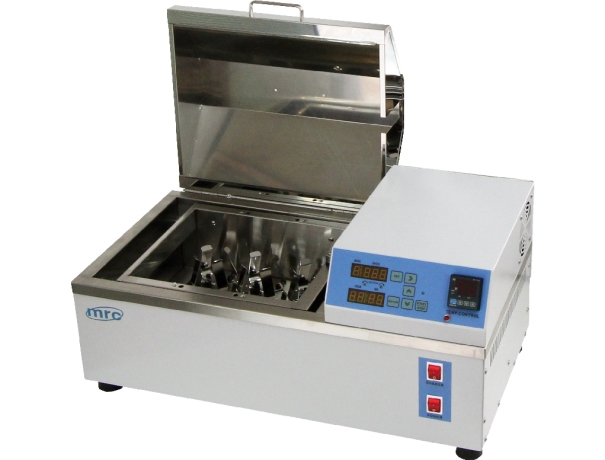
Circulating water baths:
For enzymatic and serological research that needs accurate temperature control, stirrers, often called separators, are the right solution. The water in the bath is more evenly heated if it is circulated sufficiently.
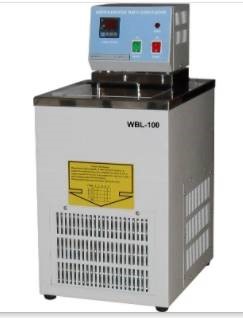
Magnetic stirrer Water bath
Allow you to heat and mix the liquid in the vessel at the same time.
Water Bath: Digital vs. Analog?
The simplest sort of
water bath is an analog water bath. It is low-cost and simple to use. However, there are a few drawbacks. Analog water baths are less accurate than digital water baths in this regard. In addition, there is no sign-up sheet. As a result, you won't be able to tell what the water's true temperature is.
An analog water bath has been modernized into a digital one. It's more accurate. The water temperature in the bath may also be seen on the display board that is included with the bath.
How to use Water Bath:
1. Check that the power source is properly plugged in.
2. To handle the heating element, check that there is an adequate amount of water in the water bath.
3. Turn on the mains switch once you have ensured that the power supply, main and instrument are both connected to the switch.
4. By tapping the SET key, you will be able to adjust the temperature. You may adjust the temperature by pressing the increase button to make it higher or the decrease button to make it lower. The temperature at the predetermined level will be maintained throughout.
5. After usage, make sure that power supply- the instrument and the main are both turned off.
Important tips:
The component should not be immersed in water under any circumstances. Before any kind of maintenance is done on it, the plug has to be removed.
Maintain some distance between the heater and the temperature sensor, which is a capillary.
Only use filtered or purified water to fill the water bath.
The device has to be switched off every day in order to avoid water loss from evaporation and overheating caused by the device. Remove any stale water from the saucepan.
Each and every time After you have finished utilizing the water bath, you should turn off the switch at the mains.
Ensure that the platform and the spaces around it are kept dry at all times.