This analysis can significantly affect the quality and stability of products, especially in industries like food, pharmaceuticals, and chemicals. To achieve precise moisture measurements, laboratories rely on moisture balances. These sophisticated instruments offer accuracy, speed, and efficiency, making them indispensable tools in modern laboratories.
What is a Moisture Balance?
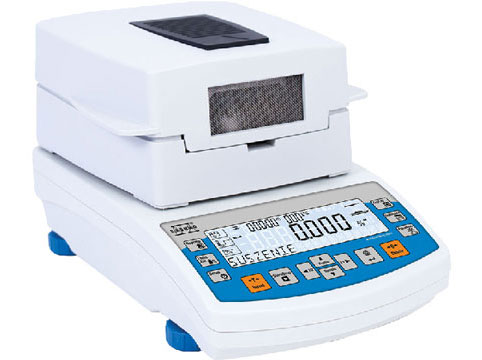
A moisture balance, also known as a moisture analyzer, is a device designed to measure the moisture content in a sample by weighing it before and after drying. This method helps determine the amount of moisture present, providing critical data for quality control and research purposes.
Key Components
- Heating Element: Used to dry the sample, typically utilizing halogen, infrared, or microwave technology.
- Weighing Mechanism: A precision balance that measures the weight of the sample before and after drying.
- Display and Controls: Interface for setting parameters and viewing results.
How Moisture Balances Work
Basic Principle
Moisture balances work by heating a sample to evaporate the moisture content. The initial weight is recorded, and then the sample is dried using the heating element. The final weight is measured, and the moisture content is calculated based on the weight difference.
Step-by-Step Process
- Place the sample on the Laboratory balance.
- Record the initial weight.
- Start the drying process using the selected heating method.
- Once drying is complete, record the final weight.
- Calculate the moisture content using the difference between initial and final weights.
Applications of Moisture Balances in Laboratories
Food Industry
In the food industry, moisture content affects the shelf life, taste, and texture of products. It help ensure product consistency and quality.
Pharmaceutical Industry
Accurate moisture measurement is vital for the stability and efficacy of pharmaceutical products. Moisture balances assist in maintaining the required moisture levels in drugs and other products.
Chemical Industry
In the chemical industry, the moisture content can influence the chemical properties and reactions. They are used to ensure the desired moisture levels in raw materials and finished products.
Environmental Testing
They are used in environmental testing to analyze soil and other samples for moisture content, which can affect ecological studies and environmental monitoring.
Advantages
Accuracy
Moisture balances provide highly accurate measurements, crucial for quality control and compliance with industry standards.
Speed
These devices offer fast drying and measurement times, increasing laboratory efficiency and throughput.
Versatility
Moisture balances can handle a wide range of sample types and sizes, making them versatile tools for various applications.
Factors to Consider When Choosing a Moisture Balance
Sample Type
The nature of the sample (e.g., powder, liquid, solid) affects the choice of moisture balance and heating method.
Required Precision
Different applications may require varying levels of precision. Choose ones that meets the accuracy requirements of your specific needs.
Budget Considerations
Moisture balances come in a range of prices. Consider your budget while ensuring the device meets your technical requirements.
Setting Up
Calibration
Proper calibration is essential for accurate measurements. Follow the manufacturer's instructions to calibrate the balance before use.
Initial Setup Steps
- Position the balance on a stable, level surface.
- Connect to the power supply and turn on the device.
- Perform a calibration check.