Two of the most commonly used types are standard desiccators and vacuum desiccators. So, what sets them apart? Let's dive into the details and uncover the key differences between these essential lab tools.
What is a Standard Desiccator?
A standard Desiccator is a sealed container used to store moisture-sensitive items. It's typically made of glass or plastic and features a lid that fits tightly to create an airtight environment. Inside, you'll find a shelf or platform to hold the items, along with a desiccant, such as silica gel, to absorb moisture.
Components and Materials
- Container: Usually made of glass or durable plastic.
- Lid: Airtight, often with a sealing ring to ensure no air gets in or out.
- Shelf: Perforated or solid, designed to hold the items being stored.
- Desiccant: Material like silica gel or activated charcoal to absorb moisture.
Common Uses
Standard desiccators are commonly used for storing hygroscopic chemicals, protecting delicate samples, and preserving items that could be damaged by humidity.
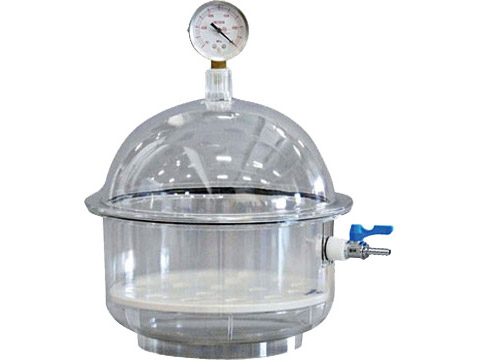
What is a Vacuum Desiccator?
A Vacuum Desiccator takes the concept of moisture control a step further. In addition to being airtight, it can be connected to a vacuum pump to remove air from the container. This creates a low-pressure environment that enhances the drying process and provides better protection against moisture.
Components and Materials
- Container: Similar to a standard desiccator but designed to withstand vacuum pressure.
- Lid: Airtight with a vacuum valve for connecting a pump.
- Shelf: Similar to standard desiccators, used for holding items.
- Desiccant: Still used, but the vacuum enhances its effectiveness.
- Vacuum Pump: Essential for creating the low-pressure environment.
Common Uses
Vacuum desiccators are ideal for drying samples quickly, removing volatile solvents, and protecting materials that are extremely sensitive to moisture.
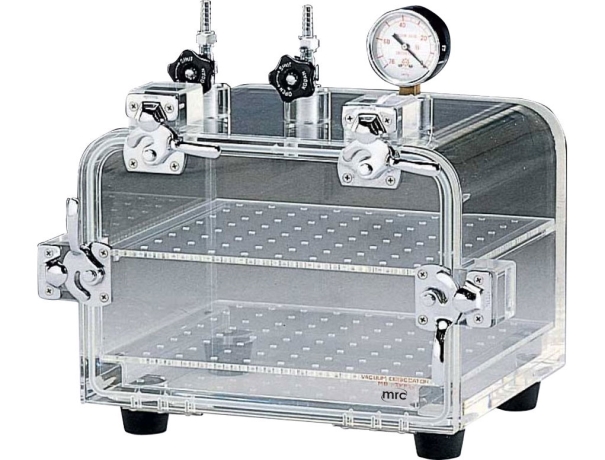
Key Differences Between Standard and Vacuum Desiccators
Structural Differences
- Standard Desiccators: Simple design, no need for additional equipment.
- Vacuum Desiccators: More robust construction to handle vacuum pressure, includes a vacuum valve.
Functional Differences
- Standard Desiccators: Rely solely on desiccants to remove moisture.
- Vacuum Desiccators: Use a combination of desiccants and vacuum pressure for more effective drying.
Efficiency and Performance
- Standard Desiccators: Adequate for many laboratory needs, but slower and less effective at moisture removal.
- Vacuum Desiccators: Faster and more efficient, especially for materials that require thorough drying.
When to Use a Standard Desiccator
Ideal Conditions and Scenarios
- Routine Storage: Perfect for everyday storage of chemicals and samples.
- Budget Constraints: More cost-effective and simpler to use.
Types of Materials Suitable
- Hygroscopic Chemicals: Like sodium hydroxide and potassium carbonate.
- Biological Samples: That need protection from ambient humidity.
When to Use a Vacuum Desiccator
Ideal Conditions and Scenarios
- Rapid Drying Needs: When time is of the essence.
- High Sensitivity Materials: That cannot tolerate even minimal moisture.
Types of Materials Suitable
- Sensitive Chemicals: Such as anhydrous reagents.
- Electronic Components: That must remain moisture-free.
Advantages of Standard Desiccators
Cost-Effectiveness
Standard desiccators are generally less expensive than their vacuum counterparts, making them accessible for most labs.
Simplicity and Ease of Use
With fewer components and no need for a vacuum pump, standard desiccators are straightforward to operate.
Advantages of Vacuum Desiccators
Enhanced Drying Efficiency
The combination of desiccants and vacuum pressure ensures quicker and more thorough drying.
Better Moisture Control
The vacuum environment significantly reduces the amount of residual moisture.
How to Choose the Right Desiccator for Your Needs
Factors to Consider
- Material Sensitivity: How sensitive are the materials to moisture?
- Budget: What is your budget for lab equipment?
- Drying Time: How quickly do you need to dry or preserve materials?
- Complexity: Are you comfortable using more complex equipment?
Application-Specific Recommendations
- Standard Desiccators: Best for general storage and less sensitive materials.
- Vacuum Desiccators: Ideal for high-sensitivity and rapid drying needs.