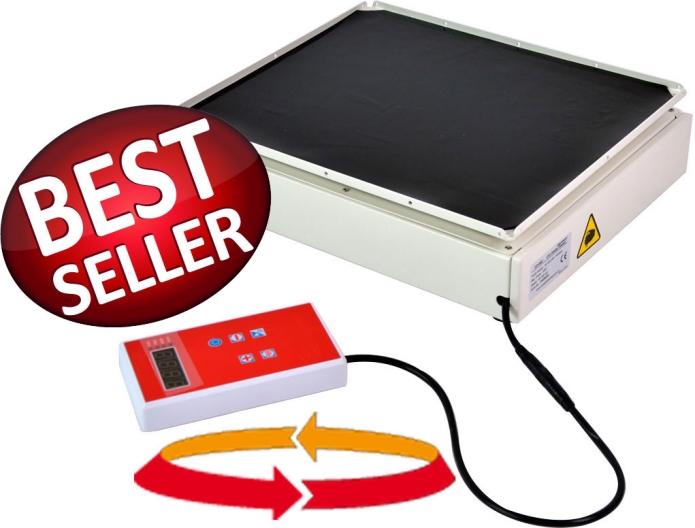
Orbital shakers are crucial equipment in laboratories, facilitating the agitation and mixing of substances in various vessels. In the context of CO2 incubators, these shakers are important in ensuring optimal conditions for cell culture and growth studies.
An orbital shaker works by employing a circular shaking motion, which causes the vessels on the platform to move in a smooth, orbital path. This motion ensures thorough mixing and aeration of cell cultures, which is essential for maintaining healthy cell growth within CO2 incubators. Orbital shakers are used in CO2 incubators for various applications, including cell culture experiments, growth studies, and mixing of cell cultures. Their ability to provide gentle yet thorough agitation is essential for maintaining cell viability and achieving reproducible results.
Features and Benefits
Orbital shakers come with a range of features, including adjustable speed and temperature controls, as well as platforms of different sizes to accommodate various vessel types. These features contribute to the efficient mixing and incubation of cells, ultimately leading to more reliable research outcomes.
Points to choose
Several factors should be taken into account when selecting an orbital shaker for use in a CO2 incubator. These include stability and uniformity of shaking, speed and temperature control accuracy, as well as the capacity and compatibility of the Laboratory shaker with the CO2 incubator.
Tips
Tips for Maximizing Efficiency To maximize the efficiency of an orbital shaker for CO2 incubator, researchers can employ various optimization techniques, such as using appropriate vessel types, optimizing shaking parameters, and minimizing vibration interference. These strategies can help improve experimental reproducibility and achieve more reliable results.