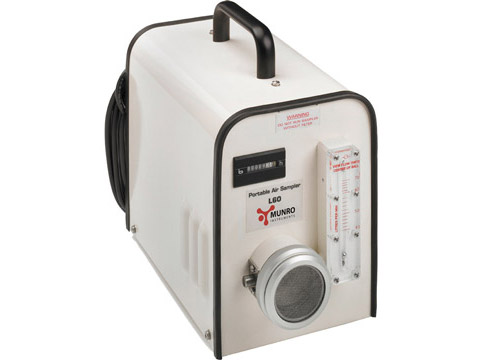
An air sampler collects air samples to detect and measure airborne contaminants, such as microorganisms, particulates, or gases. It important in environmental monitoring to ensure compliance with regulatory standards and maintain safe, controlled environments.
2. How it works / Principles of operation
- Snapshot vs. Monitoring:
- Air sampling provides a “snapshot” of air quality at a specific point in time.
- Air monitoring offers continuous analysis over a period, akin to "videoing" air quality changes.
- Active Air Sampling:
- Uses a pump to draw in air, which passes through a sample head and settles particles onto a media plate.
- The plate contains specialized media to react with particles and identify contamination.
- Operates on a principle called d50, where 50% of particles are retained based on size, ensuring compliance with regulatory standards.
- Typically samples 1,000 liters of air for regulatory monitoring.
- Technological Features:
- Modern samplers are portable, convenient, and semi-automated.
- Some integrate with environmental monitoring software for enhanced data integrity.
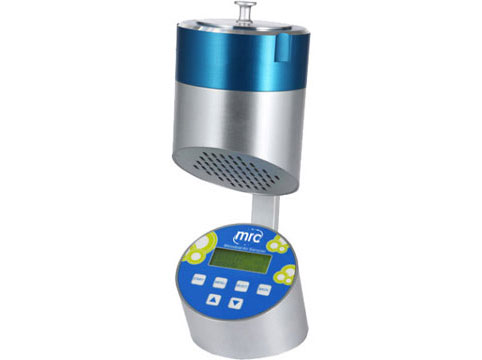
3. Industries/Applications/Tests
- Pharmaceuticals: Regulatory microbiological monitoring in cleanrooms (e.g., ISO 14698-1/2 compliance).
- Healthcare: Monitoring airborne microorganisms in hospitals to prevent infections.
- Food Production: Reducing contamination in factories, such as bakeries, where fungal spores can affect shelf life.
- Workplaces: Identifying sources of "sick building syndrome" in offices or industrial facilities.
- Medical Devices: Ensuring air quality during sensitive manufacturing processes.
Airborne microorganisms are a significant contamination source in all these environments, as they exist in forms like bioaerosols or larger aggregates.
4. Available types
- Munro’s Active Air Samplers:
- Use pumps to actively draw air through a sample head (e.g., agar plates or media plates) for microbial and particulate analysis.
- Commonly used in controlled environments like cleanrooms and pharmaceutical manufacturing.
- Munro’s Passive Air Samplers:
- Depend on natural air movement to collect particles on plates or other surfaces without a pump.
- Often used for long-term monitoring of airborne microorganisms.
- Munro’s Biological Air Samplers:
- Specifically designed to detect and quantify viable microorganisms such as bacteria, fungi, and spores.
- They collect microorganisms as bioaerosols, either suspended in the air or aggregated in clumps.
- Examples:
- Slit-to-Agar Samplers: Use agar plates to grow and identify microbial colonies.
- Liquid Impingement Samplers: Capture bioaerosols in a liquid medium for subsequent analysis.
- Munro’s Portable Air Samplers:
- Lightweight and convenient for on-the-go sampling in hospitals, food factories, or environmental fieldwork.
- Munro’s Stationary Air Samplers:
- Fixed installations for continuous monitoring in facilities like pharmaceutical plants or research labs.