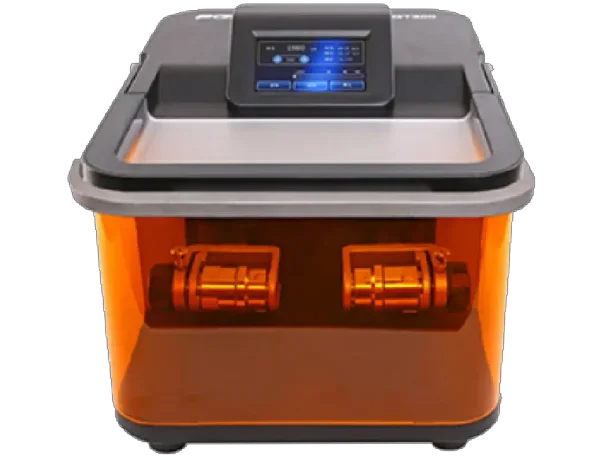
Laboratory ball mills are specialized grinding machines used primarily in scientific laboratories to finely grind and blend materials for analytical, research, or quality control purposes. They are a scaled-down version of industrial ball mills and are widely used in chemistry, material science, pharmaceuticals, nanotechnology, metallurgy, and other scientific disciplines.
Key Features of Laboratory Ball Mills
-
Compact Size
Designed to fit on benchtops or inside fume hoods.
-
Precision Grinding
Achieves fine, consistent particle sizes.
-
Versatile Applications
Suitable for dry or wet grinding, mixing, homogenizing, and mechanical alloying.
-
Controlled Environment
Many models allow temperature control, inert gas environments, or vacuum operation.
How Do Ball Mills Work?
Simple yet powerful. A motor turns a cylinder filled with grinding media. As the cylinder rotates, the balls rise and fall, crushing the material inside through impact and friction.
What’s Inside a Ball Mill?
-
Drum or Shell – The outer cylinder where everything happens.
-
Grinding Media – Balls made of steel, ceramic, or rubber.
-
Motor & Gearbox – Drives the rotation.
Materials Used in Ball Mills
Grinding Media
-
Stainless Steel Balls – Durable and common.
-
Ceramic Balls – Ideal for low contamination needs.
-
Rubber Balls – Gentle on softer materials.
Suitable Grinding Materials
-
Minerals
-
Pigments
-
Pharmaceuticals
-
Chemicals
-
Food powders
Applications Across Industries
Mining
Pulverizing ores to extract metals.
Pharmaceuticals
Grinding active compounds into powder form for tablets or capsules.
Food
Grinding spices, flour, and other ingredients with precision.
Paints
Achieving smooth, uniform pigment dispersion.
Cement
Mixing raw materials before kiln firing.
Advantages of Ball Mills
-
Uniform Output – Even particle size every time.
-
Scalable – From bench-top to industrial.
-
Flexible – Works for dry or wet grinding.